QEMU 11.0 delivers noticeable performance boosts for ARM device passthrough and Windows on Arm workloads while streamlining block operations with faster async FUSE exports. Migration tracking finally gets a clear failing status so operators stop guessing when transfers break, though several legacy machine types and 32-bit host support quietly disappear. Guest agent updates fix those annoying Windows storage freezes during snapshots, and TCG plugin development gains proper C++ support for smoother debugging workflows. Anyone running older launch scripts or outdated host architectures will need to update their configs before testing anything critical.
QEMU 11.0 Release Brings Faster Passthrough, Nitro Enclave Support, and Dropped 32-bit Hosts
QEMU 11.0 ships with performance tweaks that actually matter for virtualization workflows, alongside some hard deprecations that will break older setups if launch scripts go unupdated. This release focuses on tighter KVM integration, faster block device handling, and cleaner ARM emulation, while quietly dropping support for thirty-two bit host systems entirely. Readers will get better vfio passthrough speeds, a new Nitro Enclave accelerator, and several guest agent fixes that stop Windows VMs from freezing during disk operations.
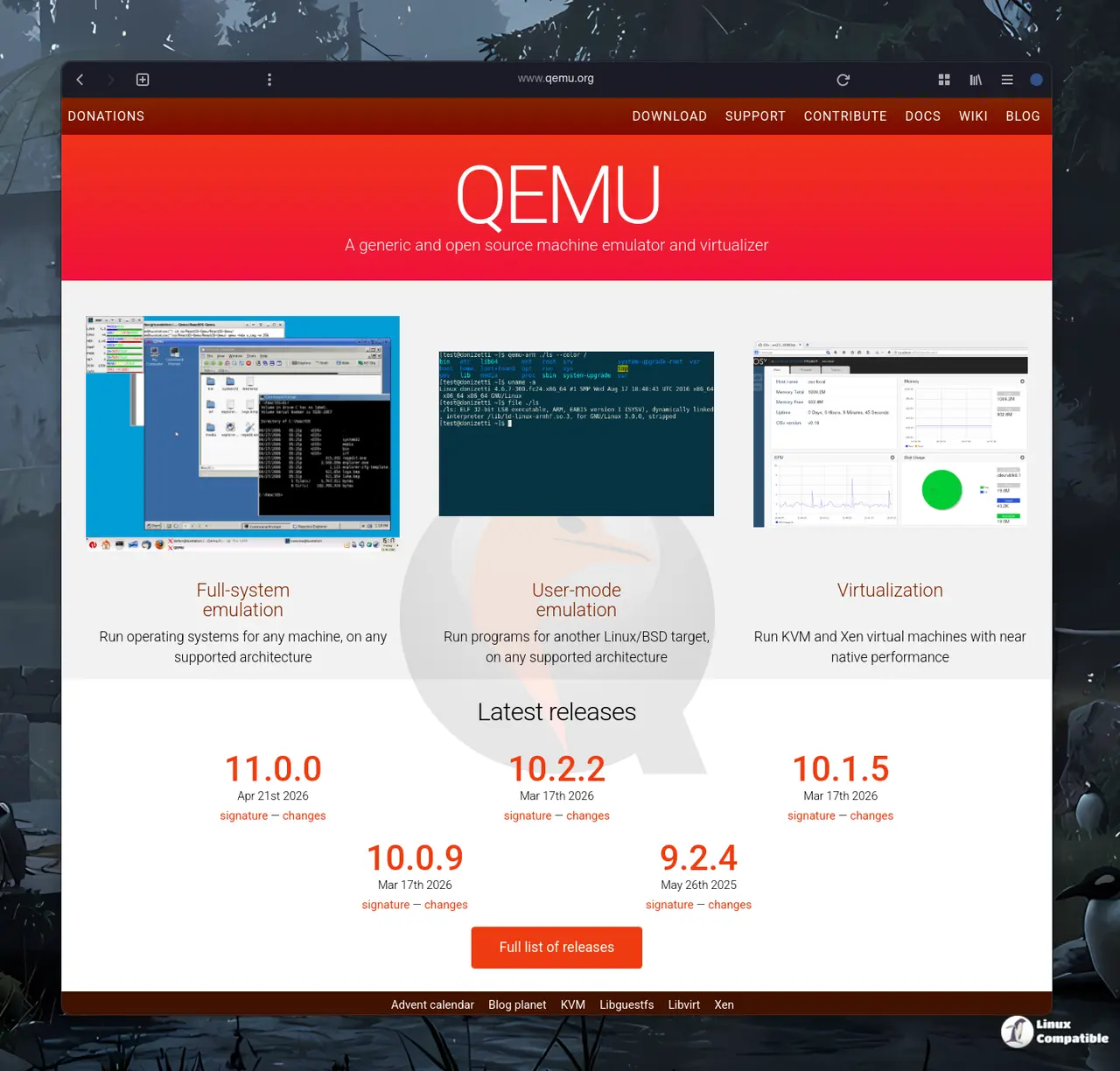
QEMU 11.0 Acceleration and Passthrough Improvements
The most noticeable shift in this release targets virtual machine performance through tighter hardware integration. ARM systems now support SMMUv3 acceleration, which means vfio pci device passthrough to KVM guests runs significantly faster instead of bogging down under software translation overhead. Experienced admins often see passthrough fail or stutter when the IOMMU emulation falls back to software translation, so this change removes a common bottleneck for GPU and network card assignment. Windows users on Arm boards will also get WHPX accelerator support, closing a gap that left many developers stuck with slower TCG fallbacks. The nitro accelerator brings native Nitro Enclave execution to QEMU, which matters if you run AWS compatible workloads locally or need isolated environments without full cloud costs. WHPX itself gets faster emulation code and proper x2apic support, so Windows host setups that rely on Hyper V integration finally stop choking on interrupt routing.
QEMU 11.0 Block Device and Migration Changes
Storage handling gets a major overhaul that keeps virtual machines responsive during heavy disk operations. The FUSE block export no longer processes requests synchronously, which stops the entire QEMU process from freezing when a remote filesystem lags. You can now configure multiple iothreads for FUSE exports, so concurrent read and write operations actually run in parallel instead of queuing behind each other. The curl block driver adds a force range option that skips unnecessary HEAD probes on HTTP servers that block those requests, which speeds up cloud image pulls without wasting bandwidth. Migration gets cleaned up with a new failing status that clearly signals when something breaks mid transfer, so operators stop guessing whether the guest is recovering or dead in the water. The query migration threads command disappears entirely since it only returned limited data that nobody actually used, and the zero blocks capability vanishes after sitting unused since version nine point one.
Deprecated Features and Hard Breaks in QEMU 11.0
Several legacy features get the axe this cycle, and ignoring them will break existing virtual machines on first boot. The i440fx and q35 machine types from version two point six and two point seven are completely gone, so any automation relying on those exact identifiers needs updating to current defaults or newer variants. Thirty-two bit host systems lose all support entirely, which means older hardware running legacy Linux distributions will no longer compile or run the emulator. Migration commands drop the fd URI scheme unless paired with sockets, removing a workaround that caused more confusion than it solved. ARM linux user mode drops old OABI binary support, so anyone still trying to run ancient embedded toolchains will need a fallback environment. The microblazeel binary also disappears since the main microblaze build handles little endian natively now, which simplifies the command line without breaking functionality for users who already adapted.
Guest Agent Updates and Windows Fixes
The guest agent receives targeted fixes that stop Windows virtual machines from throwing access denied errors during storage operations. A new network route query command helps automation tools track IP assignments without relying on external DHCP logs, which simplifies cloud image provisioning scripts. TCG plugin development finally gets C++ support in tree, so developers can write performance monitoring or debugging plugins without fighting linker restrictions that previously forced workarounds. Memory preallocation scales up to thirty two threads during startup, cutting boot times for large disk images that previously stalled while mapping pages one by one. Guest agent freeze issues tied to Event ID eight thousand one hundred ninety four get resolved, which stops Windows VMs from hanging when backup software triggers volume snapshots. The fix addresses a known deadlock in the Windows storage stack that left administrators scrambling to restart services after every scheduled maintenance window.
You can download the new release from the official download page. Grab the release notes if you want to dig into every commit, but focus on updating your launch scripts before testing anything critical. Older machine types will not magically convert themselves, and thirty-two bit hosts are officially out of luck.


