2026-02-14
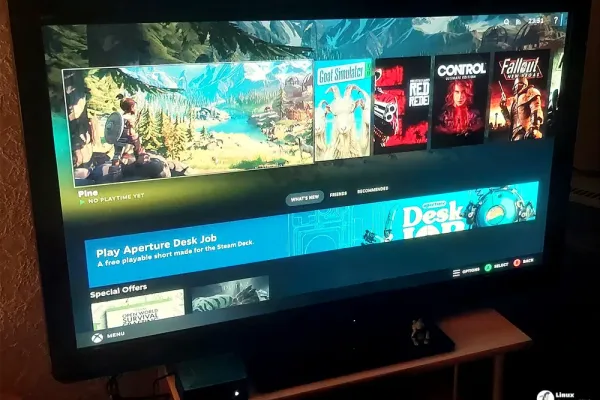
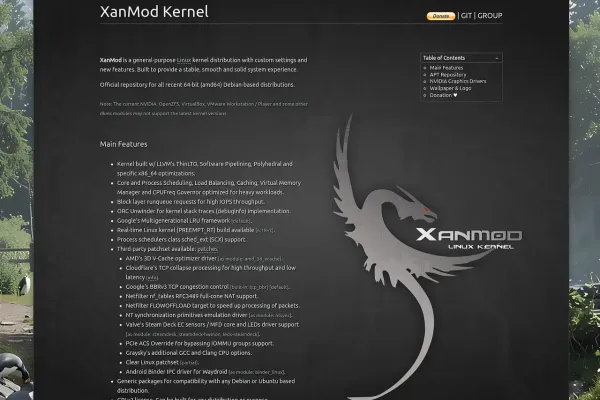
A new version of the Liquorix Kernel 6.18-11 has been released, bringing low-latency tweaks, latency-driven improvements, and an optional Docker build pipeline to Debian, Ubuntu, and Arch systems. For most users, the official install script can be used to easily install a drop-in replacement kernel with reduced input latency without any manual configuration. Power users who prefer a transparent build chain can use Docker to compile their own packages from source, allowing for customization of signing and packaging options. The Liquorix kernel brings several low-latency features, including Zen Interactive Tuning, Background Hugepage Reclaim, and High-Resolution 1000 Hz Tick, making it a great solution for gaming, audio production, and other interactive workloads.
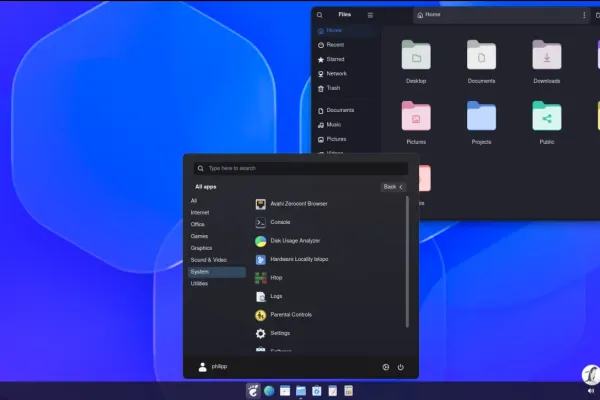
GNOME 49.4 is the latest stable bug-fix release for distributions that ship GNOME 49, promising a smooth transition with under-the-hood tweaks. The bulk of the work in 49.4 involves minor polishing and stability patches to prevent random crashes, including fixes for Evolution, Nautilus, and libadwaita. Upgrading now saves you from potential bugs and annoyances later on, especially if you rely on Evolution for contacts, and ensures you have the latest security patches. To upgrade, make sure your package manager's metadata is fresh, then use the usual upgrade command, log out and back in, and consider a quick reboot to ensure the updated binaries take effect.
Vim 9.2 has introduced several changes that can impact daily workflows, including a revamped completion engine with fuzzy matching and improved performance when dealing with large files. The new version also introduces diff improvements, allowing users to split large files into logical sections for easier comparison. Additionally, Linux users can now enjoy native Wayland clipboard handling and UI integration, although this feature is still experimental. Overall, the update brings incremental improvements that are solid enough for everyday editing, but may not necessitate a massive overhaul of existing settings or workflows.
Zen Browser 1.18.7b finally adds proper ARIA labels to the workspace‑switcher and other toolbar buttons, so screen‑readers can announce each control correctly. The build also forces the session cache to flush before a crash, which stops the blank‑tab nightmare that showed up after Windows forced a reboot. Anyone who relies on accessibility tools should upgrade right away, and even users without those needs will notice a steadier tab restore. The update is tiny, installs cleanly, and doesn’t demand a restart—so there’s really no excuse to stick with the buggy predecessor.
Today's roundup includes a variety of tech product reviews, starting with the SilverStone FLP02 case that brings back vintage vibes with its beige appearance. In terms of gaming peripherals, the Simagic GT Neo steering wheel stands out as an affordable option for budget GT3 racing fans. Meanwhile, several high-end motherboards were reviewed, including MSI's MPG X870E Carbon MAX WIFI and Asus' ROG Crosshair X870E Dark Hero. Additionally, reviews of power supplies and storage devices were also featured, including the FSP Mega GM 1200W PSU and LaCie Rugged SSD4 portable SSD.
Casing: SilverStone FLP02 Review
Gaming: Simagic GT Neo Steering Wheel Review
Motherboards: MSI MPG X870E Carbon MAX WIFI Motherboard Review - Maxing Out Carbon For AM5 Builders, Asus ROG Crosshair X870E Dark Hero Motherboard Review
Power: FSP Mega GM 1200W PSU Review
Storage: LaCie Rugged SSD4 2 TB Portable SSD Review - Iconic Design, Now Fast, WD Green SN3000 1TB SSD Review: A diamond in the rough
The GNOME 50 beta release is now available, marking the start of the UI, feature, and API freezes known as The Freeze. This freeze locks in new features and requires developers to squash any remaining bugs before the final 50 release. Developers are encouraged to test their applications early, especially those that rely on libraries or extensions with breaking changes between beta and stable releases. By testing early, developers can adjust to any necessary updates and ensure a smooth transition when GNOME 50 is released.
The Godot 4.7 development snapshot introduces a built‑in VirtualJoystick node with three practical modes, eliminating the need for external mobile input plugins. DrawableTexture offers a straightforward API for drawing directly onto textures, removing the cumbersome viewport workaround most users relied on. Path3D now includes an optional collider‑snap feature that aligns points to nearby geometry, and the Remote Tree Inspector preserves enum names even when they aren’t exported. Early Vulkan raytracing hooks and a prototype HDR output for Windows also land in this build, giving developers tangible tools to experiment with before the next stable release.
Roundcube 1.7 RC4 has been released with several important bug fixes that resolve minor issues affecting sysadmins. The most notable change is the correction of file permissions, which previously prevented users from writing logs or saving settings due to inadequate folder access. Additionally, the installer now correctly links to download the generated configuration file, making it easier to retrieve config.inc.php without searching through the filesystem. This release candidate addresses two minor issues and is primarily intended to resolve a file permission problem that hindered fresh installs of Roundcube 1.7.
VSCodium has been updated to VS Code 1.109.3, with new language-service improvements for Python and JavaScript, as well as a few UI tweaks. However, users may experience issues with extensions that haven't been updated to work with the latest API. If you're currently running VSCodium 1.108 and want telemetry-free builds, this update is a good reason to upgrade, but if your workflow relies on an outdated extension, it might be better to wait for another week or so. To download the new version without issues, users can find direct links to various installers on the official VSCodium page.
Several security updates have been released for various Debian packages, including ClamAV and Linux kernel versions 5.10 and 6.1. These updates address multiple vulnerabilities that could lead to privilege escalation, denial of service, or information leaks. Additionally, a security update has been issued for PDNS Recursor due to two vulnerabilities that can cause denial of service when processing malformed zone files. Users are advised to upgrade their packages to the latest versions available in order to stay secure.
Debian GNU/Linux 9 (Stretch) and 10 (Buster) Extended LTS:
ELA-1644-1 linux-5.10 security update
ELA-1643-1 linux-6.1 security update
Debian GNU/Linux 10 (Buster) Extended LTS:
ELA-1645-1 clamav new upstream version
Debian GNU/Linux 13 (Trixie):
[DSA 6134-1] pdns-recursor security update
A security issue was found in the Linux kernel for Amazon Web Services (AWS) systems, affecting Ubuntu 20.04 LTS and its derivatives. The issue was fixed by correcting flaws in multiple subsystems, including Nios II architecture, x86 architecture, Block layer subsystem, Cryptographic API, and more. To fix the problem, users need to update their system to specific package versions, reboot, and reinstall any third-party kernel modules that were installed manually.
[USN-8033-4] Linux kernel (AWS) vulnerabilities
Multiple security updates have been announced for AlmaLinux 8, affecting various packages including PHP 7.4, Node.js, GCC toolset binutils, Firefox, and Python 3.12. The updates address several vulnerabilities, including potential code execution, information disclosure, denial of service, and heap buffer overflows. Most of the updates are categorized as Moderate or Important severity, with a few being rated as Critical.
ALSA-2026:2470: php:7.4 security update (Moderate)
ALSA-2026:2421: nodejs:22 security update (Important)
ALSA-2026:2627: gcc-toolset-14-binutils security update (Moderate)
ALSA-2026:2420: nodejs:24 security update (Important)
ALSA-2026:0667: firefox security update (Important)
ALSA-2026:2419: python3.12 security update (Moderate)
ALSA-2026:2422: nodejs:20 security update (Important)
Several security updates are available for Rocky Linux systems. An important libsoup3 update is available for Rocky Linux 10, while other updates include a pcs security update for Rocky Linux 9 and a keylime security update that's critical in severity. Additionally, java-25-openjdk has an important security update available for Rocky Linux 9.
RLSA-2026:2410: Important: libsoup3 security update
RLSA-2026:2452: Important: pcs security update
RLSA-2026:2216: Important: libsoup security update
RLSA-2026:2224: Critical: keylime security update
RLSA-2026:0933: Important: java-25-openjdk security update
A security update for python-eventlet is available for Red Hat OpenStack Services on OpenShift 18.0, which has been rated as having a moderate security impact by Red Hat Product Security. The update addresses vulnerabilities in the package. Meanwhile, Red Hat OpenShift Container Platform release 4.12.85 is also now available with bug fixes and security updates, although it's considered to be of low security risk. This latter update includes enhancements and adds new features for the platform.
RHSA-2026:1959: Moderate: Red Hat OpenStack Services on OpenShift 18.0 (python-eventlet) security update
RHSA-2026:2064: Moderate: OpenShift Container Platform 4.12.85 bug fix and security update
A security update for Fedora 43 is available, which includes updates to the linux-sgx package. The linux-sgx package provides Intel Linux SGX SDK and Platform Software, allowing developers to create and debug Intel SGX enabled applications in C/C++. The update addresses several CVEs related to nodejs modules used by the pccs daemon.
Separately, a security update for Fedora 43 is available for the python-aiohttp package. This update resolves an issue with test_send_compress_text_notakeover on s390x and closes bug #2434949.
Fedora 43 Update: linux-sgx-2.26-34.fc43
Fedora 43 Update: python-aiohttp-3.13.3-4.fc43
2026-02-13
The latest point release of the Linux Kernel 6.12 series has arrived, bringing a few focused fixes that address subtle bugs in areas like virtual socket tests and VLAN packet handling in tunnels. The patches aim to improve the kernel's networking and storage subsystems by ensuring accurate data storage, streamlining io_uring reads for better async performance, and providing clearer error messages when packets are dropped due to VLAN tags.
KDE Frameworks 6.23.0 has been released to improve Baloo indexing and overall memory safety, with a focus on cleaning up the file-indexing pipeline and tightening ownership rules across core components. The update also includes changes to Bluez Qt and Breeze icons, such as a new "update-busy" state and color-aware kdeconnect-symbolic assets that respect dark themes. LeakSanitizer has been enabled in the release to catch memory bugs before they ship, although this may result in a modest increase in build time for some projects. Developers who rely on Baloo should consider upgrading to 6.23.0, but those using older Qt versions will need to upgrade their packages first.
MariaDB 12.3.1 has been released as a first candidate for its long-term support line, bringing significant changes to the binary log, XML data type, and Oracle-compatibility tweaks. The new binlog implementation embeds it inside InnoDB, reducing commit latency by up to 50% and making the binlog crash-safe even with relaxed flush settings. To enable this feature, users must add a specific directive to their my.cnf file, but should not treat this as a production release due to potential replication issues until at least one point release is available. The update also brings new features in MariaDB 12.2.2, including expanded Oracle compatibility and improved JSON handling, making it a safer upgrade for those already on the 12.1 series.
Zen Browser 1.18.6b moves overflowing extensions to a row below the address bar in single‑sidebar mode, clearing up a crowded UI. The program now stores its Linux configuration under ~/.config/zen and respects XDG standards while still supporting the legacy folder if it exists. Crash recovery has been tightened so unpinned tabs stay closed when “Restore previous session” is disabled, and bookmark syncing with Mozilla accounts finally functions reliably. A new --blank-window command‑line switch opens a clean window without any pinned tabs or restored spaces, which is handy for testing or starting fresh.
Today's reviews cover various hardware components, including cases, cooling systems, displays, graphics cards, input devices, power supplies, and storage solutions. The Sama V62 White ATX case was reviewed by PC Inquisitor, while Arctic's MX-7 thermal paste was compared to its predecessors in an OCInside.de review. Several reviews of the MSI GeForce RTX 5090 Lightning Z were published, highlighting its high performance, cooling capabilities, and power consumption, which reaches up to 1000 W. Additionally, other products such as the COUGAR Revenger Pro gaming mouse, ASRock's Steel Legend SL-850P PSU, and Micron's 3610 SSD were reviewed in articles from various websites.
Casing: Sama V62 White ATX Case Review
Cooling: Arctic MX-4 vs MX-6 vs MX-7 Thermal Paste Review
Displays: Asus ROG Strix XG27JCG 27-inch 5K gaming monitor review: Performance that raises the bar
Graphics Cards: MSI GeForce RTX 5090 Lightning Z review: RTX 5090 Ti, anyone?, MSI GeForce RTX 5090 Lightning Z review – Lightning-fast and thirsty unicorn in battle against NVIDIA's clock speed barriers, MSI GeForce RTX 5090 Lightning Z Review - Up to 1000 W, MSI GeForce RTX 5090 Lightning Z 32 GB GPU Review: The Beast Unleashed, MSI GeForce RTX 5090 Lightning Z review
Input: COUGAR Revenger Pro 4K Gaming Mouse Review
Power: ASRock Steel Legend SL-850P 850W PSU Review
Storage: Micron 3610 2TB SSD Review - DRAMless QLC at 11,000 MB/s, PNY Duo Link V3 flash drive review: Type-A and Type-C to maximize compatibility
Remi Collet has released new versions of PHP, including 8.5.3 and 8.4.18, for RHEL, Fedora, Rocky, and Alma based distributions. These packages are available from the remi-modular repository, which allows users to pull RPMs or run them as Software Collections alongside their system PHP. Using Remi's repo is beneficial because it provides access to more modern versions of PHP with new features like JIT improvements and newer extensions, whereas the default distribution PHP may be outdated. Installing Remi's PHP can solve compatibility issues that arise when a legacy application requires newer PHP features but the system PHP version is too old.
Rust 1.93.1 is a point release that undoes three regressions introduced in 1.93.0: it stops the compiler from crashing when rustfmt encounters new keywords, silences a Clippy false‑positive on implicit dereference field access, and fixes a file descriptor leak on the wasm32‑wasip2 target. Updating via rustup update stable fetches the patched binaries and can be verified with rustc --version. The ICE and noisy lint warnings have been known to break CI pipelines, while the wasm leak caused “too many open files” errors in long‑running services. In short, if rustfmt, Clippy, or wasm builds are part of the workflow, installing 1.93.1 is the only sensible move.
Debian has released several security advisories to address vulnerabilities in various packages, including HAProxy, PostgreSQL, and Nginx. The advisory for HAProxy (DSA-6130-1) warns that an attacker can cause a denial-of-service attack by sending specially crafted data, and recommends upgrading to version 3.0.11-1+deb13u2. Meanwhile, multiple security issues were discovered in PostgreSQL (CVEs 2026-2003-2006), which may result in memory disclosure or code execution, and the advisory recommends updating to version 17.8-0+deb13u1 for the stable distribution or 15.16-0+deb12u1 for the oldstable distribution. Nginx has also been updated (DSA-6131-1) to fix a vulnerability that made it possible for an attacker to inject malicious code into upstream TLS servers, and users are recommended to upgrade to version 1.22.1-9+deb12u4 or 1.26.3-3+deb13u2.
[DSA 6130-1] haproxy security update
[DSA 6133-1] postgresql-17 security update
[DSA 6132-1] postgresql-15 security update
[DSA 6131-1] nginx security update
The Ubuntu Security Notice USN-8034-1 addresses vulnerabilities in the Linux kernel (NVIDIA Tegra) on Ubuntu 22.04 LTS and Ubuntu 20.04 LTS, which could be exploited by an attacker to compromise the system. USN-8033-3 fixes vulnerabilities in the Linux kernel (FIPS) affecting Ubuntu 22.04 LTS, which could be used by an attacker to compromise the system. USN-8033-2 addresses multiple security issues in the Linux kernel (Real-time) on Ubuntu 22.04 LTS, including improper initialization of CPU cache memory and potential information leakage due to AMD processor flaws. Additionally, multiple security notices address various vulnerabilities in different software packages, including HAProxy, nginx, MUNGE, node-dottie, and libpng, which could be exploited by attackers to compromise systems or steal sensitive information.
[USN-8034-1] Linux kernel (NVIDIA Tegra) vulnerabilities
[USN-8033-3] Linux kernel (FIPS) vulnerabilities
[USN-8033-2] Linux kernel vulnerabilities
[USN-8033-1] Linux kernel vulnerabilities
[USN-8031-1] Linux kernel (GCP) vulnerabilities
[USN-8028-2] Linux kernel (Real-time) vulnerabilities
[USN-8030-1] Linux kernel (GCP) vulnerabilities
[USN-8029-1] Linux kernel vulnerabilities
[USN-8025-1] .NET vulnerability
[USN-8035-1] libpng vulnerabilities
[USN-8037-1] DNSdist vulnerabilities
[USN-7990-4] Linux kernel (Oracle) vulnerabilities
[USN-7988-5] Linux kernel (Azure) vulnerabilities
[USN-8039-1] libpng vulnerability
[USN-8036-1] HAProxy vulnerability
[USN-8038-1] nginx vulnerability
[USN-8040-1] MUNGE vulnerability
[USN-8041-1] Dottie vulnerability
Several updates have been released for SUSE Linux, including security patches for various packages. Key updates include fixes for the Linux Kernel and important security updates for nvidia-modprobe.cuda and glib2. Additionally, there is a moderate update for assimp and multiple security updates for nodejs20, xorg-x11-server, and helm. The specific updates also cover issues with python-wheel, micropython, snpguest, rustup, sccache, libmunge2, and other packages.
SUSE-SU-2026:0459-1: important: Security update for nvidia-modprobe.cuda, nvidia-open-driver-G06-signed, nvidia-persistenced.cuda
SUSE-SU-2026:0457-1: important: Security update for nodejs20
SUSE-SU-2026:0456-1: important: Security update for nvidia-modprobe.cuda, nvidia-open-driver-G06-signed, nvidia-persistenced.cuda
SUSE-SU-2026:0458-1: important: Security update for glib2
SUSE-SU-2026:0460-1: important: Security update for python-wheel
openSUSE-SU-2026:0044-1: important: Security update for tcpreplay
openSUSE-SU-2026:20199-1: low: Security update for micropython
openSUSE-SU-2026:20198-1: important: Security update for xorg-x11-server
openSUSE-SU-2026:10182-1: moderate: snpguest-0.10.0-2.1 on GA media
openSUSE-SU-2026:10177-1: moderate: gnutls-3.8.12-1.1 on GA media
openSUSE-SU-2026:10180-1: moderate: rustup-1.28.2~0-3.1 on GA media
openSUSE-SU-2026:10181-1: moderate: sccache-0.13.0~1-2.1 on GA media
openSUSE-SU-2026:10178-1: moderate: libmunge2-0.5.18-1.1 on GA media
SUSE-SU-2026:0471-1: important: Security update for the Linux Kernel
SUSE-SU-2026:0474-1: important: Security update for the Linux Kernel
SUSE-SU-2026:0475-1: important: Security update for the Linux Kernel
SUSE-SU-2026:0476-1: important: Security update for python-azure-core
SUSE-SU-2026:0480-1: important: Security update for helm
openSUSE-SU-2026:0045-1: moderate: Security update for assimp
Oracle Linux has released several bug fix and enhancement updates for various packages, including .NET Core, Node.js, PHP, and gcc-toolset-14-gcc. These updates address security vulnerabilities and provide new features for Oracle Linux 8, 9, and 10. The updates include fixes for CVEs such as CVE-2025-61140, CVE-2025-40269, and CVE-2026-22998, as well as improvements to the .NET Core and Node.js packages. Additionally, some of these updates add support for Oracle Linux on specific architectures.
ELBA-2026-2479 Oracle Linux 10 .NET 10.0 bug fix and enhancement update
ELBA-2026-2475 Oracle Linux 10 .NET 9.0 bug fix and enhancement update
OLAMSA-2026-0003 Critical: Oracle Linux 9 ol-automation-manager security update
OLAMSA-2026-0002 Critical: Oracle Linux 8 ol-automation-manager security update
OLAMSA-2026-0001 Critical: Oracle Linux 8 ol-automation-manager security update
ELBA-2026-2478 Oracle Linux 9 .NET 10.0 bug fix and enhancement update
ELBA-2026-2477 Oracle Linux 8 .NET 10.0 bug fix and enhancement update
ELBA-2026-2476 Oracle Linux 9 .NET 9.0 bug fix and enhancement update
ELBA-2026-2264-1 Oracle Linux 8 kernel bug fix update
ELSA-2026-2421 Important: Oracle Linux 8 nodejs:22 security update
ELSA-2026-2470 Moderate: Oracle Linux 8 php:7.4 security update
ELSA-2026-2422 Important: Oracle Linux 8 nodejs:20 security update
ELBA-2026-2474 Oracle Linux 8 .NET 9.0 bug fix and enhancement update
ELBA-2026-2415 Oracle Linux 8 libselinux bug fix and enhancement update
ELBA-2026-2411 Oracle Linux 8 kexec-tools bug fix and enhancement update
ELBA-2026-2418 Oracle Linux 8 gcc-toolset-14-gcc bug fix and enhancement update
ELBA-2026-2471 Oracle Linux 8 .NET 8.0 bug fix and enhancement update
ELSA-2026-1608 Moderate: Oracle Linux 7 glib2 security update
ELSA-2026-0925 Important: Oracle Linux 7 libsoup security update
Several security updates have been released for AlmaLinux, including kernel and pcs package updates. The kernel updates address multiple vulnerabilities, such as memory corruption and use-after-free bugs, while the pcs update fixes a prototype pollution issue in the lodash library. Additionally, keylime and libsoup3 packages have also received security updates to fix an authentication bypass vulnerability and a stack-based buffer overflow issue, respectively.
ALSA-2026:2282: kernel security update (Moderate)
ALSA-2026:2438: pcs security update (Important)
ALSA-2026:2410: libsoup3 security update (Important)
ALSA-2026:1377: image-builder security update (Moderate)
ALSA-2026:2212: kernel security update (Moderate)
ALSA-2026:2452: pcs security update (Important)
ALSA-2026:2224: keylime security update (Critical)
Several important security updates are available for Rocky Linux 8. These updates include an RLSA-2026:1240 update for fence-agents, which addresses vulnerabilities with a detailed severity rating. Other updates include RLSA-2026:2470 and RLSA-2025:15687 for PHP versions 7.4 and 8.2 respectively, as well as RLSA-2026:2422 and RLSA-2026:2421 for Node.js versions 20 and 22.
RLSA-2026:1240: Important: fence-agents security update
RLSA-2026:2470: Moderate: php:7.4 security update
RLSA-2026:2422: Important: nodejs:20 security update
RLSA-2025:15687: Moderate: php:8.2 security update
RLSA-2026:2421: Important: nodejs:22 security update
There are several security updates available for various Red Hat products. The kernel has received updates for Red Hat Enterprise Linux 9.4 Extended Update Support and Red Hat Enterprise Linux 8.2 Advanced Update Support, both rated as Moderate in security impact. Additionally, updates have been made available for gcc-toolset-14-binutils on Red Hat Enterprise Linux 8, libsoup on Red Hat Enterprise Linux 7 Extended Lifecycle Support, and osbuild-composer on multiple versions of Red Hat Enterprise Linux.
RHSA-2026:2594: Moderate: kernel security update
RHSA-2026:2627: Moderate: gcc-toolset-14-binutils security update
RHSA-2026:2628: Important: libsoup security update
RHSA-2026:2664: Moderate: kernel security update
RHSA-2026:1958: Important: Red Hat OpenStack Services on OpenShift 18.0 (openstack-keystone) security update
RHSA-2026:2685: Moderate: osbuild-composer security update
RHSA-2026:2686: Moderate: osbuild-composer security update
A security update for Fedora 43 has been released, which includes a new version of the libssh library (version 0.11.4-1.fc43). This update fixes several security issues, including CVEs related to path traversal, denial of service, and buffer underflow vulnerabilities.
[SECURITY] Fedora 43 Update: libssh-0.11.4-1.fc43
[ Archive ]