Zed Editor 1.21.0 ships with faster rendering and a wider AI stable
Six days after the previous build, Zed Industries rolls out 1.21.0 with snappier scrolling, a language-server command picker, and a big expansion of model support that now reaches Claude Opus 5.5 and OpenAI's GPT-6 lineup.
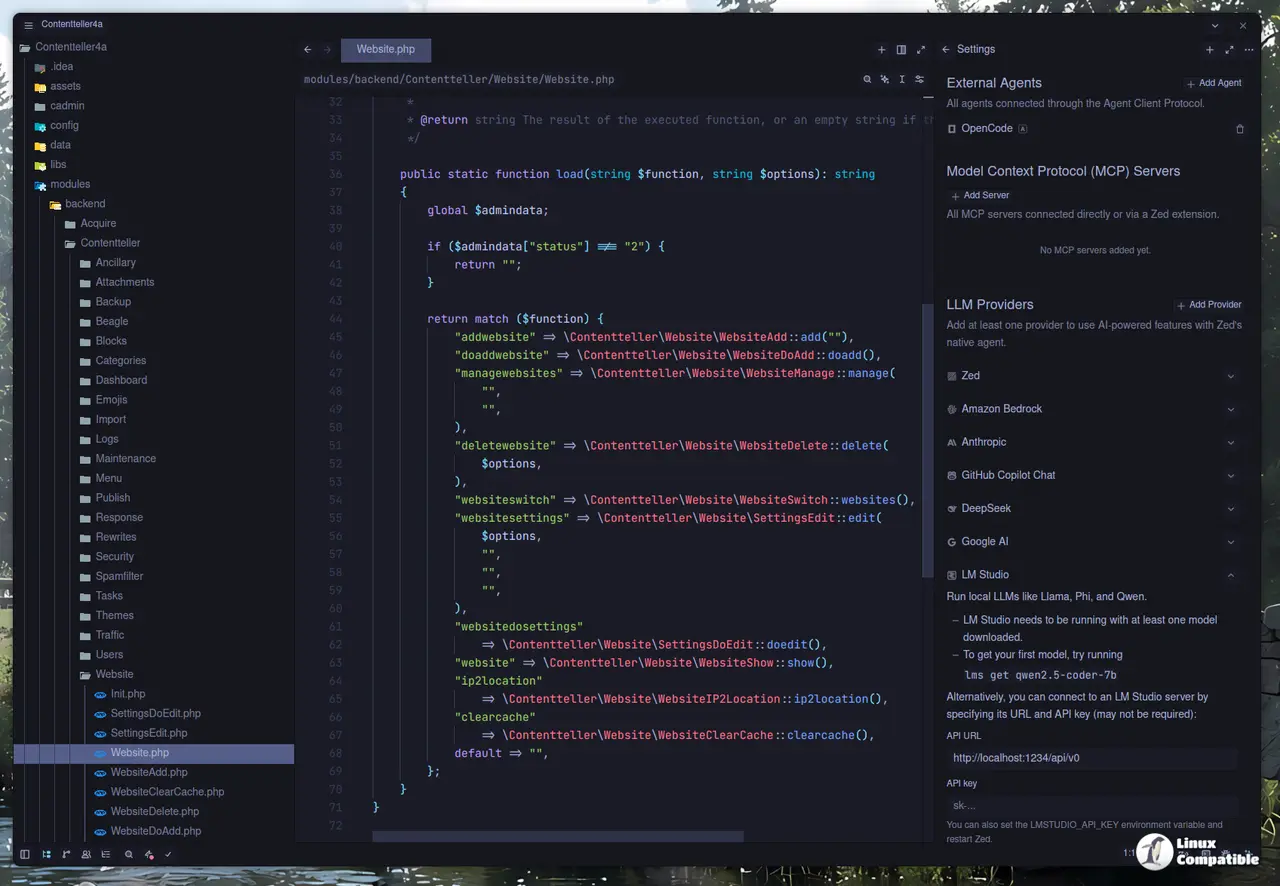
Zed Industries shipped Zed Editor 1.21.0 today, just six days after the previous stable release. The update delivers faster rendering for syntax-heavy files and one of the widest expansions of AI model support the project has rolled out. Among the additions are Claude Opus 5.5, OpenAI's GPT-6 "Astra," "Sol," and "Luna," a DeepSeek Flash 4.1, and SuperGrok sign-in.
Six days between stable builds is genuinely brisk. It's a pace that has defined Zed since the start and one that only intensified after the company shipped its first 1.0 in April 2026. Nathan Sobo founded Zed after GitHub shut down Atom in 2022. He built this editor to be fast and cooperative, and the release notes reflect a company that clearly wants to stay fast. Roughly 117 commits went back to the main branch for this one.
A bigger AI stable
The bigger story here is models. Zed keeps adding providers, and this release is no different.
SuperGrok subscribers can now sign in directly and use Grok models through the Agent Panel. That's a tie-in to Elon Musk's X super subscription tier, so if you're already paying for that, Grok just gained a new home.
On the bring-your-own-key front, Zed now accepts your own Anthropic key for Claude Opus 5.5. OpenAI keys work for GPT-6 Sol, GPT-6 Luna, and GPT-6 Astra. BYOK matters for a certain breed of developer: it keeps traffic off Zed's hosted inference and dodges vendor lock-in, at the cost of handling your own API keys.
The rest of the additions are more modest. DeepSeek Flash 4.1 is now supported, and Z.ai's GLM models got added to the Mistral provider, along with a fix for the thinking-mode toggle on Mistral Small and Medium.
There's also a setting to stop your computer from idling to sleep while agent threads run. Useful if you let long-running AI tasks chime along overnight. Zed added controls for the Threads Sidebar width and a way to rename the active Terminal Thread straight from the Agent Panel.
The rest of the release
Rendering is where you'll notice the change first. Zed improved rendering in syntax-highlighted files, especially when the minimap is turned on, and sped up how Markdown code blocks render across the Agent Panel, hover popovers, and the Markdown preview.
If you work in large files packed with highlighting, or projects heavy in documentation, these tweaks mean smoother scrolling and less input lag. Not earth-shattering, but those are exactly the interactions that grind you down over a long session.
The language-server tooling picked up a command picker, and servers can now open files and URLs through showDocument requests. You can also trigger language-server actions straight from inlay hints.
On the editor side, there's a new option to decide whether blank lines in a multiline selection get commented, plus a dedicated theme setting for CodeLens text. A menu shortcut (Linux and Windows) and shift-f10 (every platform) now open the context menu for a selected entry in the Project Panel.
It's a mixed bag of granular refinements. But that granularity is kind of the point for a project of this age: Zed can't out-feature VS Code on volume, so it out-polishes it on detail.
Roughly 30 bug fixes rode along, and they lean toward the annoying rather than the catastrophic. Folders staying highlighted after you drag them. macOS windows reopening on the wrong Space. Crashes while discovering a Python interpreter, or while typing into an empty merge-conflict pane. There's also a Linux startup crash tied to missing XKB keyboard files and intermittent "database is locked" errors when sharing a database across multiple Zed instances.
These are the kinds of bugs you don't report until they bite you three times in a week.
The release velocity sits against a company that has grown along with its ambitions. Zed raised a $32 million Series B in August 2025, led by Sequoia Capital, bringing its total past $42 million. It open-sourced the editor in January 2024, building on the Tree-sitter parsing library its founders co-created.
Around this same window, Zed pushed its "Delta" roadmap forward with a public beta, an operation-level version control system built on CRDTs and called DeltaDB. The pitch is to keep conversations about code durably linked to the code itself, a direct shot at the snapshot-based limits it sees in Git.
The AI direction hasn't gone unnoticed. In March 2026, Kristoffer Grönlund released Gram, a fork that strips out Zed's AI and chat features, citing objections to both the approach and the terms of use. That's a useful signal that the tension over AI-native tools runs deep, and it's the kind of thing to watch as Zed keeps leaning into integrations like this one.
Zed 1.21.0 is available for Linux, macOS, and Windows, in both native installers and remote-server builds for cloud workflows.
Head here to download the release from the GitHub releases page.


