Amethyst Mod Manager v2.6.3 ships with a two-line changelog
The native Linux mod manager fixed two installation bugs, and did it in the fewest words possible.
Amethyst Mod Manager v2.6.3 is out, and the changelog is exactly two lines. Both fixes are the unglamorous sort: broken Nexus domain mappings during Wabbajack installs, and deployment getting wedged by a stray stock game folder. Not exactly headline material. That's precisely what you want in a reliability patch, though.
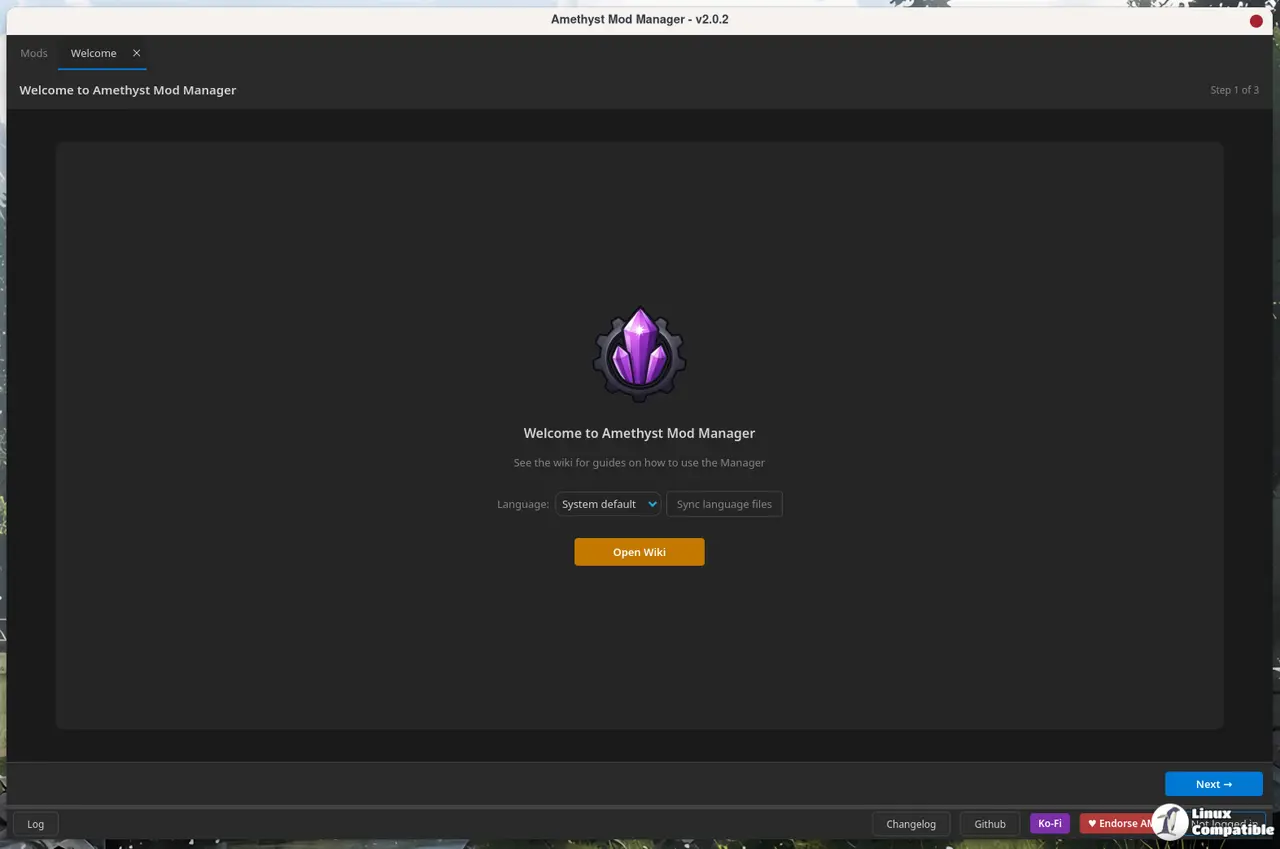
Amethyst has quietly become one of the most-used mod managers among Steam Deck owners, and it earned that spot partly because it runs natively on Linux and talks straight to NexusMods without leaning on a Windows compatibility layer. Since launching in February 2026, the project has gathered roughly 1,400 GitHub stars, 71 forks, over 3,300 commits, and nearly 900 NexusMods endorsements. That's a fast climb for a project that's basically one person working under the GPL-3.0 license.
Keep in mind that those two lines of fixes sit on top of a fairly feature-dense recent history. The last big release, v2.6.0 on 29 October, added a plugin system, a headless API, support for Nivalis Nights and Prey (2017), Steam overlay loading, and portable profile saves. Two weeks later came v2.6.1, a pure rebuild to fix a Flatpak launch issue that the developer described plainly as "essentially just a version bump." The betas rolling through early November keep the treadmill going with a Hexium browser, a Fallout: New California install wizard, Graveyard Keeper 2 support, and a Nexus v3 API update.
So why stop at two lines for 2.6.3?
A feature-heavy past, a quiet patch
Let's break down the two lines, since they're worth understanding.
The Nexus domain issue is the more interesting of the pair. Wabbajack modlists pull in hundreds of mods, many hosted on NexusMods under region-specific or premium-domain download URLs. Amethyst has to map a collection's expected Nexus domain to the actual download endpoint, and get that mapping wrong and installs either fail outright or reach for the wrong host entirely. This patch repairs it, so Wabbajack lists hosted through Nexus install cleanly again.
The second fix is more of a housekeeping win. Amethyst stages mods in a staging directory before deploying them into the game folder. If an unmodified stock game folder ends up nested inside that staging area, the deploy step was refusing to go ahead, probably tripping over a path-collision guard. With 2.6.3, deployment simply proceeds when such a folder is present.
Both are edge cases you only hit after someone actually tries the workflow, which is exactly why they matter.
It's worth pausing on one side effect of all this. In some Steam Deck circles, Amethyst has become a reason to install SteamOS in the first place rather than just a mod manager bolted onto an existing setup. That speaks to a strange amount of trust people place in a tool built almost entirely by one developer. Which brings us to the more uncomfortable question.
A solo project with a ceiling
Nearly every commit and every release in the repository traces back to a single GitHub account, ChrisDKN. A handful of contributors handle tooltips, Wayland fixes, translations, and the AUR package, but the weight of the thing falls on one person. That fragility has been the recurring worry in coverage of Amethyst. One sick day, and the repo stalls.
The developer has been candid about the workload. Back around v2.5.0, Chris explained that an influx of feature requests was getting to be too much to carry even though he appreciated the interest.
So a terse, stable patch might read like a well-earned breather. And it probably is.
The project itself frames the goal plainly enough, describing Amethyst as a manager "designed to ease the painpoints of modding on Linux while having a familiar easy to use interface." On paper that's a strong pitch, and it's one the numbers back up.
Stack and scope, briefly
Under the hood it's Python and PySide6 (Qt for the GUI), with a Rust extension called amethyst_filegraph handling the performance-heavy file operations. That's also why building from source needs a Rust toolchain alongside Python. The manager detects games across Steam, Heroic, Lutris, and Fogus, sets up Proton prefixes on its own, and offers three deployment methods: symlinks, hardlinks, or a virtual file system.
Then there's the headless API, which is arguably the most useful feature for power users. It speaks JSON-RPC 2.0 over newline-delimited JSON, so external apps, launcher wrappers, and scripts can drive most of the manager's functions without importing Python modules or firing up a GUI. You can list games, manage profiles, authenticate to Nexus, install collections, sort load order with LOOT, and launch games, in batch operations of up to 256 items. That's a lot of surface area for someone wanting to script their setup.
Amethyst claims near-100 games out of the box, with the wiki listing around 95 explicitly. Coverage spans all the Bethesda titles, Cyberpunk 2077, Baldur's Gate 3, the RE Engine horror games, Elden Ring and Nightreign, plus a grab bag of smaller picks from Stardew Valley to Valheim and RimWorld. A custom-game editor stretches the effective list well beyond what ships installed.
Where to grab it
You can install Amethyst as an AppImage with an auto-updater, a self-hosted Flatpak, an AUR package, or straight from source. The AppImage installer runs a single curl-and-bash command, and the app will prompt you to update on launch.
A note on the Flatpak route: installing from the bundle skips the 32-bit compat extensions that Windows (Proton/Wine) tools need. Those come in automatically on first launch or by hand. The app may also ask for your OS keyring password to store your Nexus API key, which it keeps out of plaintext files. There's no uninstall script yet, so removing it means clearing files by hand from ~/.config/AmethystModManager and a few sibling folders.
If you'd rather support the developer directly, Chris runs a Ko-Fi. The project takes no donations through NexusMods and stays firmly under GPL-3.0.
Head here to the GitHub release page.


