Amethyst Mod Manager v2.6.0 Adds a Plugin System and a Headless API
The native Linux mod manager's most ambitious update yet opens the door to automation and third-party tools, though the workload still rests on a single developer.
Amethyst Mod Manager, the native Linux tool that has quietly become a default for Steam Deck modders, just shipped its most ambitious release to date. ChrisDKN put out version 2.6.0 today, bringing a real plugin system and a headless API that lets external scripts drive the whole thing.
Both features answer the same underlying question: how much can a single open-source project do before the person running it has to go buy a coffee?
That isn't rhetorical. Amethyst has grown at a pace that's unusual for a hobby project. Since its February 2026 debut, it has pulled in roughly 1,300 GitHub stars, 64 forks, over 3,255 commits, and more than 800 endorsements on NexusMods,mostly from ChrisDKN working solo.
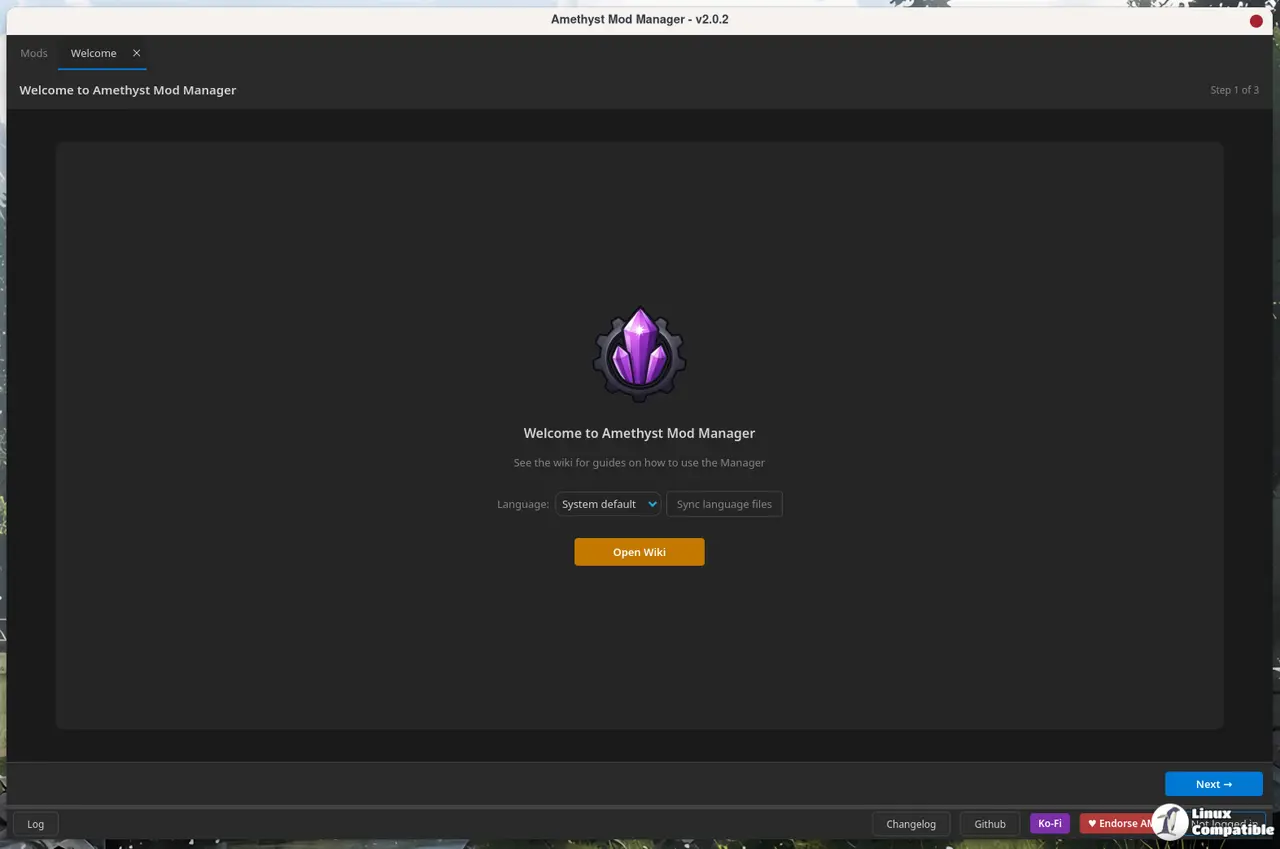
For those unfamiliar, Amethyst is a native Linux mod manager, meaning it never needs Wine or Proton to sit on top of a Windows app. It borrows the dual-panel layout of Mod Organizer 2 and the one-click NexusMods integration that Vortex made popular, then adds a Linux-native virtual filesystem deploy method to dodge much of the symlink headache that usually plagues that whole corner of the internet. It now supports nearly 100 games, spanning Bethesda titles, Cyberpunk 2077, Baldur's Gate 3, and a spread of UE5 releases.
Two headline features
The plugin system is the more visible change, and honestly it's a real one this time. Earlier versions had a thin notion of plugins, enough to add wizard-tool entries and nothing more. Version 2.6.0 reworks that into something genuinely extensible. Plugins live in the ~/.config/AmethystModManager/Plugins folder and are reached through a Plugins button in the top-right corner, next to the settings and notification icons. A browser lives there too, pulling additions from the project's "resources" branch with room to add your own repos.
Two plugins ship out of the box. The Steam Workshop browser manages subscribed mods or pushes them straight into the manager, and they surface in the modlist panel. A legacy installer plugin targets older C#-scripted .fomod and .omod files that earlier engines couldn't handle. Both are marked "Work in progress" on the wiki, which is ChrisDKN's way of signaling the foundation is down and the rest is coming.
The headless API is where things get more interesting for power users.
This mode lets external apps and scripts call most of Amethyst's functions directly, without importing Python modules or launching the Qt GUI. It effectively turns a desktop app into a programmable backend. Open the project's docs/headless.md and you'll find the public boundary is JSON-RPC 2.0 over newline-delimited JSON. Amethyst reads one JSON value per line from stdin and writes one response per line to stdout, sending diagnostics to stderr so clients only need to parse stdout.
It exposes Protocol version 1, which covers a staggering amount: game and profile state, Nexus OAuth, catalogue discovery, managed downloads, full profile lifecycles, collection install and resume, Wabbajack gallery operations, and managed game launch. Batch operations top out at 256 items per call, many jobs are cancellable or pausable, and when input ends the service waits for background jobs to finish before exiting. That means a client dropping the connection doesn't leave a profile half-mutated.
Head here to the docs for the full method catalogue. It's enormous, spanning tools like Synthesis, Wrye Bash, xEdit, and SMAPI, alongside saves and downloads.
Everything else in the batch
New games join the roster, if you're keeping score. Nivalis Nights gains support, and Prey (2017) lands via pull request #751. Not exactly a parade, but a tidy pair on top of a list that already runs close to 100 titles.
There's also a pile of smaller changes. Steam overlay loading now happens automatically for direct game launches, including VFS deployments. Thunderstore share codes can be imported through the dropdown, saves travel with a profile by default during export, and a LOOT report button landed in the plugins tab. Every plugin panel tab now supports "Open as tab," and script extender wizards default to the modlist instead of the game folder. Seven bug fixes round it out, including one for restore failing when a profile-save state is empty, another for Wabbajack lists ignoring manually added folders, and yet another for game-folder text files vanishing from the Text Files tab.
The broader Linux modding tooling space is crowded enough on its own. There's ammo, Fluorine Manager, the official NexusMods.App, r2modmac, and community movers like GoodbyeWindows for people hauling existing MO2 setups over. Amethyst fits in beside all of that, and it's arguably carved out a corner that was largely empty, since native support is still rare enough that the Steam Deck crowd keeps returning to it.
It's a solid release, though let's be honest about the context. Amethyst has been trending on GitHub and gets cited in Steam Deck communities as a reason to switch to SteamOS, with some users calling it the only mod manager that works natively.
The thing that stands out isn't just the features. It's the velocity. From a February 2026 debut through the Qt UI rework in 2.0.0, VFS deploy in 2.3.0, Wabbajack support in 2.5.0, and now 2.6.0, the release cadence has been relentless. It also revives the recurring "solo developer sustainability" question, since nearly all the workload still rests on ChrisDKN. The community bridges gaps through translations via Crowdin, AUR packaging, and NexusMods endorsements, but one person is still the bottleneck.
However, at the same time, that hasn't slowed anything down.
If you want to try it, Amethyst ships through AppImage, Flatpak, and the AUR. The AppImage update path now uses a zsync file instead of re-running the full installer, and the Flatpak remote carries both stable and beta branches, worth keeping in mind, since this release came straight out of the beta series, with v2.6.0-beta.10 dropping the day before on October 28.
Head here to the GitHub release page.


