Ungoogled Chromium 151 ships with 370 security fixes while stripping Google from your browser
The latest community build tracks Google's Stable channel and removes every Google service integration at compile time.
Ungoogled Chromium 151.0.7922.71-1 dropped on GitHub, and it brings everything you want from Google's latest Stable update along with everything you want to leave behind. If you've been looking for a privacy-first Chromium that doesn't phone home, the long wait is finally over.
The project tracks Google's upstream releases almost in lockstep. This build is patched directly from Chromium 151.0.7922.71, which means it ships with the exact same rendering engine, V8 JavaScript implementation, and hardware acceleration paths as stock Chrome. The only difference is what gets gutted at compile time.
The Security Patch
Google just shipped 370 security fixes for Chromium 151 across its Stable channel, making it one of the biggest single updates in the browser's history. Ungoogled Chromium gets all of them. Not a single one gets left behind.
The breakdown includes seven critical vulnerabilities spanning the Skia graphics library, the Dawn Vulkan backend, and ANGLE's OpenGL translation layer. Another ~85 are rated high, with the bulk targeting V8 memory handling, GPU out-of-bounds writes, and WebAuthn flows. You'll find roughly 210 medium-severity issues affecting extensions, autofill, Bluetooth, and WebXR, plus another 60 low-priority fixes scattered across DNS, NFC, and editing routines.
Browser security updates usually vanish into the background until a zero-day makes the nightly news. A 370-vulnerability patch deserves a second look, though. The ANGLE layer alone accounts for over 30 CVEs across every severity tier, which tells you exactly where the codebase is taking the heat as browsers push harder into GPU compute workloads. Chrome for iOS shows up repeatedly in the high and medium tiers too, another reminder that Apple's WebKit constraints create entirely new attack surfaces for Chromium forks.
What Actually Gets Gutted
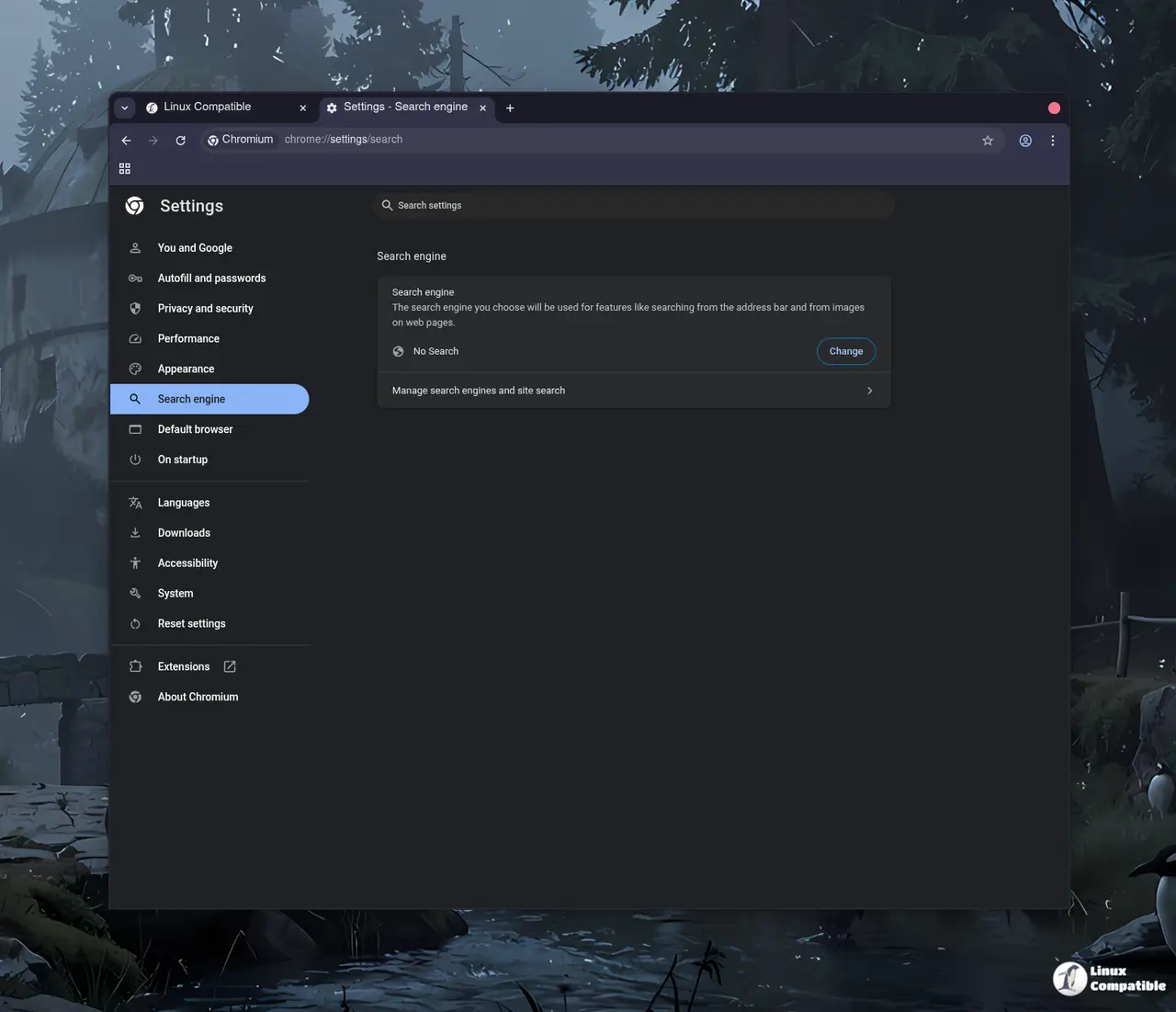
Keep in mind that the ungoogling process is aggressive. Google Safe Browsing is disabled by default. Domain requests to Google services are rewritten using a pseudo-TLD at runtime. Pre-built binaries are stripped from the source tree, and the new tab search button gets pulled in favor of a settings toggle. AI features like Gemini integration are patched out before the code ever compiles. The project's stated philosophy makes this clear: strip the Google dependency first, preserve the Chromium experience second, and only add optional tweaks third.
It's not all seamless, though. A user reported on the project's issue tracker Tuesday that Ungoogled Chromium is scoring noticeably lower on Speedometer 3.1 benchmarks compared to stock Chrome and Brave. I ran the numbers from the thread, and the gap is real. Chrome hit 39.2 on a M1 MacBook Pro. Ungoogled sat at 30.5. The maintainer confirmed the build isn't disabling V8 optimizations, which points to runtime patch overhead and the loss of Google's internal performance tweaks that normally ship with the official binary.
The Linux build is available now. Windows and macOS users will need to wait for the .72 patch, which the project expects to land shortly after Google's staggered Windows and Mac Stable update drops. You can grab it from the project's CI artifacts, pull it through Homebrew, or install it via Flatpak, NixOS, or the various distro repositories. The project itself has been quietly handed off from its original creator Eloston to maintainer Ahrotahn, who published this release with a verified GPG signature. The repository sits at roughly 27,300 stars now, and the automated GitHub Actions pipeline shows no signs of stalling.
If you're running Chrome on Apple's ecosystem, you're probably seeing those iOS-specific fixes whether you like it or not. The fact that you can install the exact same security baseline without the telemetry tax is exactly why the project keeps gaining traction.
Head here to the official GitHub release page. Keep an eye on the upstream issue tracker if you want to track the exact .72 patch timelines for your operating system.


