Valve has pushed SteamOS 3.8.20 to the Beta and Preview channels for the Steam Deck, bundling the fixes already shipped to stable as version 3.8.12. The new update delivers a major Mesa graphics driver release that brings wider ray-tracing performance improvements alongside significantly smarter VRAM management for devices with limited memory. Alongside these graphical upgrades, the stable track resolves lingering issues with Steam streaming in fullscreen Desktop Mode, a rendering bug in Sniper Elite 5, and SD card reader errors on select Legion Go S models.
Valve Pushes SteamOS 3.8.20 Beta to Deck Users on the Heels of Steam Machine Launch
The new update brings ray-tracing improvements and tighter VRAM management to the Beta channel, alongside a suite of fixes already rolling out to stable.
SteamOS 3.8.20 is live for opt-in testers today, landing in the Beta and Preview channels for the Steam Deck. If you're already testing pre-release builds, you'll notice the Mesa graphics stack just got a major bump. VRAM handling has also been rewritten at a lower level, which should matter a lot on hardware running tight on memory.
Keep in mind that this beta also contains everything already shipped to the stable channel as SteamOS 3.8.12. Anyone who wants to skip the testing track gets the same fix list without touching the update menu. The stable release tackles a handful of nagging bugs. Steam streaming was acting up in fullscreen games under Desktop Mode. The main menu in Sniper Elite 5 refused to render on some units. SD card readers on certain Legion Go S models were throwing errors. All of that ships to stable right alongside the new Mesa driver.
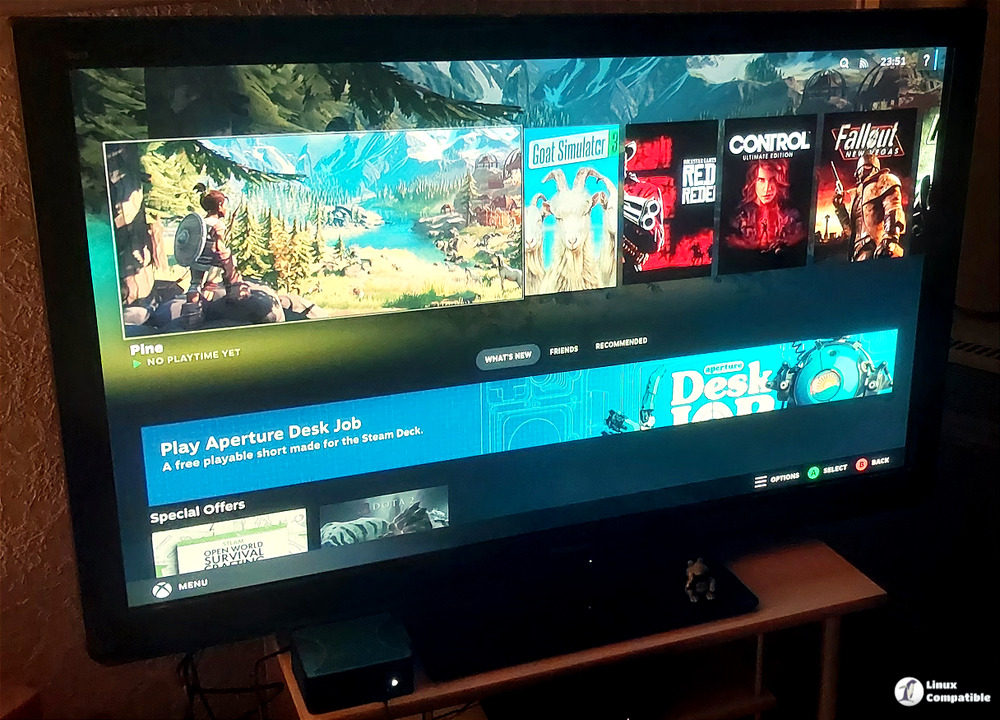
Ray-Tracing and Memory Management
SteamOS has come a long way since Gabe Newell was talking about living-room streaming clients back in 2013. Today, it's running a custom Arch base with a rolling-ish update cadence that actually keeps up with hardware shifts. The headline changes in 3.8.20 are squarely in the graphics department. Valve has pushed a new major Mesa release into the build. That translates to wider ray-tracing performance improvements, plus the usual round of driver tweaks and functionality bumps. More importantly, VRAM management has been overhauled. If you've ever hit stuttering or instability on a Steam Deck with tightly packed textures, this should be meaningful.
It's always a tightrope walk to ship Mesa updates on a schedule like this. You get the performance perks, but you also inherit whatever quirks slip through Mesa's own release cycle. VRAM changes feel like a direct response to the hardware reality of handheld PC gaming in 2026. You don't have 16GB of desktop-grade memory to burn.
Desktop Hardware and the Steam Machine
The timing is worth noting. SteamOS 3.8.20 drops just a day after the new Steam Machine shipped on June 29. Beta users on desktop hardware have already been testing AMD and Intel graphics stacks, and this update will likely shake out more compatibility quirks before Nvidia support finally joins the party. Valve has been clear that Nvidia support isn't coming anytime soon, despite the push for a more open desktop experience. And that's not even the full story for desktop users. The long wait for broad GPU compatibility continues, though the architecture is clearly shifting in that direction.
Opting in is straightforward. Head to Settings > System > System Update Channel and toggle over to Beta or Preview. You'll need to be on a Steam Deck or a supported third-party handheld to officially touch this, though the desktop beta has been quietly open to PC builds since mid-May.
Not exactly a small change for anyone tracking the Linux gaming stack. If you're running a test rig or just want the new Mesa features without waiting for the stable rollout, 3.8.20 is ready now. Just keep an eye on your system after the install. Mesa updates on a custom Arch base can occasionally need a nudge to settle.
Head here to see the full SteamOS release notes and changelog.


