PHP 8.6 Alpha Released, Brings clamp() and First-Class Callable Cache
The PHP team has pushed the first alpha of PHP 8.6.0 to the public repositories for testing. It's a solid list of updates, though you should treat anything in an alpha release with a healthy dose of skepticism until the stable build drops. The headline additions are a new clamp() function, first-class callable caching, and a push to bring the TAILCALL VM to Windows under Clang 19.
Keep in mind that PHP 8.5 is still the current feature release, sitting at 8.5.7 as of June 2026. The 8.6 alpha is where you'll see the experimental tweaks that will likely land in 8.6 or 8.7 depending on how the community reacts.
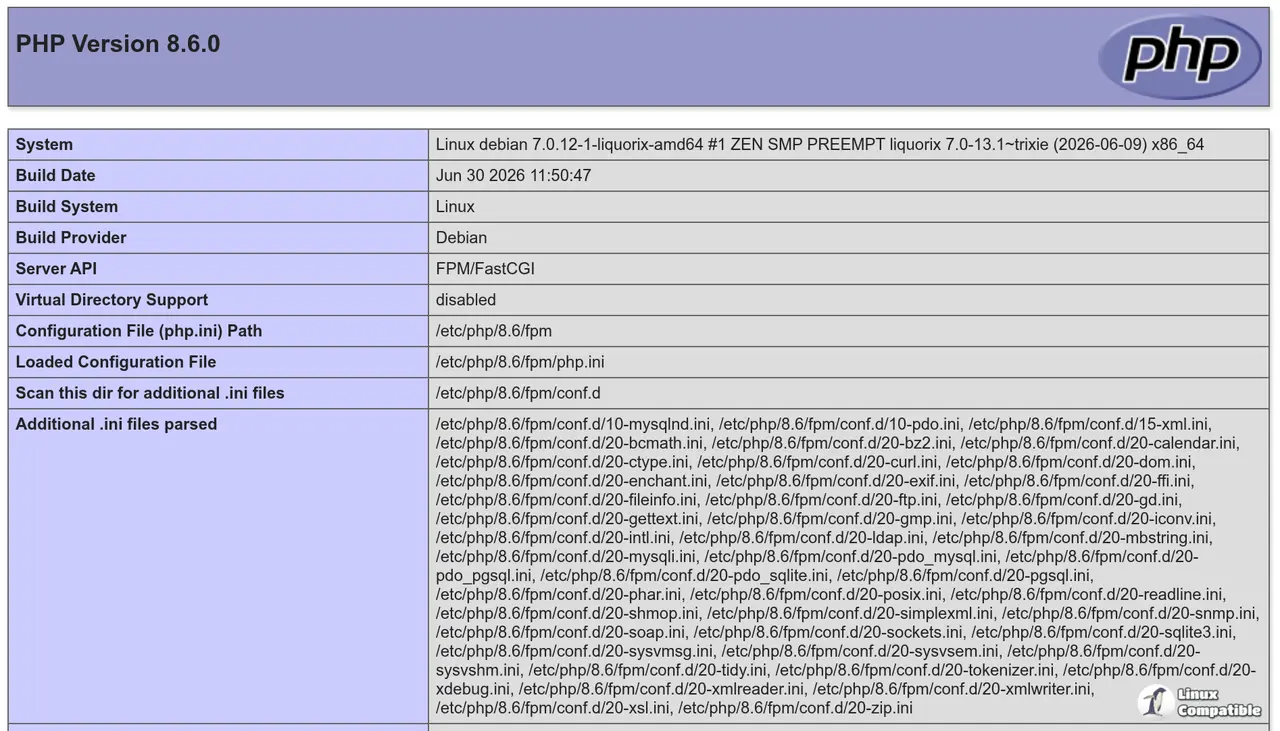
What's in the box
The clamp() function is probably the most useful addition here. It caps a value between a minimum and maximum bound, which is a pattern developers end up writing in a loop anyway. Before this, you were stuck nesting min() and max() calls or writing your own helper.
On the performance side, the team added a cache for first-class callable instances. If you're creating callables repeatedly within a single request, the engine will now share those instances instead of allocating a new one every time. It's a small win, but it adds up in tight loops.
The TAILCALL VM got a Windows build when compiling with Clang 19 or newer on x86_64. This leverages compiler tail-call optimization at the VM level, which reduces stack overhead for recursive patterns. If you're not compiling with Clang on Windows, you won't see this change yet.
There's also a deprecation for nullable return types on __debugInfo(). The function is meant to return an array, so making the return type nullable was never really the right approach. You'll want to update your code if you're relying on this pattern.
The bigger picture
PHP still powers roughly 70.8% of all websites whose server-side language is known, according to W3Techs data from June 2026. That's three out of every four sites on the web. Facebook, Wikipedia, WordPress.com, Baidu, VK, and Archive.org all run on it. The "PHP is dead" meme persists in developer circles, but the numbers don't lie.
The ecosystem is mature. WordPress alone drives adoption on over 43% of the internet, but Laravel, Contentteller, Drupal, and Shopify have all built serious, modern codebases on top of PHP. If you're starting a new project today, you're getting type safety, attributes, enums, and a JIT compiler that's actually production-ready for compute-bound workloads.
Security is also a priority. The team patches CVEs monthly across all supported branches. The 8.4 and 8.3 branches are actively maintained, while 8.5 gets full feature updates. If you're still running 7.x or 5.x, you're missing out on years of performance and security improvements.
What comes next
The 8.6 alpha is a testing ground. Features like clamp() and the callable cache will likely stabilize, but you'll want to watch the RFCs for property hooks and further URL parsing normalization through the new ext/uri extension. The team is also refining OPcache and JIT performance, so expect more speed gains in the coming releases.
If you want to help test 8.6, you can grab the source from the GitHub. Just don't run it in production yet.


