openSUSE Leap 16.1 has entered its Release Candidate phase and is targeting a November 2026 general availability date. The project is running roughly a week behind its own roadmap but has no known release blockers as it produces about one build per week. The update brings major bumps across the stack, including KDE Plasma 6.6.4, QEMU 11, MariaDB 12, PHP 8.5, and LLVM 21. Most notably, Leap 16.1 will ship the same day as SLES 16.1, so users get enterprise-grade security patches immediately rather than waiting for a separate community update.
openSUSE Leap 16.1 Enters Release Candidate Phase, GA Set for November 2026
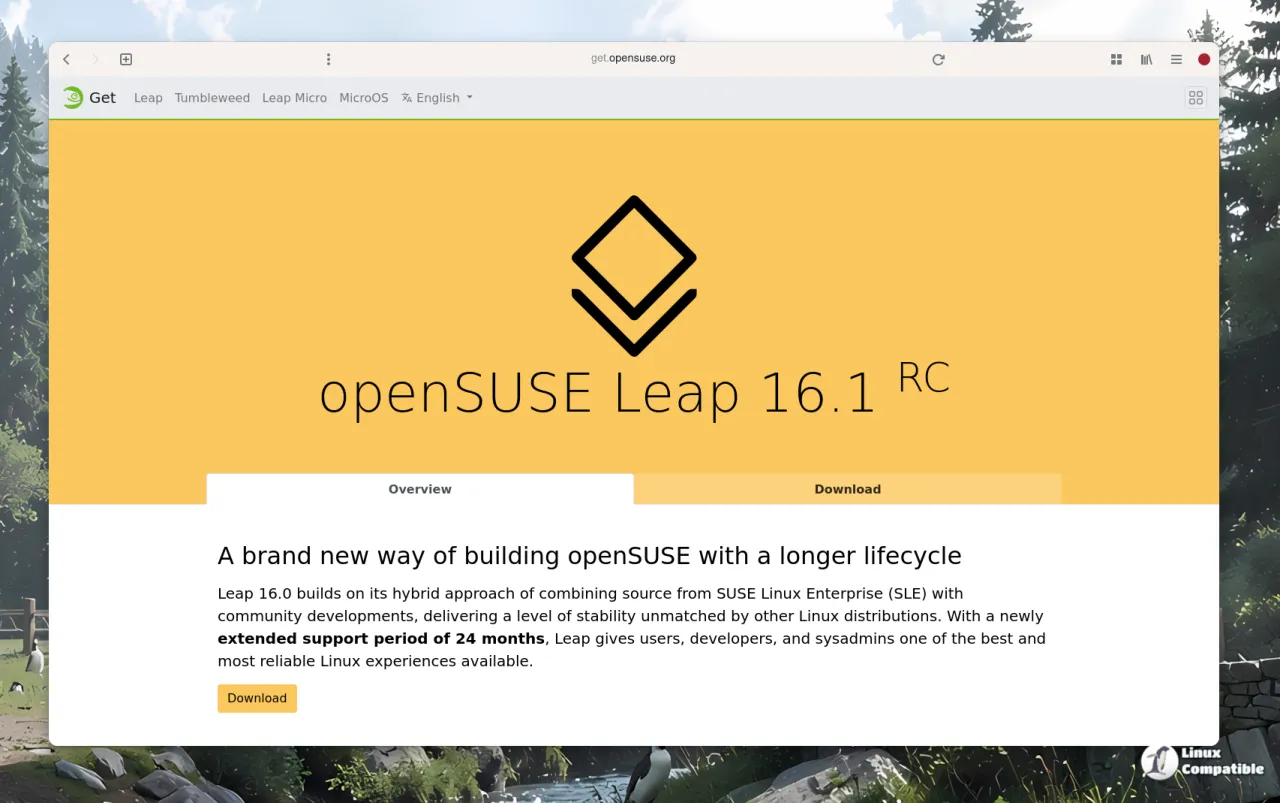
openSUSE Leap 16.1 has reached the gates of its Release Candidate phase, and the project is now gunning for a November 2026 general availability date. As of September 24, the next build should qualify as the RC and head to openQA for automated testing. That clears the last real hurdle before the first minor update of the 16.x series ships.
It's about a year since Leap 16.0 landed on October 1, 2025. The release team is already circling the finish line on the follow-up. Douglas DeMaio posted the update on the openSUSE mailing list, but the real progress report comes from Release Manager Luboš Kocman. He said the upcoming build should qualify as the RC and reach openQA soon, and confirmed there were no known release blockers at the time of writing.
The timing is a little loose. The official roadmap had penciled the RC build for September 16, 2026, so the project is running roughly a week behind. It's a modest slip, well within tolerance for software entering final testing. During RC the team plans roughly one build per week while it chases down whatever lingers. And it's not like Leap is the only distro to stumble a bit before shipping.
What actually changes
Here's the bit most people will care about. Leap 16.1 brings a broad sweep of updates across the desktop, developer, and server stacks, and the loudest change lands in KDE. Plasma jumps from 6.4.2 to 6.6.4. Frameworks climbs from 6.16.0 to 6.25.0. That's two feature releases and nine Frameworks releases, all sitting on a newer Qt 6.11.
The server-side upgrades are arguably more meaningful. QEMU moves to a new major line at 11.0.3, MariaDB makes the leap into its 12 series at 12.3.2, PHP lands at 8.5.8, and LLVM reaches 21. LibreOffice sits at 26.2.5, PipeWire at 1.6.8, NetworkManager at 1.54.3, GRUB at 2.14, Podman at 5.8.2, Samba at 4.23.10, and Git at 2.53.0.
For what it's worth, these desktop and server updates roughly mirror what Tumbleweed already carries, since Leap pulls application software from that rolling line. It isn't new software so much as it's proven software, now older by a few months. That's kind of the whole point of a fixed release. (The Leap name itself goes back to 42.1, a nod to the answer to life, the universe and everything. It's a small joke that's somehow stuck with the project for decades.)
Keep in mind that Leap 16.0 is built on SUSE Linux Enterprise, which is the entire trick behind the project. Leap ships binary-identical to SLE, so the enterprise-grade foundation that powers commercial SUSE deployments is available to you at no cost.
Why the launch timing matters
One structural detail is worth paying attention to. Leap 16.1 will launch the same day as SUSE Linux Enterprise Server 16.1, a synchronized schedule that grew out of feedback gathered during the Leap 16.0 retrospective.
The payoff is real. Because Leap mirrors SLE, shipping together eliminates any gap between the community release and its first maintenance updates. Those security and bug-fix patches arrive alongside SLES 16.1 GA and flow straight to Leap users. In plain terms, you get enterprise-grade patches immediately, with no separate community-side cycle to wait for.
It's a fairly ambitious claim for a free distro to make, though the 16.x lifecycle actually backs it up. Major releases get at least 36 months of support. Annual minor releases like 16.1 through 16.6 align with SLE service packs, and the whole series commits to continuing through at least Leap 16.6 in 2031. That's a maintenance span a lot of community projects simply can't match for free.
The release team is clear that testing matters most during the RC stage, and your reports directly shape the final build. You can run your usual workflows on the latest RC image and log critical issues to openSUSE Bugzilla. If you want the badge, pull the image from get.opensuse.org/testing, pick a test from the manual test plan, and log your result with your openSUSE username and build number. Participants get an openSUSE Kudos badge as a thank-you.
Known bugs are tracked on the openSUSE Known Bugs 16.1 wiki page, and the full schedule lives on the openSUSE Roadmap.
Head here to download the ISO images.


