Godot 4.8 beta 3 ships, leaving only a handful of blockers before stable
The feature-freezed game engine is on the home stretch, with a release candidate and a stable build both looking close.
Godot 4.8 beta 3 went live today, the third and final-seen beta in this major release cycle. According to the announcement by Thaddeus Crews (Repiteo) on the Godot blog, the team has basically wrapped up feature work. Only "a handful of remaining release blockers" sit between this build and the release candidate phase.
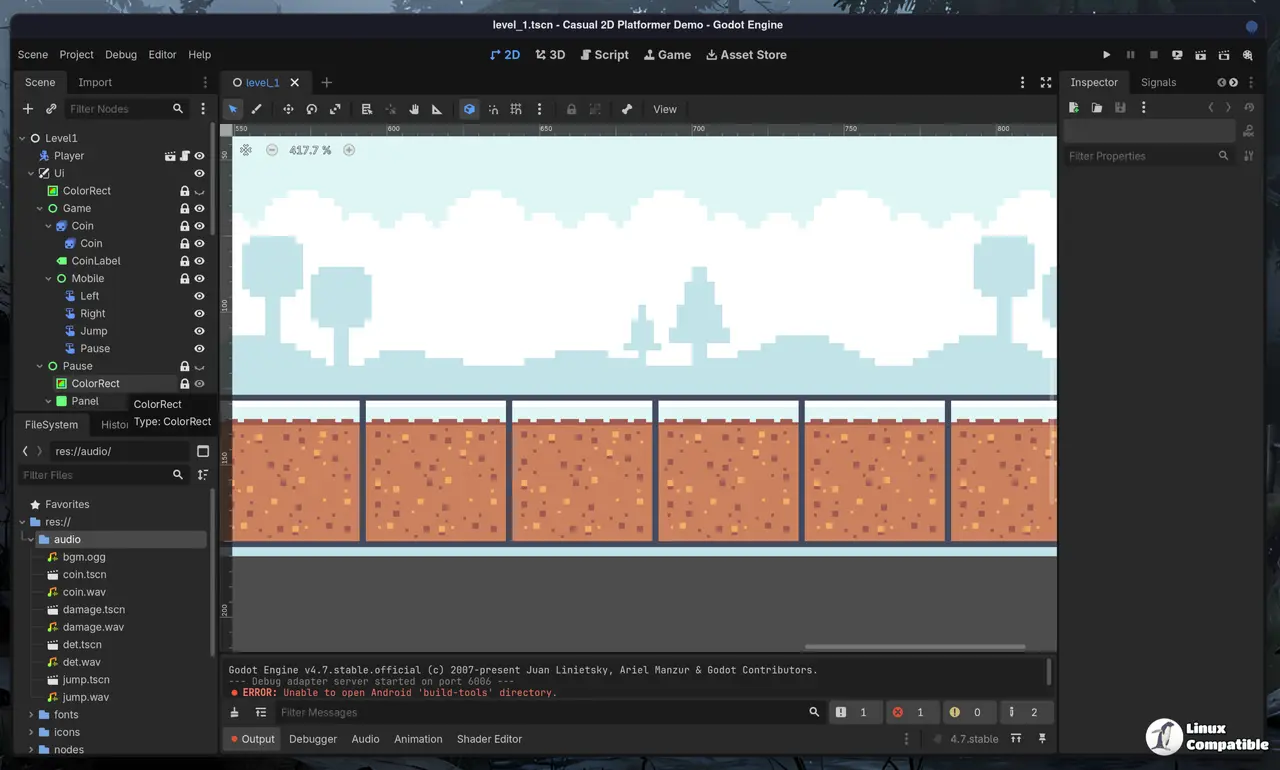
It's a feature-complete engine now, so don't expect dramatic new capabilities in the next snapshot. Beta 3 itself brings 74 fixes. From 51 contributors. A single starting commit. Beta 1 and 2 dropped close together, on 15 and 29 October, and the whole 4.8 cycle since feature freeze on 29 September has been about repairing things that used to work and then broke under newer changes.
Keep in mind that the Godot Foundation hasn't pinned an exact stable date. Community trackers are betting on November to December 2026, which is a reasonable estimate and nothing more.
Head here to grab the snapshot if you want to test. It's live on Linux, macOS (ARM64), and Windows (x64 installer), in both Standard (.NET builds too). Export templates sit in the download archive, and you can skip installation entirely by hitting the web editor or grabbing the Meta Quest XR build. The Android editor is on the Play Store, though you'll need to join the testers group first.
One thing for C# devs: the .NET build now requires .NET 10 or newer. That's a bump from .NET 8, so update your toolchain before you start poking at things.
The real headline is what 4.8 actually brings
Beta 3 adds little on its own, but it caps what's turning into one of the biggest feature drops Godot has shipped in a while. As of right now, 4.8 counts 340 contributors and 1,523 fixes since the 4.7 stable release, so the scale is hard to miss.
"It's looking like it won't be too much longer before we're ready to transition to the release candidate phase," Crews wrote.
The rendering work is arguably the biggest draw. Multi-bounce ambient occlusion approximation gives you a low-cost stand-in for interreflections without scenes turning pitch black. Mip-level texture streaming loads only the mipmap you need, which meaningfully cuts VRAM for large open-world games. Add screen-space contact shadows, baked directional lightmap specular light, animated decals, and ASTC compression profiles, and you've got a renderer aiming squarely at AAA-tier output.
Then there's the editor overhaul. Main screens are now EditorDocks, so they can be closed or floated freely. You can manipulate CanvasItem nodes right in the game view — move, resize, rotate, scale, pivot — with full undo and redo. Fuzzy search is in, symbol renaming is here (still experimental), and the game view now embeds by default.
On performance, Godot claims roughly 1.6× faster property access and about 12 MB of saved runtime RAM through a unified GDType property map. Not headline-grabbing numbers. But they add up over a big project.
Worth knowing before you upgrade
Not everything in 4.8 is smooth sailing. The engine ships a set of compatibility-breaking changes under its "breaks compat" label, and several deserve your attention. The .NET bump to 10.0 is the obvious one. But there are others: undocumented script-only enter_world callbacks are gone, exports no longer serialize options lacking the PROPERTY_USAGE_STORAGE flag, and GDScript now forbids scripts from inheriting their own inner classes.
Platform-wise, one fix stands out. Windows users had been hitting catastrophic framerate drops with high polling-rate mice running at 2 to 8 kHz, and 4.8 reportedly addresses it. Android gets SDK automation behind a single button, and macOS binaries are now split by architecture for smaller downloads.
As with any pre-release, Godot is explicit about backups. Use version control like Git and back up projects frequently. During the beta phase, the team is prioritizing regressions (stuff that worked in 4.x and broke here) and significant new bugs from new features.
If you find something, open a report in the issue tracker and search existing issues first to dodge duplicates. Regressions get special attention, so report them prominently if you hit them. You can also join the bug-hunting sprints via the #bugsquad and #bugsquad-sprints channels on the Godot RocketChat.
Godot is still run mostly by volunteers, with a small number of paid developers funded by donations. The beta announcements don't shy away from asking for financial support through the Godot Development Fund, which directly affects how fast the team can clear the remaining blockers. This beta's cover art is "Repel The Rifts," a tower-defense roguelike from RefinedBearGames. A nice touch, even if it won't speed up the RC.
Godot 4.8 beta 3 is available now. The RC phase should follow shortly, and if community tracking is right, a stable build lands later this year.


