Liquorix Linux Kernel 7.2-2 Drops with PDS Scheduler Tweaks
The enthusiast Linux kernel gets a rapid point release focused on sleep credit decay behavior and critical path optimizations.
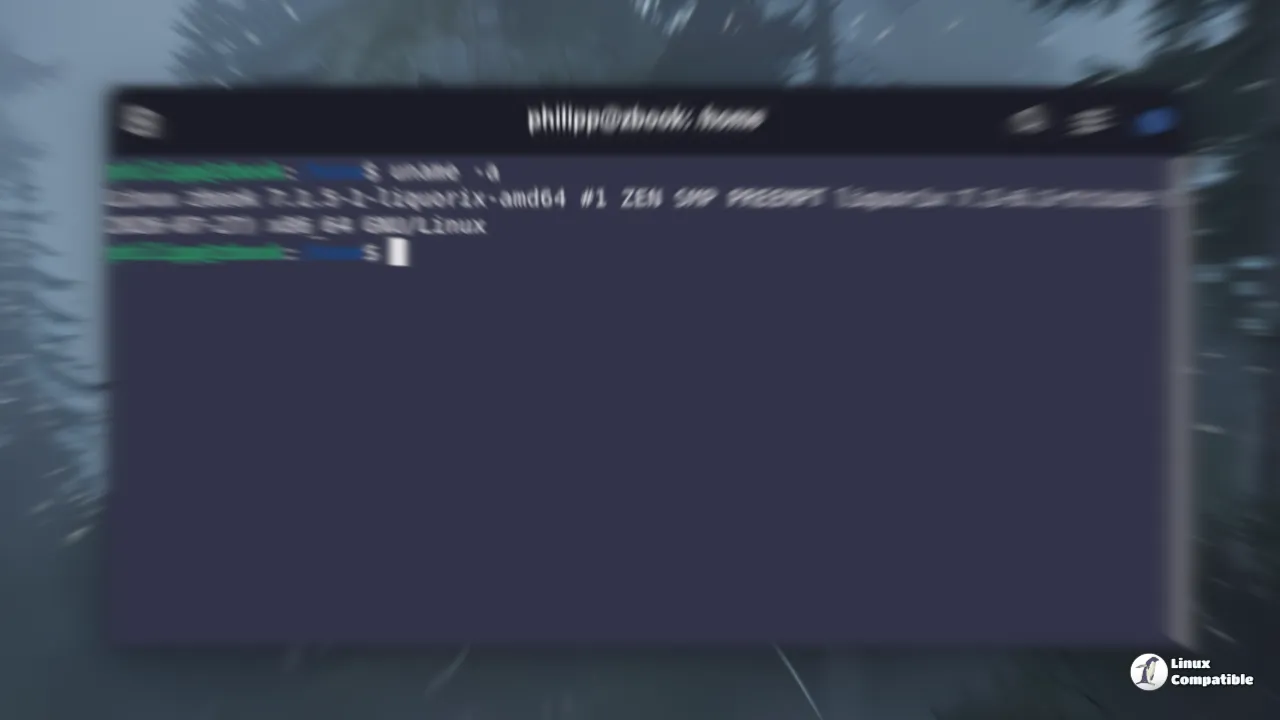
Steven Barrett just pushed with linux-liquorix 7.2-2, another release for the community-maintained kernel built on top of upstream Linux Kernel 7.2.2. The update lands less than 24 hours after 7.2-1, and it is entirely dedicated to tightening the PDS/BMQ process scheduler's sleep credit decay mechanism. If you run a distro that ships stock kernels and want your desktop to feel noticeably snappier, this is exactly the kind of patch you would be waiting for. The new kernel 7.2 series also integrates the AMD ISP4 capture driver, providing finally out-of-the-box webcam functionality for the HP ZBook Ultra 14 G1a and compatible Ryzen AI Max-powered systems.
What Actually Changed
Liquorix has never been a mainstream project. It trades throughput and power efficiency for aggressive responsiveness. The default profile forces hard preemptible kernels, locks the tick rate at 1000Hz, and swaps the stock CFS scheduler for the BMQ/PDS lineage that originated with the CK patchset back in 2007. Most audio engineers, competitive gamers, and anyone running heavy interactive workloads sideload it because it simply feels faster.
This release brings six targeted commits to the scheduler subsystem. The focus is sleep credit decay. The PDS scheduler hands a priority boost to tasks after they wake from idle, which makes sense for keeping audio buffers primed or game loops responsive. Without careful decay, those boosts pile up unpredictably or bleed across process boundaries. The patch set drops stale credits on policy changes and forks, reads fresh timestamps on wakeup, and aligns credit decay with actual CPU time consumed rather than wall clock time.
Not cheap to maintain, really. Running this kind of scheduler tuning usually requires days of profiling. Barrett shipped it in under a day because it is part of a broader internal effort he calls Project-C.
The Project-C Push
A quick scan of the August changelog reveals releases nearly every other day. Each iteration strips cache misses, dead code, and branch mispredictions from select_task_rq() and wakeup paths. The goal is straightforward: minimize critical path latency wherever the scheduler touches the CPU. It is the kind of low-level work that mainstream distributions typically leave to hardware vendors or defer entirely.
The kernel also marks the official switch to the Linux 7.x family. That means newer CPU microarchitectures, updated GPU drivers, and whatever mainline CFS improvements upstream shipped in 7.2.2 are now flowing into Liquorix's tuning profile. Keep in mind that 7.x has not yet earned longterm status from kernel.org, so you are still riding the active development cycle.
It is a niche product, though the focused tuning do give it a clear edge over stock kernels for specific use cases. However, at the same time, the AMD64-only build support and solo development model mean you should expect occasional delays when Barrett needs to step away from the keyboard. Most distro kernels will continue to favor stability over this kind of micro-optimization, which is exactly why enthusiasts keep coming back.
Installation is straightforward if you run Debian, Ubuntu, or Arch. The project ships a one-line install script that drops the necessary packages and keys into your system.
curl -s 'https://liquorix.net/install-liquorix.sh' | sudo bash
Head here to check the change log and download the source code.


