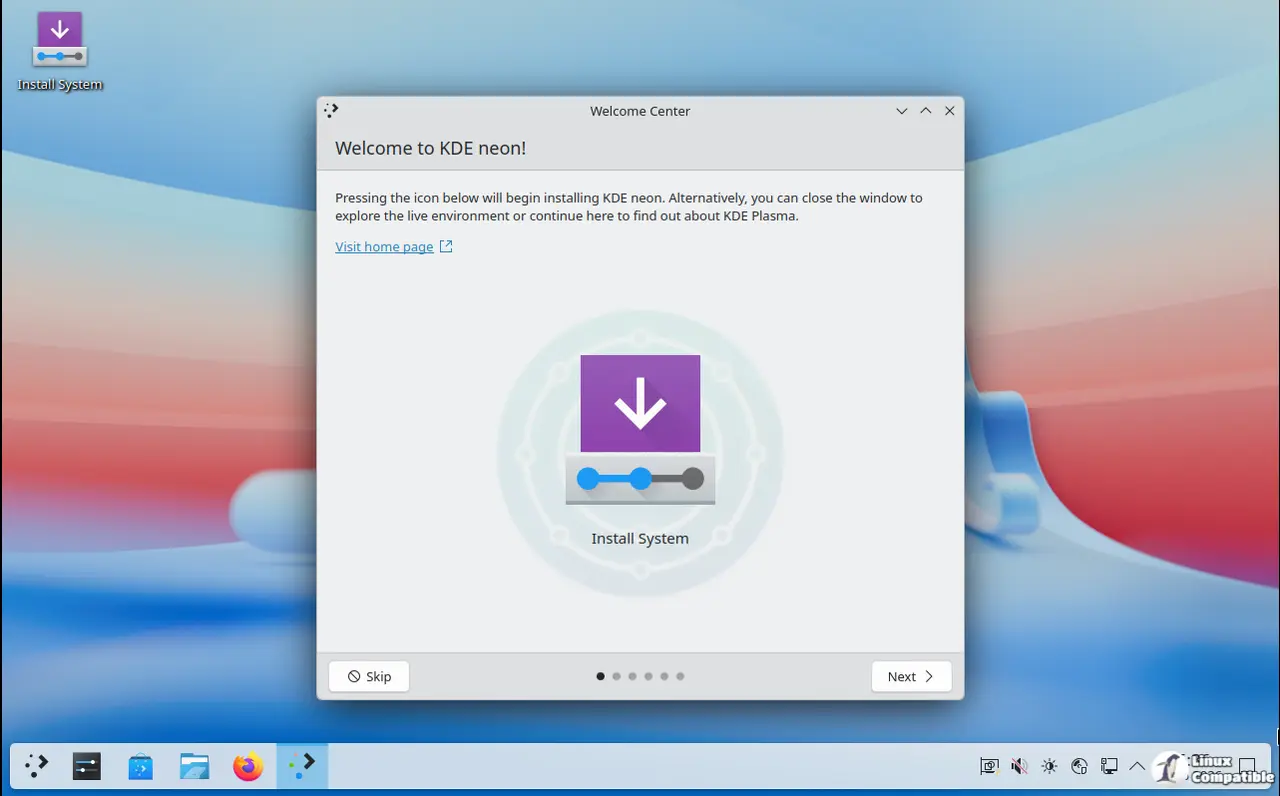
KDE neon has released its latest build, dated 20260730-0522, continuing to deliver rolling KDE software straight from upstream on a stable Ubuntu 24.04 LTS base. The distribution maintains multiple edition tracks, including stable, testing, unstable, and developer variants, while officially supporting only Intel and AMD graphics with open-source drivers.
KDE Neon Ships New 20260730 Build, Still Rolling KDE Straight From Upstream
The rolling desktop distro hits its third year on Ubuntu 24.04 LTS with improved testing pipelines and multiple edition tracks.
KDE neon has dropped a fresh build dated 20260730-0522, continuing its longtime strategy of shipping KDE software the moment upstream releases it. If you run the stable User Edition, you are looking at a rolling desktop layered on top of Ubuntu 24.04 LTS that has now completed three full years of life.
The distribution has never been about rewriting kernels or window managers from scratch. It is about pulling the latest Plasma, Frameworks, and Qt builds straight from KDE Git and handing them to you. The July 30 release keeps that model intact. The underlying OS base has quietly matured since the October 2024 rebase solved the PipeWire and build-requirements headaches that had been plaguing the 22.04 days.
Testing Infrastructure Gets a Makeover
For years, the main criticism of neon was that only the User Edition actually got meaningful QA before public release. The Testing and Unstable editions were essentially raw upstream builds with whatever broke you would have to report. That changed in late 2025 when the team introduced a dedicated stable development archive. Now every edition gets a chance to age in an automated pipeline before reaching you. The Testing Edition was last updated on July 28, the Unstable desktop build dropped on July 26, and the Developer Edition landed on July 27. Skip the waiting game entirely if you want, and run the unstable track and accept whatever breaks along the way.
The July 30 build is built for 64-bit systems and ships with support for Intel and AMD graphics, including the open source Nouveau driver. NVIDIA proprietary drivers work, but the neon team has been clear that they are not officially supported. Open-source hardware is where the QA focus sits.
It is a strange paradox in Linux desktop development. You get bleeding edge software on a rock solid base, but you also inherit the responsibility of knowing which pipeline you are actually pulling from. The distribution has never promised stability in the traditional sense. It promises freshness.
It is a straightforward model for people who want KDE without waiting for their distro of choice to package it. The rolling update cycle means you will get patches fast. Keep in mind that rolling KDE software on an LTS base does shift the maintenance burden slightly toward you. Updates are continuous. Plasma Discover handles most of them, though a manual apt full-upgrade works just as well if you prefer the terminal. However, at the same time, the fact that upstream developers are packaging the software means you are not stuck waiting on third-party maintainers to backport fixes.
You can grab the ISO directly from here and flash it with KDE ISO Image Writer or ROSA Image Writer if you are on a Mac.


