Goverlay 1.9.3 Ships With Native ReShade Support and a Smarter Per-Game Config System
The popular Linux gaming tool has landed a big update focused on post-processing, launch-wrapper reliability, and cutting down on manual config editing.
Goverlay 1.9.3 shipped today as the latest stable release of the open-source GUI tool. It arrives on the heels of a busy stretch for the project, building directly on the 1.9.1 and 1.9.2 waves that added frame generation and Lutris integration. This round isn't the biggest feature drop of the series, but it touches several pain points that Linux gamers have complained about for years.
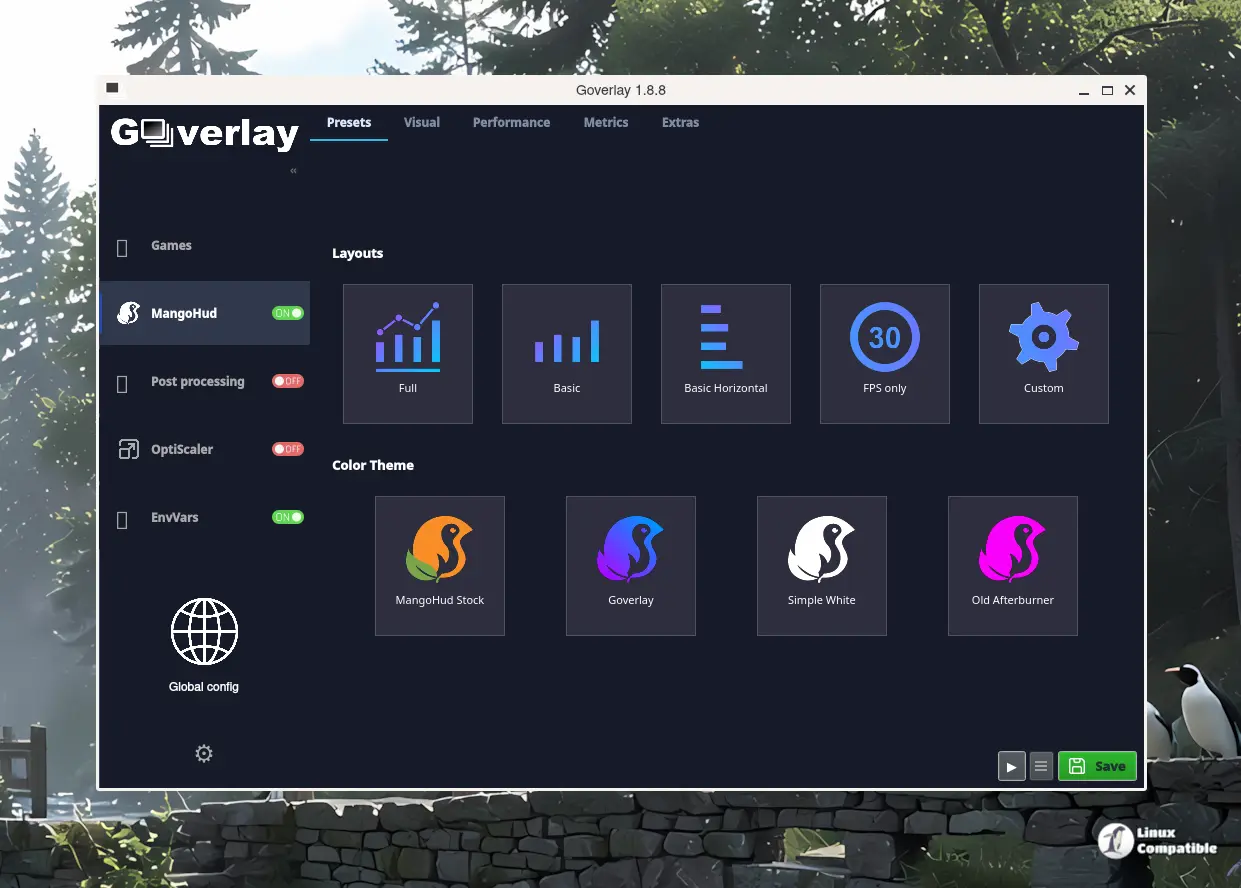
What Goverlay is (and why it exists)
Gaming on Linux has a friction problem that Windows players never deal with. On Windows you can drop a DLL into a game folder and get a performance overlay or some fancy post-processing for free. On Linux, that same outcome usually means babysitting MangoHud, vkBasalt, an upscaler, Proton tweaks, and a handful of config files by hand.
Goverlay wraps all of that behind a Qt6 interface. The tool was written in Free Pascal with the Lazarus IDE, and it presents each tool as a card with switches and dropdowns. You toggle what you want, and Goverlay writes the config files and launch command for you. Then you paste that command into Steam, Lutris, or a Decky Loader plugin.
ReShade Support
The biggest addition is native ReShade support. ReShade is a cross-game post-processing framework that's been a nightmare to wire up on Linux through Vulkan for years. Goverlay now handles it out of the box.
The work wasn't all his. Gois credited @Cliffback for inspiration (via the letmereshade project) and thanked @zigma "for all the help, suggestions and testing." Both show up in the release notes.
On top of that, vkBasalt gained 3D Color LUT support in both .cube and .png formats, duplicate ReShade effect entries no longer pile up in your config, and vkSumi now matches the app's theme so the post-processing tab doesn't look like a stepchild.
The single most useful change for people with big libraries might be simpler. You can now clone a global config straight into one game's profile from the context menu. No more manually re-typing the same settings twenty times. Game cards also sort alphabetically now, which sounds minor until you're scrolling through a 400-game collection.
Keep in mind that the environment-variable tab has a new name: it's now called "Tweaks," and it manages launch arguments too. You can set per-game or global launch flags directly in the UI, and custom global variables persist across profiles.
The bgmod reliability pass
The trickier half of this release targets bgmod, Goverlay's own launch-wrapper binary. It replaced the old bash-script predecessor, fgmod, and it's the thing that actually wires everything together when a game starts.
The new bgmod-splash window shows you which layers are active the moment you launch a game. That feedback loop is small but genuinely handy. The wrapper now syncs and updates itself across your game folders, preserves third-party proxy DLLs during both launch and uninstall, and stops leaving log files behind in your game directories.
Anti-cheat systems love to scan folders for unexpected files. A stray log is an easy way to trip a false positive. The release also fixes a hang where Steam still thinks a game is running after you've closed it. That one's been a real annoyance.
Small fixes that matter
The remaining changes are the kind you don't notice until they're gone.
MangoHud's fps_only preset used to stop persisting across load-save cycles. That bug is fixed, with thanks going to @Droppisalt for testing help. The Flatpak build had an issue where host Vulkan layers would pollute the sandbox and cause boot loops. That's cleaned up too, which matters as more people install via Flatpak. Card padding and margins were standardized so views stay scroll-free at standard resolutions, and Turkish translations got a refresh via @Menemen54, marking his first contribution to the project.
The PasCube preview demo gained a ray-tracing benchmark with dedicated scores. There was also a fix where powerful NVIDIA GPUs got stuck at 5fps during the benchmark, which made previews basically unusable on high-end hardware.
Where to get it
Goverlay installs several ways. The broadest option is Flatpak from Flathub, and that method also pulls in the Vulkan layers you need automatically.
Head here to the releases page to grab 1.9.3, or browse the issues if you want to see what's cooking next.


