Red Hat Splits Fedora Community Architect Role as AI Alignment Takes Center Stage
Shaun McCance is taking over as the next Fedora Community Architect, with outgoing FCA Justin Wheeler moving into a newly created AI Alignment Community Architect position. The transition runs through Fedora Linux 45's planned October 2026 release.
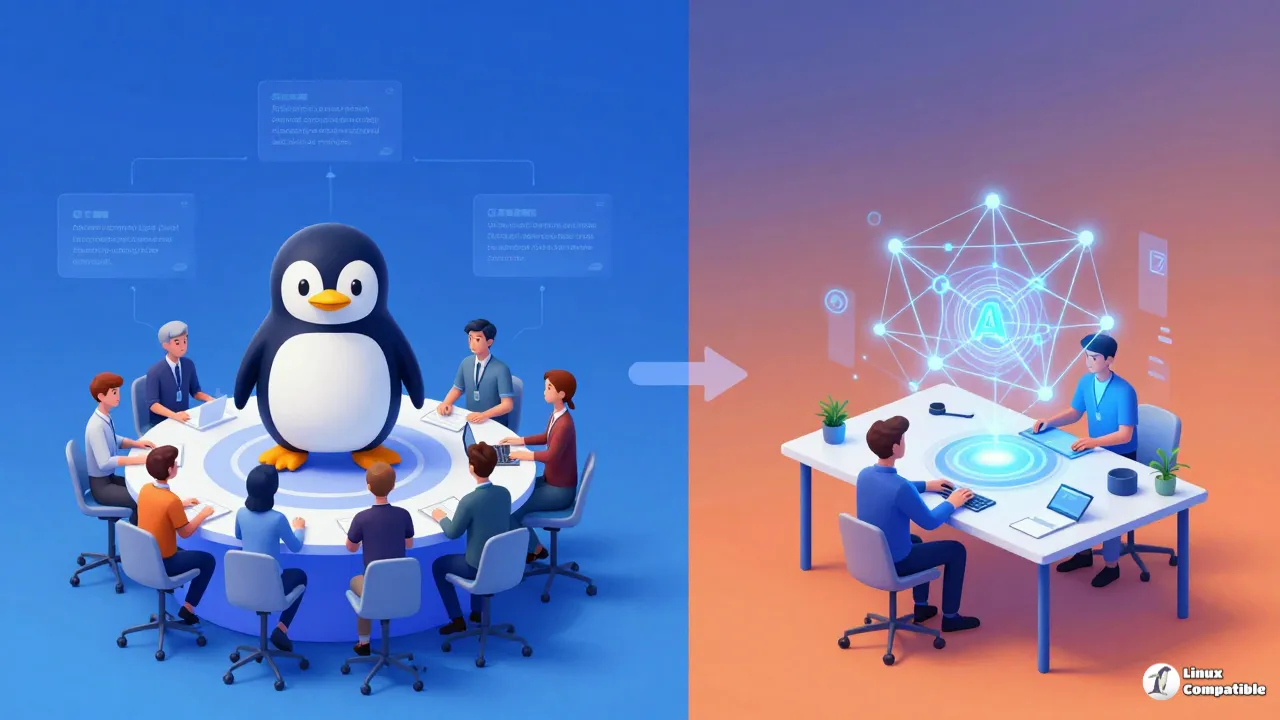
The move is being framed as a strategic expansion rather than a departure. Both Wheeler and McCance note that evolution and innovation apply just as much to community operations as they do to the codebase. For years, the FCA seat covered everything from Flock logistics to budget stewardship to Code of Conduct oversight. Now that scope is getting divided.
McCance brings a unique dual perspective to the traditional community seat. He currently serves as CentOS Community Architect for Red Hat, meaning he already manages the upstream and downstream relationship from the inside. A GNOME veteran with a background in event execution, McCance has been active across the Fedora ecosystem for years. He even presented at SCaLE 23x earlier this year on the Fedora Docs Revamp Initiative, laying out how subject-matter expertise teams are tightening up contributor documentation.
Wheeler originally joined Red Hat as the FCA in October 2022 after four years leading volunteer community operations. He was also the one who pushed to rename the seat from "Fedora Community Action and Impact Coordinator" to the title we know today. Now he gets to focus entirely on something he's been circling around for a while: aligning Fedora's AI initiatives with the project's Four Foundations. Freedom. Friends. Features. First. He'll be formalizing community AI services, mentoring contributors on AI tooling, and exploring what a future with AI builder downstreams actually looks like.
Why the Split Makes Sense
Community management in open source has gotten considerably more complex. Running Flock isn't just about venue contracts anymore. It's about onboarding contributors who might be asking how to safely integrate LLM tooling into packaging workflows, or how to work through the ethical implications of default AI services in the desktop experience. Splitting the seat lets each architect go deeper on their respective domain without either one becoming a part-time distraction.
Keep in mind that Fedora doesn't ship with AI tools enabled by default across the desktop, so the AI Alignment Architect's job is partly about defining what does, and more importantly, what doesn't make the cut. That's a conversation that probably shouldn't live on a single person's side of a Flock keynote.
The FCA role itself has only existed in its current form for about three years. Marie Nordin held the original FCAIC seat during the pandemic, tripling virtual event participation and doubling contributor survey respondents before moving into a Code of Conduct Specialist role inside Red Hat's OSPO. Wheeler took over in late 2022 and formalized the architectural title. Now McCance inherits a seat that already requires twice the focus it did three years ago.
It's a reasonable response to a real problem, though the new AI Alignment seat will need to prove it doesn't just become a branding exercise. AI governance in open source distros is a minefield. Fedora has to balance default AI tooling with its privacy-first, freedom-focused identity, and having a dedicated seat for that conversation is at least better than winging it. McCance's CentOS background also helps, since the upstream/downstream handoff during the CentOS Stream 10 and Fedora 45 era is where community friction usually spikes.
The two will run the overlapping period through Fedora Linux 45's October release, with McCance taking full custody of event logistics, budget management, and Fedora Council representation. If you're tracking how Fedora handles AI adoption going forward, the AI Alignment Architect seat is going to be worth watching closely.
Head here to read the full announcement on Fedora Magazine.


