Bazaar 0.9.4 lands with faster async I/O and a weekly release cadence that shows no signs of slowing
The open-source Flatpak app store for Linux has arrived at version 0.9.4, bringing a significant backend overhaul and another round of polish in a release cycle that's now moving at breakneck speed.
If you've been following Bazaar since its first pre-release back in June, the pace of development is worth noting: three versions in ten days, with the 0.9.2 daemon architecture upgrade, 0.9.3's curated content features, and now 0.9.4's libdex integration all landing before most desktop environments have finished their own maintenance updates.
The real story here isn't the keyboard shortcuts or the accessibility fixes, though those matter. It's what's happening under the hood with the adoption of libdex 1.2.beta, a GNOME library for deferred asynchronous execution created by Christian Hergert. The Bazaar team replaced their own "hacky macros" from bz-util.h with proper DexLimiter integration, tying maximum concurrent I/O tasks to the host's CPU count. They worked directly with Hergert on optimal limiter sizing, which suggests this isn't just a copy-paste job but a genuine collaboration with upstream library developers.
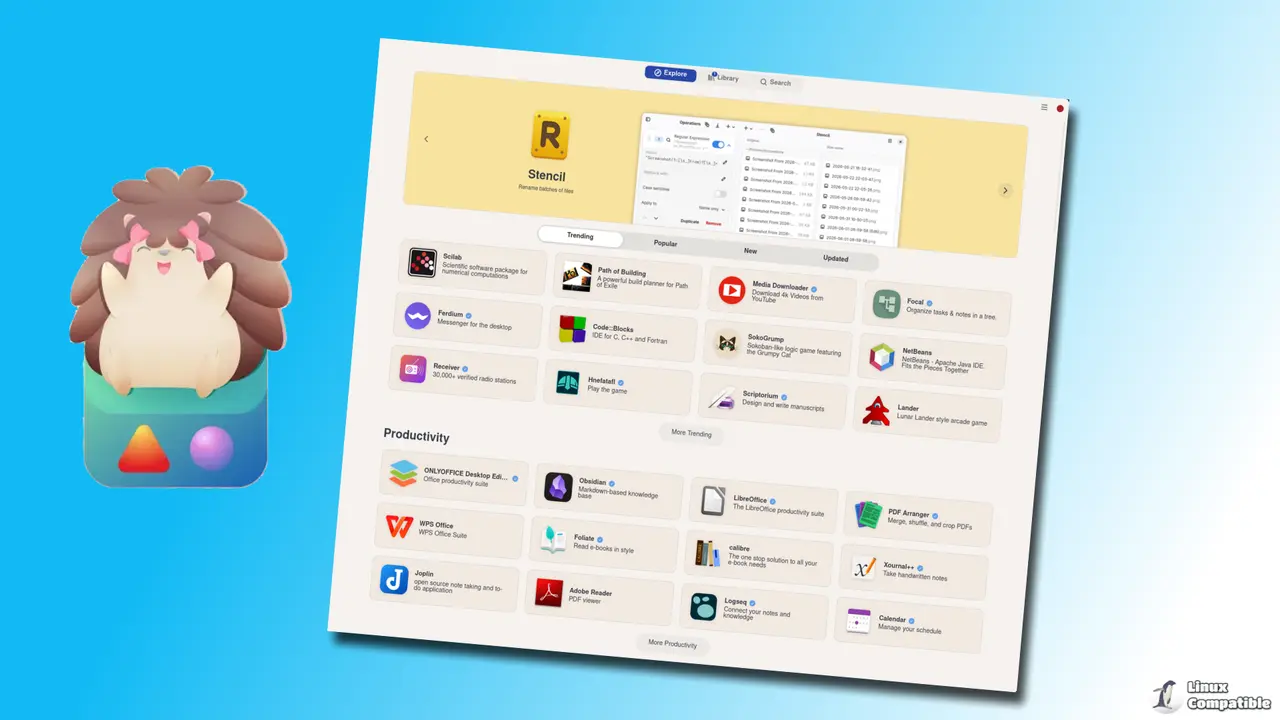
The daemon split is paying off
Keep in mind that Bazaar 0.9.2, released five days before this version, re-architected the app into three separate binaries: the main GUI, a low-memory daemon for desktop search indexing and update scheduling, and a download worker. That split was meant to address a long-standing complaint about app stores that keep the main process resident just to maintain background services. The result is significantly reduced idle RAM usage, which matters more than most users realize when you're juggling a dozen Flatpak apps anyway.
The 0.9.4 release trims another patch by reverting a limiter change for async texture and entry cache management after it introduced a performance regression. That's the kind of honest bug-fixing that makes the weekly cadence work: ship something, see what breaks, fix it next week. Not every project can sustain that rhythm, but Bazaar's two-person core team (@kolunmi and @AlexanderVanhee) appears to have the workflow down.
If you're curious about the UI changes, @AlexanderVanhee's contributions in this release include zoom shortcuts in the screenshot viewer per GNOME HIG guidelines, improved navigation where clicking app tiles now opens new pages, and keyboard navigation fixes on the Curated page. Those sound like minor polish, but they're the kind of details that separate a usable app store from one that feels stuck in 2015. The Curated tab, which displays Flathub's topic sections on the home page, is now more accessible to screen reader users and keyboard navigators.
The libdex work introduces dex_scheduler_spawnv, a variadic scheduler spawn API that makes the async code cleaner overall. For the average Flatpak user, this translates to fewer hiccups when browsing or downloading apps on systems with many cores. The limiter caps concurrent tasks at roughly half the CPU count, which prevents I/O saturation while still letting faster machines push harder. It's a balanced approach, and one that the libdex author helped refine.
Bazaar continues to expand its translation coverage through the GNOME Damned Lies platform, with recent additions including Slovenian, Swedish, Cornish, Japanese, Basque, and several other languages. The project has 1,600 GitHub stars and 138 forks at this point, which puts it ahead of many legacy app stores in terms of community engagement. The KRunner plugin for KDE Plasma is still in development, but the GNOME Shell search provider integration means desktop search works out of the box for the majority of Linux users.
Not cheap to maintain, but @kolunmi and @AlexanderVanhee both accept donations via Ko-fi if you want to support the developers directly. The app is available on Flathub as the primary distribution, with Arch Linux and Debian packages also available. If you're running a different distro, the Justfile-based build system should handle compilation from source.
The rapid release cadence suggests Bazaar is treating this as a living project rather than a weekend side project that's been stuck at v0.1 for two years. Whether it can sustain that momentum past the initial excitement phase remains to be seen, but the technical foundations being laid now, especially the daemon architecture and libdex integration, give it a better chance than most.
Head here to grab the app from Flathub, or check the GitHub releases page if you want to dig into the commit history yourself.


