BlueOnyx Ships Three Server Generations Simultaneously, Including an AlmaLinux 10 Build with PHP 8.5
The open-source hosting panel BlueOnyx has updated its distribution lineup, now shipping three concurrent generations: 5212R, 5211R, and 5210R. The 5212R branch is built on AlmaLinux 10 and includes PHP 8.5, MariaDB 12.3, and OpenSSL 4.0.1.
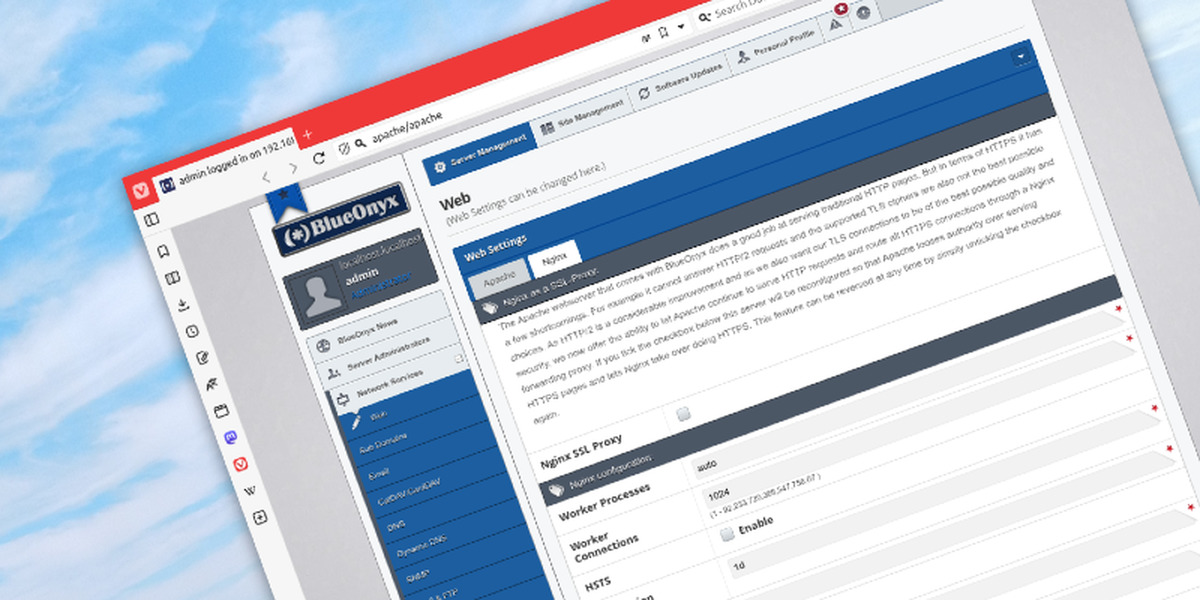
BlueOnyx isn't a new name in the server panel game. The project traces its lineage back to the Cobalt Networks RaQ appliances acquired by Sun Microsystems. Maintainer Michael Stauber has kept the codebase alive through CentOS's decline, migrating the core to AlmaLinux while preserving the original GUI logic.
That's roughly 17 years of continuous maintenance.
The current lineup targets different use cases:
- 5212R is the next-gen branch running AlmaLinux 10 with Kernel 7.1/6.12, PHP 8.5, and Flatpak support. It ships ISOs rebuilt via mock and lorax tooling for reproducible builds.
- 5211R is the stable branch on AlmaLinux 9, offering PHP 8.0, MariaDB 10.11, and OpenSSL 3.5.x. This is the balance point for most production deployments.
- 5210R holds the line on AlmaLinux 8 with PHP 7.2 and MariaDB 10.3.x. It serves existing EL8 deployments and environments requiring conservative stacks.
It's rare to see a project maintain three generations this cleanly. Most panels drop a version as soon as the base OS approaches end-of-life. BlueOnyx is keeping EL8 alive for its installed base while pushing the latest stack ahead.
Recent Activity and the AI Assistant
The project's activity log is busy as of August 2026. Installation media for all three generations was rebuilt and republished on August 14. That followed a major 2FA overhaul in March and a migration of the build pipeline to reproducible ISO tooling.
Then there's the BlueOnyx AI Assistant, released on August 8. It's a free download that helps admins troubleshoot servers, analyze logs, and automate tasks. Not exactly groundbreaking for a panel rooted in 2008-era Cobalt code, but it does answer the question of what else the team could build during development lulls.
Earlier this year, a server module for FOSSBilling also went live, and the Apache Throttle module was removed from the 5210R build cycle.
Free Core, Commercial Support
BlueOnyx positions itself squarely against cPanel's per-account licensing model. The core platform is free under the Sun Modified BSD License. You can host unlimited virtual sites without paying recurring fees per account.
The feature set is comprehensive for a free tool: preconfigured Apache, Postfix, Dovecot, MariaDB, and ProFTPd. It includes multi-tenant reseller management, role-based admin GUIs, OpenDKIM integration, and autoconfig support for email clients.
Keep in mind that commercial support isn't free. The BlueOnyx shop offers professional edition subscriptions and add-on modules. But the base experience—web hosting, email, DNS, file transfer—is fully open source and available for download.
It's a niche interface. It doesn't have the polish of modern commercial panels, and the codebase shows its age. The UI feels utilitarian. However, the stability and lack of recurring costs make it a serious option for self-hosters and small hosting providers who want full control without licensing headaches.
ISOs are available for download. Incus container images and KVM virtual appliances are also supported.


