Alpine Linux 3.24.1 Delivers Critical OpenSSL Security Fixes for Container Workloads
Alpine Linux 3.24.1 is out, and it brings a heavy dose of OpenSSL patches to keep container environments from unraveling. This maintenance release targets a cluster of high-risk vulnerabilities that could otherwise allow attackers to bypass certificate validation, exhaust server memory, or forge cryptographic keys. Updating is straightforward, but understanding which OpenSSL components actually touch your infrastructure will save hours of debugging later.
ASN.1 and PKCS Parsing Vulnerabilities
The CVE-2026-34180 advisory tackles a heap buffer over-read that triggers when OpenSSL processes DER-encoded ASN.1 structures exceeding two gigabytes. Applications feeding untrusted certificate data into d2i_X509 or d2i_PKCS7 functions will crash or leak memory if they do not upgrade. CVE-2026-34181 addresses a PKCS#12 validation flaw where PBMAC1 integrity checks fail, allowing a one in two hundred fifty six chance of accepting forged certificates and private keys. This means services that blindly trust incoming PKCS bundles without strict password verification are running a loaded dice game. Alpine patches the underlying OpenSSL library, so any container or service linking against libssl.so will automatically benefit once the package manager runs.
CMS and QUIC Stack Stress Tests
The cryptographic message processing code gets a thorough cleanup under CVE-2026-34182, which stops attackers from downgrading cipher tags or swapping authenticated encryption modes to bypass integrity checks. On the networking side, CVE-2026-34183 and CVE-2026-42764 target the QUIC implementation. A malicious peer can flood the stack with PATH_CHALLENGE frames to trigger unbounded heap allocations, and invalid tokens can crash servers when address validation is disabled. Many developers disable client address validation in testing environments to speed up local loops, which leaves those setups wide open to denial of service attacks. Alpine forces the QUIC stack to allocate memory safely and validates tokens before processing, which prevents the kind of out-of-memory crashes that take down production reverse proxies overnight.
Null Pointer Dereferences and Cryptographic Edge Cases
Several CVEs round out this release by closing null pointer dereferences in CMS decryption, CMP client responses, and password-encrypted message processing. CVE-2026-42767 specifically calls out a Certificate Management Protocol flaw where a missing parameters field crashes the client, which matters heavily for enterprise PKI deployments that automate certificate renewal. The Bleichenbacher-style mitigation in CVE-2026-42768 introduces implicit rejection for RSA PKCS#1 v1.5 key transport, which forces OpenSSL to return deterministic plaintext values regardless of certificate availability. This stops adaptive chosen-ciphertext attacks from leaking private keys through error code side channels. The DHX subgroup membership check in CVE-2026-42770 finally enforces proper q parameter validation, blocking the Lim-Lee attack that could recover private keys in static key exchanges.
Alpine Linux 3.24.1 Updating and Verification
Alpine handles package updates through the standard apk tool, and applying these patches requires only a quick system sync. Running apk update followed by apk upgrade --available pulls the corrected OpenSSL packages directly into the container or host environment. The maintenance release does not introduce new dependencies, so existing Dockerfiles or Alpine-based virtual machines will rebuild without dependency conflicts. Developers should verify the installed OpenSSL version after the upgrade by running openssl version to confirm the patch level matches the Alpine 3.24.1 release timeline. Services that cache certificate chains or maintain long-running QUIC connections should be restarted after the package update to ensure the new cryptographic routines load into memory.
Alpine 3.24.1 released
Alpine 3.24.1 released
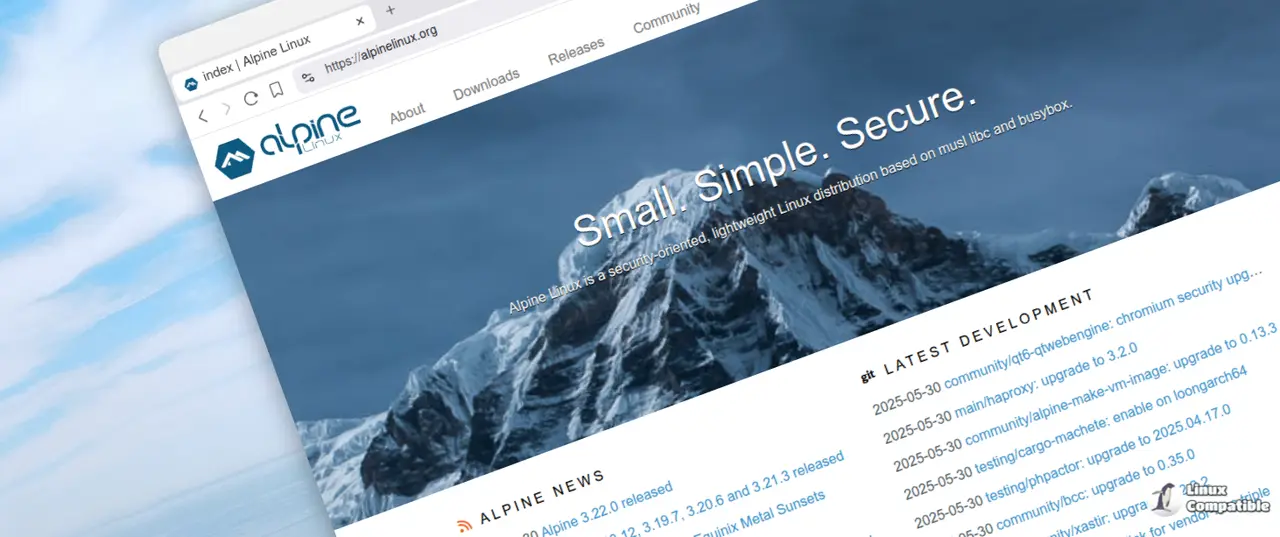
Keep your container images patched and your crypto stacks tight. Alpine Linux 3.24.1 handles the heavy lifting so you can focus on shipping code instead of hunting down memory leaks.


