Zed 1.28.1 ships today with Git workflow glue and a push toward more reliable AI agents
Zed's latest point release adds optional auto-fetching, a resizable Git Graph column, and fixes aimed at making its open-agent setup less brittle.
Zed Industries put out Zed 1.28.1 today. It's the point release that follows the 1.28 preview opened last week, carrying that line's feature set into the stable channel. Not the flashiest Tuesday in the editor world, but there's a theme here worth following.
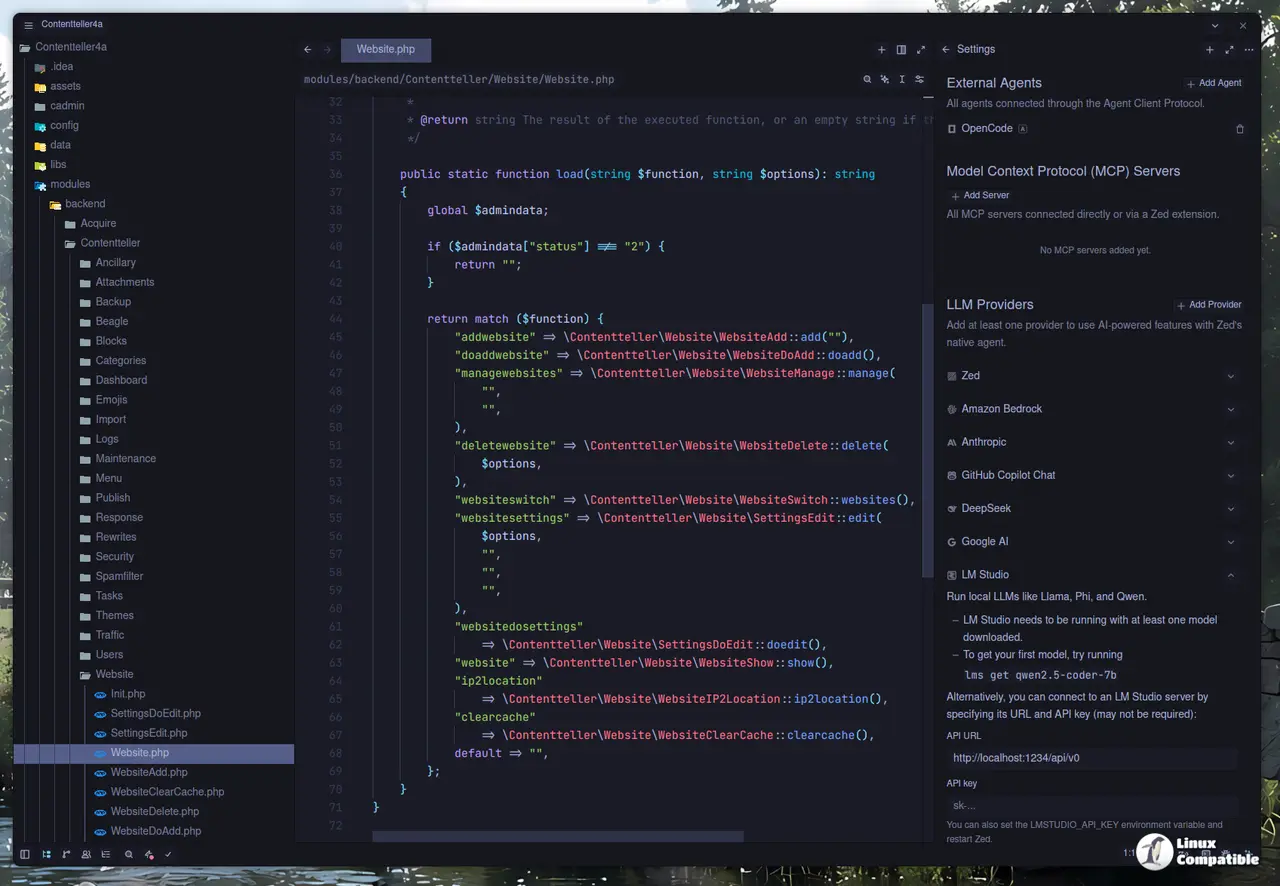
The editor is investing in the seams between its pieces instead of dropping a marquee feature. Optional automatic Git fetching, a resizable Refs column, drag-and-drop of files out of the Git Panel, and mouse-wheel font zoom in diffs and terminals. Those are the headline items. On top of that, a good chunk of effort goes into making external AI agents less likely to fall over.
Zed's own summary keeps it grounded: "This week's release includes optional automatic Git fetching, a resizable Refs column in the Git Graph, dragging Git Panel files into terminals and editors, and mouse-wheel font zoom in diff views and terminals."
The AI piece: reliability over novelty
At the core of this release is the Agent Client Protocol, the open standard that lets tools like Claude Code and Gemini CLI plug into Zed. It's an approach the company has pushed for a while now, and this build targets the exact failure modes that trip people up.
There's a new cap on the Agent's read_file tool, truncating lines longer than 2,000 characters. A single massive line from minified or generated code can otherwise blow through an LLM's context window and burn budget on pure whitespace. That's the kind of thing that quietly eats your API credits.
Improved ACP handling covers missing sessions, plan updates, diff formats, and cancellation of permission requests against the latest schema. The practical result is fewer crashes when wiring an external agent into a real project.
The 1.27 line already trimmed the binary by roughly a third on macOS and about a quarter on Windows, and cut panel memory and CPU use during long sessions. So Zed's reputation for speed feels a bit less conditional now, though the AI features are still the heavy end of the scale.
Git gets more usable
The Git work is arguably the more immediately useful part. Optional automatic fetching pulls the branch's upstream remote and the default branch's remote, but it stays off until you flip git.auto_fetch.enabled and set an interval with git.auto_fetch.interval_secs, which defaults to 60 seconds.
You can now toggle a resizable Refs column straight from the Git Graph's header menu, and drag files from the panel straight into a terminal or editor. That kills the copy-paste loop for file paths that most people never realized they hated until it was gone.
Branch search now works by name in the worktree picker, which sounds minor until you're staring at a repo with forty similarly named branches.
Keep in mind that a lot of this release is plain bug fixes. There's a real chunk aimed at remote workspaces and SSH, which is where Zed has historically drawn complaints. Local files opening as empty buffers in remote workspaces, terminal tasks failing on Nushell-based Windows SSH servers, and SSH to macOS hosts stuck on "Starting Proxy" are the kind of edge case that only bites when you're mid-task.
Session compaction, once a Zed-native perk, now reaches any ACP-connected agent too. There's also an edit_predictions status-bar toggle so you can hide or show that button.
Zed runs on macOS, Linux, and Windows, and it's free under GPL-3.0. The company hit version 1.0 in April after roughly five years and a million-plus lines of code, so this isn't a young project looking for a break.
The market context matters here. The Stack Overflow 2026 survey has Zed as the fastest-growing editor, up to about 11.4% from 7.3% the prior year. It sits behind Cursor (~14.9%) but ahead of Xcode and Sublime Text. The admiration score is where the picture gets interesting: Zed earns around 57%, edging VS Code's roughly 55.7% and sitting well clear of Cursor's 33%. Cursor uses more, but people admire it far less. VS Code still commands a roughly 71% usage share that Zed isn't threatening anytime soon.
The strategy reads as a bet on open, agent-agnostic connectivity plus a lean editor rather than a walled garden around a single provider. Whether that pays off depends on whether third-party agents stay reliable, which is exactly what this release is trying to prove.
Head here to the GitHub release page.


