YServer 1.4.0 Lands: A Rust-Native X11 Server Finally Crosses the Desktop Threshold
A modern X11 display server written from scratch in Rust just hit a real milestone. YServer 1.4.0 dropped on July 29, 2026, and it is no longer just an experiment running in a terminal.
Wayland got the spotlight when it started eating X11's lunch, but a growing contingent of Linux users still needs the older protocol for legacy apps, specific window managers, or just the workflow they rebuilt over the years. YServer implements the X11 protocol natively in Rust. No translation layer. No Xwayland shim. It talks directly to DRM/KMS and drops decades of accumulated Xorg complexity.
What Actually Changed in 1.4.0
The release merges eight pull requests and welcomes three new external contributors. The work centers on keyboard handling, screenshot capture, and KDE Plasma compatibility.
Electron app crashes? Fixed. A PR from @AprilGrimoire clamps XKB group state and filters component masks before stamping key-event state. The maintainer, Jos Dehaes, confirmed the impact plainly: "Some electron apps broke without this."
Flameshot screenshots used to return just your wallpaper background. The old v2 backend resolved root sources to a storage drawable instead of the composited desktop. The new fix reads directly from the composited scanout, splitting per-output for multi-head setups. Screenshots now actually capture windows.
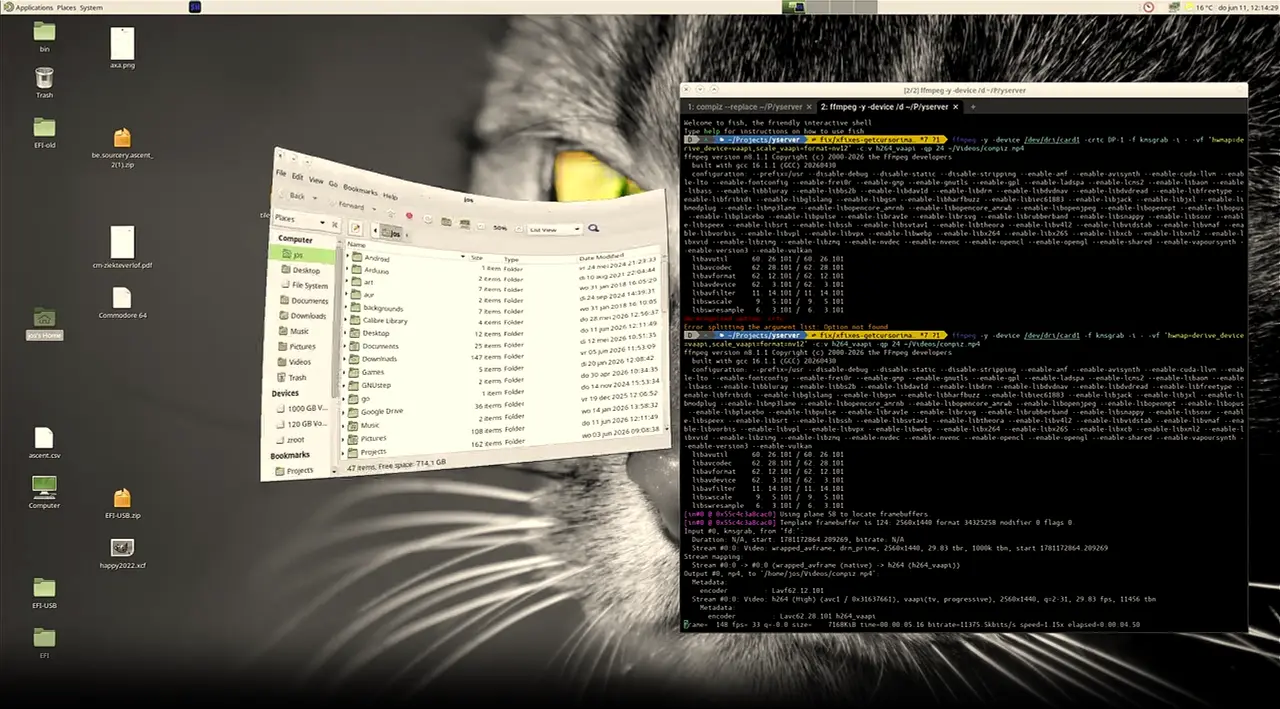
KDE Plasma RandR output resizing and ARGB popup transparency now work. That change is what finally moved Plasma into the "actually usable" column. Tk applications no longer trigger protocol errors on the FreeColors opcode. Keyboard layout switching works properly after clearing stale keymap overrides and broadcasting MappingNotify on layout switches.
The project also runs full XTS5 regression suites. That is roughly 672 tests taking about 50 minutes per run, all passing. CI enforces SSH-signed commits, and de Haes leans on both Copilot and Claude for code review. Human plus machine. It is becoming the new normal for solo Rust maintainers, and honestly, it keeps the code from drifting.
Hardware coverage is broad. AMD, Intel, NVIDIA, Qualcomm Snapdragon X1, and Apple M1/M2 via Asahi Linux all have tested builds. Both Linux and FreeBSD are supported. The tested desktop environments include Cinnamon, MATE, XFCE, and KDE Plasma, alongside window managers from i3 to bspwm to openbox. It covers a lot of ground.
The Bigger Picture
It is a rather ambitious project for what is essentially a filtered subset of Xorg, though the Rust memory safety and direct DRM/KMS pipeline do give it a real edge over maintaining a 40-year-old C codebase. However, at the same time, it does not compete with Wayland for new projects. It fills a niche. If you need a modern X11 server that does not require wrestling with legacy DDX drivers or endian-swapped clients, YServer is worth a look.
The project is MIT-licensed. Prebuilt packages are available for Fedora, Debian, Ubuntu, and Alpine.
Head here to check out the full changelog and the setup guide. Next release is presumably on the horizon, given how quickly three external contributors already landed patches this month.


