XanMod Kernel 7.0.7 and 6.18.30 LTS Released: A Faster Linux Experience for Heavy Workloads
Users looking to squeeze more performance out of modern hardware will find a solid update in the new XanMod kernel releases. The latest builds bring optimized scheduling, improved memory management, and several networking tweaks designed specifically for demanding desktop environments. Here is what actually changes, how to get it running, and where compatibility might break down.
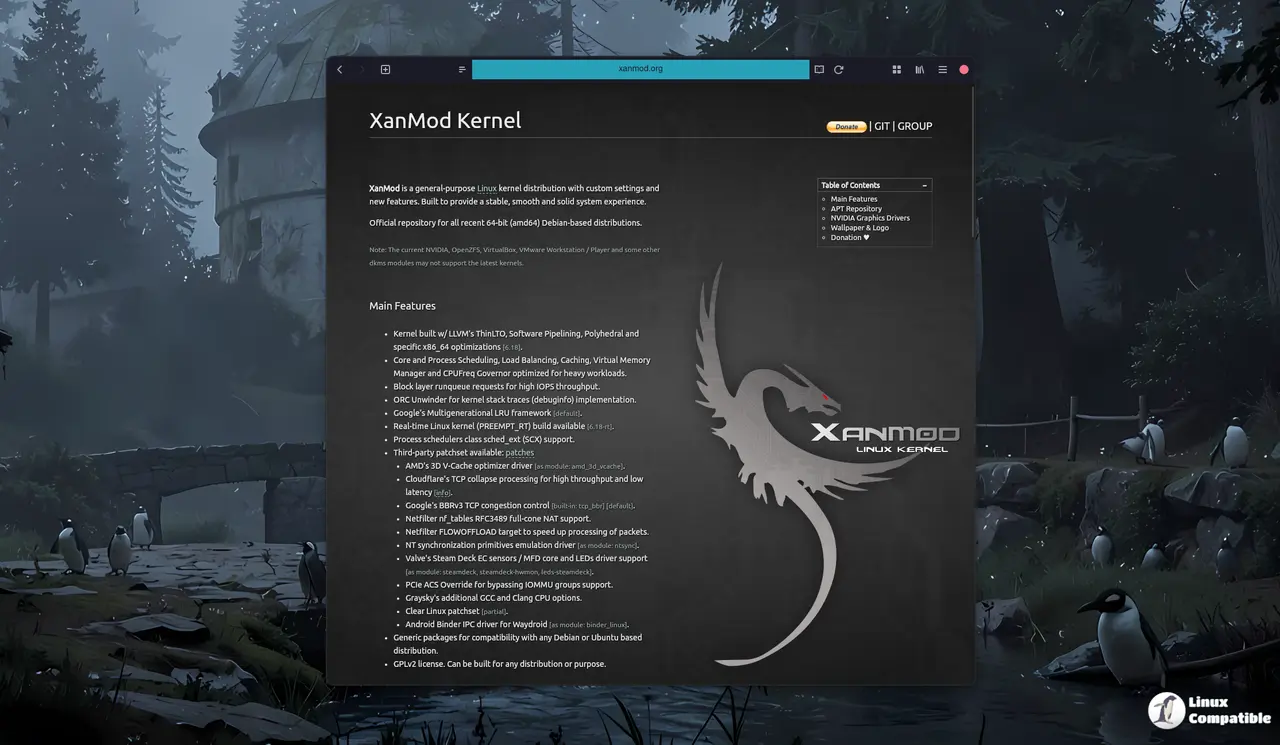
What Actually Changed Under the Hood
The core of this update focuses on squeezing extra throughput out of x86_64 processors without adding unnecessary bloat. Google multigenerational LRU now handles memory pressure more efficiently, which means systems with heavy application switching should see smoother frame pacing and fewer stutters during intensive workloads. Cloudflare TCP collapse processing and BBRv3 congestion control work together to reduce latency on busy network connections. These tweaks target real desktop usage rather than theoretical server benchmarks, making the upgrade worthwhile for anyone juggling virtual machines or continuous compilation tasks.
Installation Instructions for Debian Based Systems
Getting the new kernel onto a working system requires a few straightforward steps that can be handled through the terminal. Users first need to register the official PGP key by running wget with archive output directed to gpg dearmor, which prevents package verification errors down the line and stops random update failures after a major release cycle. After adding the repository source list file, an apt update command refreshes the local cache so the system recognizes the new kernel packages without throwing missing dependency warnings. The final installation step pulls linux-xanmod-x64v3 into the package manager, followed by a standard reboot to activate the updated scheduler and memory handlers. External module dependencies like dkms and clang should be installed beforehand if custom drivers are in use, since rebuilding out of tree modules against newer kernel architectures often requires fresh compiler toolchains.
First, bring the PGP key into APT’s trust store so it can verify every package that rolls out. Running the command below fetches the key and writes it to the appropriate directory; doing this before adding the repository protects you from man‑in‑the‑middle attacks on the kernel packages.
wget -qO - https://dl.xanmod.org/archive.key | sudo gpg --dearmor -vo /etc/apt/keyrings/xanmod-archive-keyring.gpg
Next, drop a repository file into sources. The line below is already tuned for the distribution you’re on; it automatically expands to the correct codename thanks to lsb_release. Once that file is in place, APT knows exactly where to pull the kernel packages from.
echo "deb [signed-by=/etc/apt/keyrings/xanmod-archive-keyring.gpg] http://deb.xanmod.org $(lsb_release -sc) main" | sudo tee /etc/apt/sources.list.d/xanmod-release.list
Known Compatibility Limits and Workarounds
Even with careful optimization, certain third party modules will struggle to build cleanly against newer kernel architectures. NVIDIA graphics drivers, OpenZFS implementations, VirtualBox extensions, and VMware Workstation packages all rely on specific kernel headers that sometimes lag behind upstream changes. When a DKMS module fails during boot or installation, it usually points to missing build tools rather than a broken kernel itself. Running apt install with the no-install-recommends flag for libelf-dev, clang, lld, llvm, and dkms typically resolves most compilation failures before they interrupt system updates. It is never a bad idea to keep a fallback standard kernel installed alongside custom builds, just in case a newly compiled module refuses to load properly after a routine update.
Keeping a custom kernel up to date requires regular attention rather than passive background installs. The trade off between bleeding edge scheduling tweaks and broad hardware compatibility means users should verify their specific use cases before switching from standard distribution kernels. Systems built for gaming, virtualization, or continuous compilation will benefit most from the new scheduler improvements. Those running legacy peripherals might want to stick with maintained stable releases until module support catches up.
Thanks for sticking around. Happy computing.


