XanMod Kernel 7.0.6 and 6.18.29 Deliver Heavy Workload Tuning for Debian Systems
The latest XanMod kernel releases bring a fresh round of performance tweaks aimed at keeping desktops and workstations responsive under heavy loads. Users running Debian or Ubuntu can swap in these builds to get optimized scheduling, faster network stacks, and better memory management without chasing custom compile scripts. The catch is that proprietary driver modules like NVIDIA and VirtualBox might still need time to catch up with the newest kernel versions.
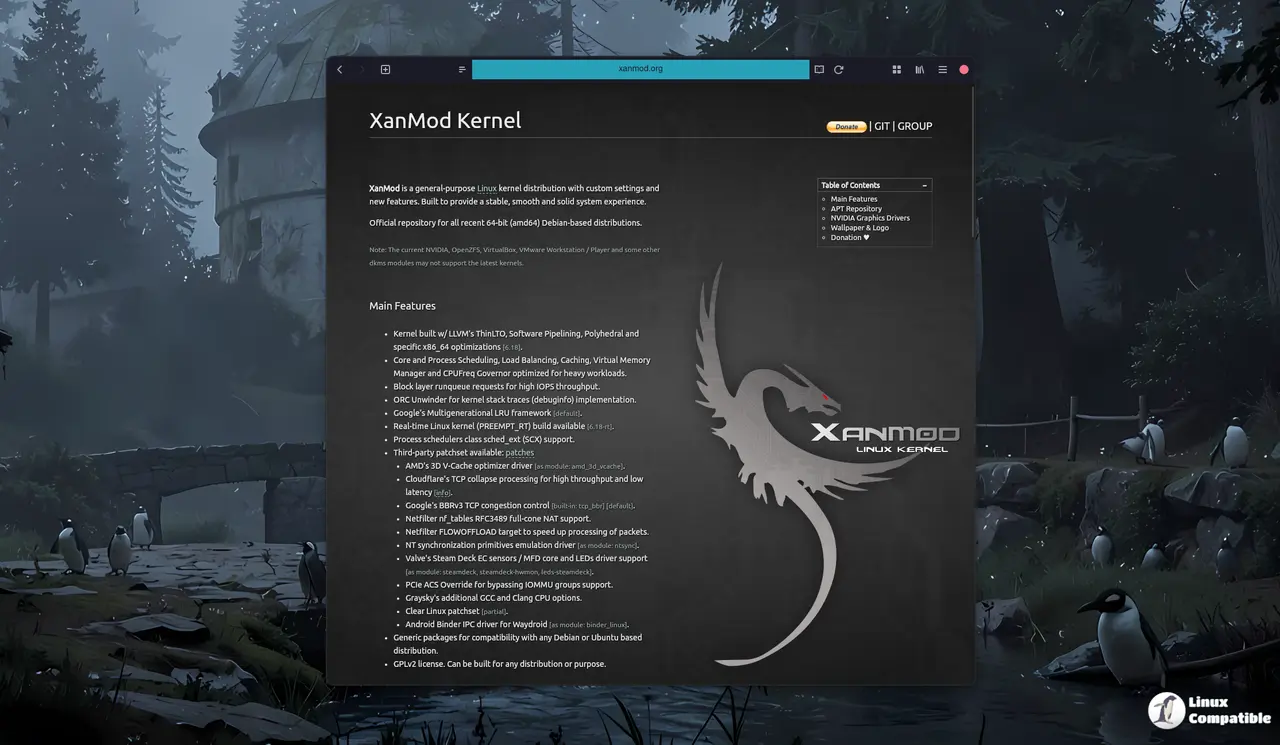
How the XanMod kernel Handles Memory and Network Stacks Better
Standard desktop kernels play it safe by balancing power draw against raw speed, but this build flips that equation toward sustained performance. The project ships with LLVM ThinLTO and x86_64 optimizations baked in, which tightens the binary footprint while keeping execution paths lean. Desktop setups often choke on sudden memory spikes when compiling code or rendering video, and the multigenerational LRU framework handles those bursts without thrashing the swap drive. Network stacks get Cloudflare's TCP collapse processing and BBRv3 congestion control out of the box, which means file transfers stay smoother when network latency spikes. AMD users with 3D V-Cache processors can load a dedicated module that tweaks memory routing for lower latency, while Steam Deck hardware gets proper sensor support through optional kernel modules. Chasing bleeding edge kernels for marginal benchmark gains is usually pointless when proprietary drivers still rely on older module trees, but XanMod keeps compatibility intact by shipping generic packages that compile cleanly against standard Debian toolchains. The PREEMPT_RT variant remains available for anyone who actually needs real-time audio timing without patching the base tree themselves.
How to Install Without Breaking Existing Drivers
Adding this kernel requires registering a GPG key and pointing the package manager at an official repository before pulling the x64v3 variant. The installation command grabs precompiled binaries tailored for modern Debian derivatives, but users should verify driver compatibility first since DKMS modules often lag behind kernel releases. Running the dependency install step ensures that external module builders like clang and llvm are ready if a proprietary driver needs recompilation later. Rebooting after the package manager finishes writing the new initramfs files guarantees that the bootloader loads the correct configuration instead of falling back to the stock kernel. Rolling back stays straightforward through standard apt commands, which keeps the whole process safe for systems that still rely on legacy hardware or specialized peripherals.
First, bring the PGP key into APT’s trust store so it can verify every package that rolls out. Running the command below fetches the key and writes it to the appropriate directory; doing this before adding the repository protects you from man‑in‑the‑middle attacks on the kernel packages.
wget -qO - https://dl.xanmod.org/archive.key | sudo gpg --dearmor -vo /etc/apt/keyrings/xanmod-archive-keyring.gpg
Next, drop a repository file into sources. The line below is already tuned for the distribution you’re on; it automatically expands to the correct codename thanks to lsb_release. Once that file is in place, APT knows exactly where to pull the kernel packages from.
echo "deb [signed-by=/etc/apt/keyrings/xanmod-archive-keyring.gpg] http://deb.xanmod.org $(lsb_release -sc) main" | sudo tee /etc/apt/sources.list.d/xanmod-release.list


