Ubuntu Linux 26.10 'Stonking Stingray' enters Beta Freeze, Beta images targeted for Thursday
Ubuntu Linux 26.10 has now entered Beta Freeze, per the release team, with Beta images landing sometime this Thursday. The final 'Stonking Stingray' release is set for October 15, nine months out and one more step in the long road toward Ubuntu Linux 28.04 LTS next April.
The Ubuntu release team announced the Beta Freeze Tuesday, with Beta images and the final October 15 launch on the calendar.
The notice landed on the ubuntu-devel-announce mailing list Tuesday morning, pushed by Utkarsh Gupta on behalf of the Ubuntu Release team. "As of a short while ago, Stonking Stingray has entered the Beta Freeze, with a goal of releasing Beta images sometime late Thursday," Gupta wrote. Beta images specifically are slated for Thursday, September 24.
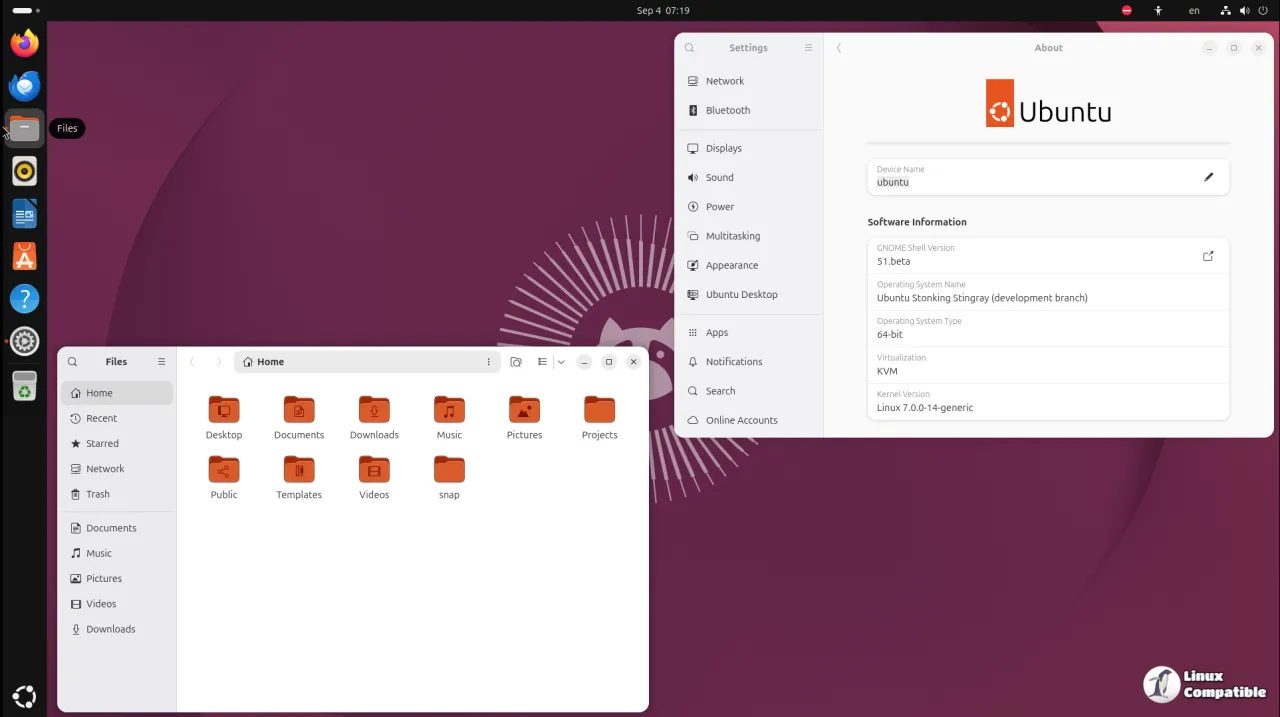
The schedule actually lists the Beta Freeze milestone as September 21, so the announcement landing on the 22nd sits a day late. That fits the pattern we've seen on previous cycles. Canonical's release-schedule page notes that dates can shift if there are regressions or other developmental hurdles, though, so timing remains provisional until the final build.
Keep in mind that the Beta Freeze is the last real gate before a final release. From here until October 15, all seeded packages must earn a spot-check and review by a release-team member before they can enter the archive. That's the entire point of the freeze, which is to stop layering new code onto a shrinking bug-fixing window.
An auto-accept bot still swallows uploads that are unseeded and don't touch the images, so the release team isn't completely buried. Gupta did throw out a clear caveat though: don't read that as a green light to break Feature Freeze on those components. Candidates are being spun up within a few hours, and testers are being urged to start hammering their favorite flavors right away.
If you want to pull an image yourself, the Test Observer tracks them at tests.ubuntu.com. Per the notice, any image built on or after September 22 counts as a Release Candidate. Head there to grab one.
A lot on the plate for Stonking Stingray
The headline changes in this cycle are the kind that tend to split Linux communities neatly in half. Ubuntu is shipping the Linux kernel 7.3, even though that version may still be lingering in Release Candidate status when the final build goes out on October 15. It's policy now, of course, having started in 2024 and extended the following year. Still, shipping an RC-status kernel heading into a GA date is a mild gamble, and it's fair to ask whether it'll hold up once you're actually running it.
Then there's the D-Bus swap. Ubuntu is retiring dbus-daemon after a 22-year run as the default, swapping in dbus-broker, an asynchronous, event-driven implementation that's already the default on several other distros. dbus-daemon has held the title since the very first Ubuntu release in 2004, which is longer than most of us have been running Linux. Canonical says the change fixes message loss under heavy load and trims sequential-query latency. It's a real win, even if it's not the most glamorous one.
The Rustification keeps moving forward too. The default coreutils now run entirely on the Rust-based uutils implementation, with the remaining GNU utilities (cp, mv, rm) finally migrated out. It's part of a broader campaign that has already replaced findutils, diffutils, and sudo. Canonical also became a Gold Sponsor of the Trifecta Tech Foundation with a €40,000 annual contribution, so this reads as a funded multi-year strategy rather than a novelty. ntpd-rs is next in line, but that one won't land until Ubuntu 27.04 at the earliest.
The desktop gets GNOME 51. The Shell picks up a pile of small fixes: screen selection now stretches to the monitor edges, the power-off dialog regains its "Install Updates" checkbox, and the overview search spinner no longer resets on every keystroke, which is a thing I've grumbled about personally. Custom sound effects replace the system sound theme, brightness is now saved across sessions, and the mic icon only lights up during actual recording.
Mutter drops support for legacy NVIDIA drivers, which may annoy a few people still running old cards. There's also a floating search overlay in the works, but that's an unconfirmed merge request, so count it as "maybe" until it actually ships.
Canonical's local-first AI push lands here as well, embodied by Myna, a push-to-talk speech-to-text tool that runs on-device through a sandboxed Canonical Inference Snap. OMG! Ubuntu built an early version from source and found it pairs a background orchestrator with a GNOME Shell extension showing Myna's on-screen state. It's a stand against the cloud-AI trend, even if it's still early and mostly assembled by volunteers working from source.
What's not final yet
A few items deserve a healthy dose of skepticism before you rewrite your expectations. The redesigned installer and onboarding flow is exactly the kind of change that draws headlines, but Canonical is explicit that it's aimed at Ubuntu 28.04 LTS, not 26.10. The design work happens during this cycle; it won't be fully baked until next April. Same story with the package-agnostic App Center, which promises unified search and ratings across .deb and Snap plus the long-able-to install local DEB files.
Some proposed changes are worth watching, or dodging. There's a plan to strip signed GRUB builds down to the bare minimum for Secure Boot, which would drop filesystem support like Btrfs and ZFS in the process. If you store data on Btrfs or ZFS, you might want to sit this one out. A separate OOM killer tweak would stop the kill switch from taking down your whole desktop session, which sounds strictly better.
The codename keeps Ubuntu's alphabetical animal-creature sequence going, right after Resolute Raccoon (26.04 LTS). "Stonking" is British slang for something impressively large, for what it's worth. Interim releases like 26.10 get nine months of support, running through roughly July 2027, and they exist to stress-test newer kernels, toolchains, and design changes with a smaller audience before they hit the wider LTS crowd.
It's a lot to cram into a nine-month release, and much of it is genuinely interesting. The Rustification and the dbus-daemon retirement feel like real milestones, and the kernel 7.3 gamble is honest tradeoff by policy. But the biggest headline feature, the installer redesign, isn't actually here yet, and several experimental items remain unconfirmed. Worth keeping in mind if you're tempted to bet your workstation on an interim release this October.
Beta images should drop Thursday. Head here to the Test Observer to pull one early if you like.


