KDE polishes its widgets, fixes a spate of bugs as Plasma 6.9 nears
The November 7 "This Week in Plasma" rounds out a rough patch of widget tweaks and quality-of-life fixes ahead of Plasma 6.9's late-February 2027 target.
The KDE Plasma desktop picked up a fresh batch of widget tweaks this week and nudged itself a bit closer to that late-February 2027 release.
A widget-first patch
The most eye-catching new feature is a "Picture of the Day" wallpaper plugin, and it's not any ordinary wallpaper. It shows art from David Revoy, the French creator of the open-source webcomic Pepper & Carrot. Guillermo Villafuerte built it.
Revoy is arguably the biggest name in free-culture comics today. His series is drawn entirely with Krita, Inkscape, Blender, Kdenlive and Scribus, then released under a Creative Commons license. Folding his work into the wallpaper engine is a bit of a fan nod, but it lands.
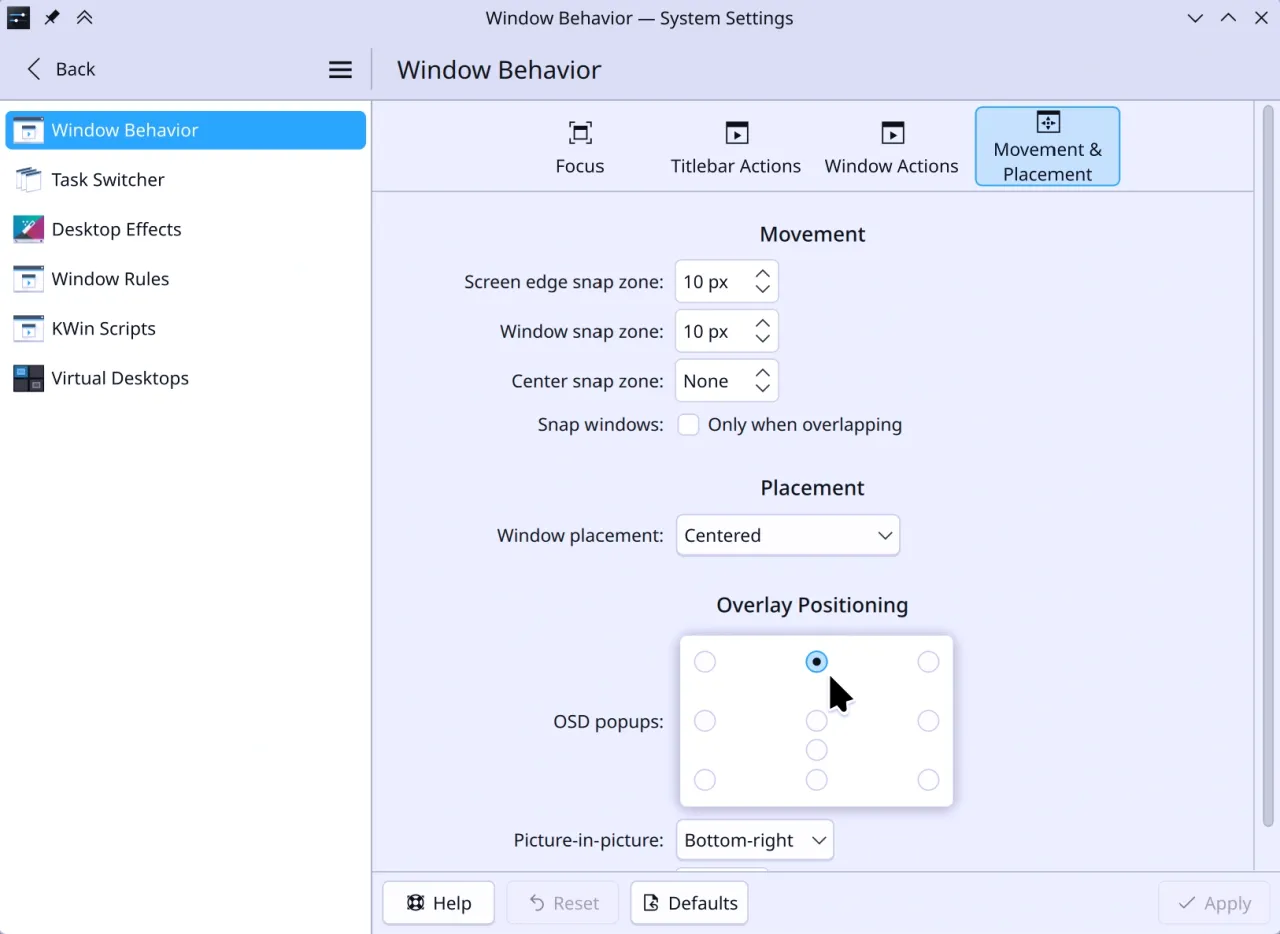
The rest is more practical. You can finally choose where the volume and brightness popups land on screen. That request has been sitting in KDE Bugzilla for years (Bugzilla #501654), and Matthias Schuh closed it out.
Running systemd-ask-password on systemd 257 or newer now brings up a proper KDE dialog instead of a bare terminal prompt. Daan De Meyer did that one (plasma-workspace MR #6433). Handy if you ever trigger encrypted-volume unlocks from a script.
Plasma Browser Integration now talks to the Glide browser too. Jan Buchar handled it (plasma-browser-integration MR #178), joining a small club of Chromium browsers that cooperate cleanly with the desktop.
Keep in mind this builds on other 6.9 work from earlier this month. KWin's Wayland picture-in-picture is now on by default, giving you native floating video windows. There's also smarter per-monitor window positioning, a cut to KWin Zoom's performance overhead, and a fix for KRunner's Firefox bookmark search.
The widget fixes are where most of the effort landed. Widgets now drop onto the desktop at a size that actually works, with nothing cut off. It sounds trivial until you've wrestled with a squished widget. Felix Desyatirikov fixed it (plasma-workspace MR #7342).
Spin a mouse wheel over a horizontal row of task thumbnails and it now scrolls them properly, ending a bug that dates back years (Bugzilla #448504) via Christoph Wolk.
Launcher menus use natural sorting now, so "Transformers 10" follows "Transformers 9" instead of leaping ahead of "Transformers 1." Peder Bergan did the work (Bugzilla #524466). Small thing. It just feels right.
System Monitor graphs render more sensibly when docked to a panel, the Calculator widget is finally keyboard-focusable, and the Media Frame widget advances its compact form as your slideshow plays. Niccolò Venerandi and Christoph Wolk carry much of the weight here.
Frameworks 6.32 brings a win worth upgrading for on its own: icons under fractional scaling are less blurry and jiggle less while you resize a window. Crispness under fractional scaling has been a recurring annoyance for Hi-DPI users. Arjen Hiemstra, Ilya Fedin and Eike Hein sorted it out (kirigami MR #2225).
Performance work was quieter but real. Plasma no longer leaks memory when you right-click files on the desktop, and System Monitor has two leaks plugged. Spectacle starts faster overall, the Accessibility page loads quicker, and the Spell Check page was ported to Qt Quick, which the team says opens the door to easier fixes down the road.
Where this all leads
Three structural trends show up if you look past the bug numbers.
KDE quietly dropped its separate long-term-support branch last year, stretching normal releases from five to six bugfix cycles and settling on two major releases a year. Each release now functions kind of like a mini-LTS, aligning Plasma with Kubuntu and Fedora.
The team is maintaining four tracks simultaneously, which is quite a lot for a desktop this size. On top of that, the ongoing Qt Quick migration, moving legacy settings pages onto the modern UI stack, is meant to make future fixes cheaper to ship.
There's also the money question. The newsletter closes with KDE's year-end fundraiser, currently sitting at 35 percent of its goal. It's a reminder that this whole machine runs on volunteer time and corporate patronage, and the contributors are asking, plainly, for community support.
Nate Graham has run the newsletter since 2017. He now runs Techpaladin Software, the for-profit consultancy he co-founded that employs more than a dozen KDE developers. That funding model, which grew out of Blue Systems, is becoming the way critical open-source desktop infrastructure actually gets paid for.
If you want to try the latest work, rolling distros like Arch Linux, openSUSE Tumbleweed and KDE neon's Testing Edition pick things up first. Neon's Testing Edition currently ships the newest Plasma 6.8, which lets you preview what's coming.
Folks on point-based distros should just wait for their distributor's backport schedule. Stable builds "might not be available on all distributions at the time of this announcement," per KDE.
The 6.9 target is late February 2027, though KDE notes those dates can shift if development runs behind. Head here to the KDE blog for the full digest, or pull up the This Week in Plasma issue itself to read it straight.


