SteamOS 3.8.28 Beta contains a single change targeting degraded game performance on systems with AMD discrete GPUs after a sleep/resume cycle. The build drops the "Known Issues" banner that had flagged an FSR/composition regression across several recent betas, suggesting that issue may finally be resolved at the beta level. Though small on paper, the fix matters most for the growing crowd running SteamOS on third-party AMD-dGPU laptops and desktops rather than Valve's own Steam Deck.
SteamOS 3.8.28 Beta Lands With a Single, Targeted Fix for AMD Discrete-GPU Systems
Valve published SteamOS 3.8.28 Beta on September 22, and it does exactly one thing. The changelog lists a single change under "General," and it targets a narrow slice of hardware: systems with AMD discrete GPUs that lose performance after a sleep and resume cycle.
That's it. No features. No experimental toys. Just a fix, and a fairly specific one at that.
A Small Fix With a Real Audience
Here's what Valve wrote, more or less verbatim: "Fixed an issue where game performance could be degraded after sleep/resume on systems with AMD discrete GPUs."
It sounds minor. Read closely, though, and it describes a genuinely annoying failure mode. Modern GPUs drop into low-power idle states when they're not working hard. Sometimes the transition out of sleep fails to properly reinitialize the driver's power management, leaving the card stuck in that low-performance state even when you're running a demanding game. The frames were probably fine until you stepped away and came back.
That's a real problem for the people this build is aimed at, even if the Steam Deck community largely shrugs.
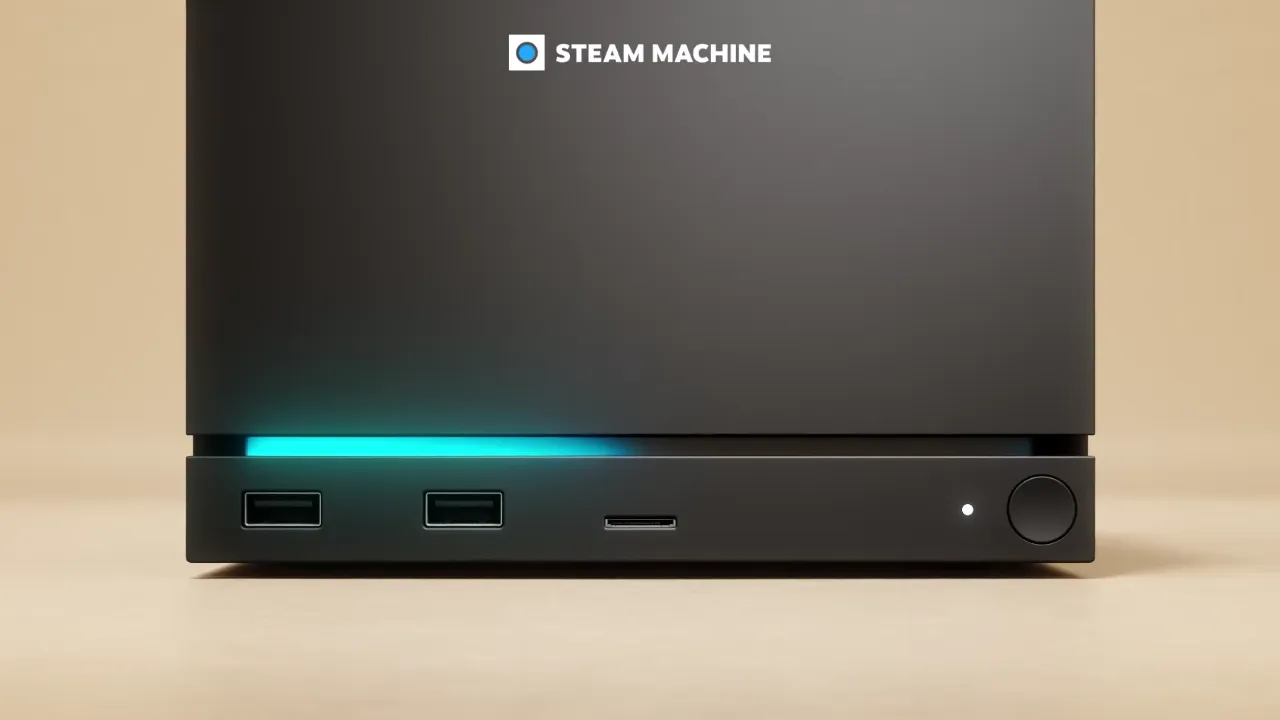
The Deck and Steam Machines use AMD integrated APUs, so this particular fix doesn't touch Valve's own handhelds directly. It's aimed at the growing crowd running SteamOS on third-party laptops and desktops with dedicated Radeon graphics. Keep in mind that Valve doesn't actually sell any of those machines. It just ships an open-source, freely installable OS and lets the rest of the industry build to it.
The upshot is that this update is less about a flagship product and more about signaling that Valve's driver testing now covers a much wider ecosystem than just the Steam Deck.
The Quietly Absent "Known Issues" Banner
If the fix itself isn't the headline, then maybe the missing section is.
This build ships without a "Known Issues" list. Several recent betas (3.8.23, 3.8.24, and 3.8.25) all flagged an ongoing composition and FSR-related performance regression. None of them are in 3.8.28.
It's tempting to read too much into an absent paragraph, but the timing is at least suggestive. The FSR/composition regression has nagged the beta channel for a while, and the fact that it's no longer being called out means it may finally be resolved at the beta level. That's a good sign heading into future Stable merges, where such things tend to surface loudly.
Valve still runs its usual boilerplate warning, of course. The beta "includes new features that are still being tested," which is Valve-speak for "something may break before this lands on Stable."
Where This Fits in the 3.8.x Grind
This one-line fix is really just another tile in a long mosaic of graphics-driver tuning. Look at the recent history and a pattern emerges.
3.8.26 addressed degraded performance "when composition is required (such as when having FSR enabled)," alongside Firefox freezing in Desktop Mode, a blank right eye in Unreal Engine 5 VR, Bluetooth instability with the Switch Pro (v1) controller, some unusable sub-640x480 Desktop Mode resolutions, and a WiFi regression on the MSI Claw A1M.
A few builds earlier, 3.8.27 fixed a bug where fan speed reverted to BIOS control until a reboot, which meant abnormally loud fans sitting idle.
Meanwhile the Stable line has had its own drama. 3.8.15 resolved an FSR/composition regression and added HDR in what Valve calls Assassin's Creed Black Flag Resynced. Then 3.8.16 pulled that change back entirely because it had driven some titles to show blank screens, kicking the root-cause investigation back to Beta.
The 3.9 Preview builds are where the heavier stuff gets staged: an updated Arch base, a Desktop Mode upgrade from KDE Plasma 6.4.3 to 6.7.3, a crash fix for Forza Horizon 6 on the "Legion Go 2," and a frame-limit issue dragging FPS on certain external displays.
Not that the version numbers mean much to anyone outside Valve's QA team. But the throughline is clear. For a while now, SteamOS development has been less about flashy new features and more about making graphics power management, thermals, and composition actually behave on real hardware. This sleep/resume fix belongs squarely in that family.
It's a rather restrained release for a company that could have shipped a feature-laden beta to generate buzz. The narrow focus is arguably the point, though. When you're running a console-like OS on someone else's desktop, polishing the things that quietly go wrong matters more than the things that sound good in a keynote.
How to Try It
If you want to test it yourself:
- Open Steam on your device.
- Go to Settings => System => System Update Channel.
- Pick Beta from the dropdown.
- Close and reopen Steam to apply the update if prompted.
If you value stability, you can stay put on Stable, which currently sits at 3.8.16, and wait for this fix to trickle down through the normal beta-to-merge process.
Head here to Valve's Steam Community and Steam store news pages for the official announcement.


