Valve pushed SteamOS 0.4 to the Steam Frame's stable channel on October 8, delivering the update to all users automatically. The headline improvement is a battery-life gain of up to 12 percent during both streamed and local gameplay, though real-world results will likely be more modest. The release also repairs a nagging streaming bug called "Error 17," fixes a wireless-adapter problem that hit users in some countries, and rounds out a batch of general dashboard, audio, and accessibility tweaks. Because the Frame runs an ARM64 branch of SteamOS, these fixes had to be built separately from the Deck and Steam Machine, a reminder that the headset is still catching up to Valve's other hardware.
SteamOS 0.4 ships for Steam Frame, with up to 12% more battery life
The stable-channel update for the wireless VR headset also repairs a long-plagued streaming bug and a wireless-adapter problem that hit users in some countries.
Valve pushed SteamOS 0.4 to the Steam Frame's stable update channel on October 8. Every owner of the headset gets it now, automatically, no beta opt-in required. The headline is a battery-life bump of up to 12 percent, though the release does a lot more than stretch playtime. It fixes a streaming fault that has nagged some users for months, corrects a wireless-adapter problem that left people in certain countries stranded, and rounds out a pile of smaller touches. Coming roughly a year after the Frame was first revealed, it's a more complete package than you'd expect from a still-baby headset.
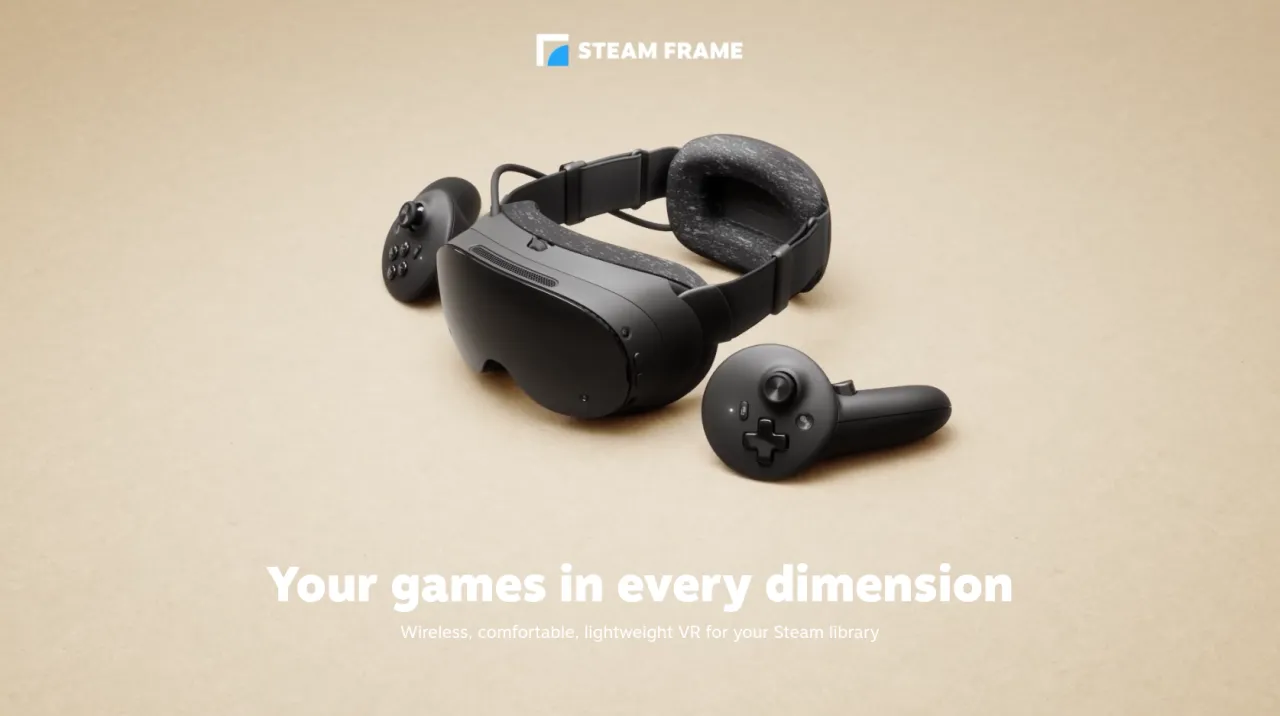
The battery and streaming fixes
The battery number is the one Valve leads with, and it applies to both streamed and local gameplay. The 12 percent figure is a theoretical ceiling, though. Real-world gains will be more modest, and they'll shift with framerate and content. Still, it's efficiency wrung out of the OS rather than a new battery, which is worth saying given the headset carries just a 21.6 Wh cell bolted to the rear headstrap.
There's also a new Presence Sensor Sensitivity setting with a "high sensitivity" option that keeps the displays on under a wider range of conditions. Useful if you wear glasses and have been living with the spacer dilemma.
The streaming fixes are arguably the more meaningful half of this release. Valve addressed a headset chroma regression, that's the color-clarity regression some users noticed, and it cleaned up VR streaming reliability, including the much-maligned "Error 17" connection fault.
Here's the catch. On the PC side you also need SteamVR 2.18.2 or later to cut down on those Error 17 issues. As of release, that build was sitting on the SteamVR beta branch, so PC users had to opt in. Other streaming cleanup includes audio reliability, fixed cases where other network interfaces disrupted the dongle, a keyboard that refused to appear mid-stream, and spectator view now smoothed by default. You reach spectator view from a PC through Steam => Settings => Remote Play, or any Steam Link device.
The rest is a long tail of general fixes. Controller bindings that failed to load in games like Google Earth VR and Thumper now load. Dashboard panels stop flickering, focus behavior with grab/resize handles feels cleaner, and the dashboard stops recentering itself for no good reason. Audio gets a matching-volume fix across downmix and binaural formats, resolving a perceived loudness mismatch. Accessibility gains a "Track Dominant Eye Only" option plus the ability to specify your dominant eye, which controls spectator view and screenshots. Community reception was warm, too: roughly 132 up-votes against a single down-vote on the announcement, at last count.
A fix with a mystery attached
One part of this update carries a bit of mystery. SteamOS 0.4.3 fixed wireless-adapter connectivity issues that "affected users in some countries," though Valve never named a specific country, a Wi-Fi band, or a root cause.
Coverage traced the issue to regulatory Wi-Fi domains. A troubleshooting script in Valve's own SteamVR-for-Linux repository checks whether the host's Wi-Fi ruleset carries the 6 GHz band. If it doesn't, the dongle simply won't work. The script also warns owners not to flip their Wi-Fi region to the United States just to unlock 6 GHz.
At the time, the workaround was developer mode plus a USB connection to the PC. The 0.4.3 build rolled out roughly 19 hours after that script's last revision, which looks like the follow-through, and shipping alongside SteamVR 2.18.2 inside the headset image. Valve never confirmed that a promised non-6 GHz mode actually landed, and it named no countries.
If you happen to be in an affected region, the only way to know whether it mattered was to take the update. Now it's on stable, so the test is trivial. Keep in mind, though, that the lack of specifics means this is really "fixed for whomever it broke," rather than a clean bill of health.
Why the ARM chip changes everything
The Steam Frame runs an ARM64 branch of SteamOS, because it's built on a Qualcomm Snapdragon 8 Gen 3 instead of AMD's x86 silicon. That's the first time Valve has carried SteamOS onto a mobile, battery-powered device outside the Deck's AMD family. Every fix here has to be ported and validated independently from the x86 builds, which raises honest questions about how fast Frame users will see what x86 users already take for granted.
There's also a supply-chain wrinkle worth flagging. In July, Bloomberg reported Qualcomm was raising chip prices by double-digit percentages, driven by rising DRAM and NAND costs plus softening smartphone sales. The Frame's heart is a Snapdragon, so that's a direct hit. Community speculation ran hot, with some forum users floating prices well north of $1,000. Valve didn't confirm a price hike, and it never pushed an aggressive MSRP either, the pitch has always been the experience and the SteamOS tuning, not the spec sheet or the number on the box.
That philosophy actually cuts in the Frame's favor here. The headset is arriving with genuinely useful software maturity, and SteamOS has a track record of extending hardware life well past its launch window. The Deck proved that's possible. The Frame might just repeat it, especially if battery gains keep coming through the OS rather than the factory.
How to get it
The update is rolling out to the stable channel now, so most frames should pick it up on their next check. If you want to look around or change channels manually, head to Settings => System => System Update Channel. PC users should also keep an eye out for SteamVR 2.18.2 if you want the full Error 17 relief, it should land on the stable branch sooner rather than later.
Head here to read Valve's own release notes on Steam News.


