Shelly 2.4.1.2 lands with key fixes, solidifying its spot as an Arch-native package manager alternative
The libalpm-based tool, now adopted by CachyOS, gets another bump with chroot, AUR, and dependency patches.
Shelly 2.4.1.2 has officially rolled out. If you are running Arch or an Arch derivative, you already know what the fuss is about. Zoey Erin Bauer’s project just isn’t another pacman skin. It talks straight to libalpm, the same core library that drives the official pacman tool, which means it gets direct access to the transaction database, dependency trees, and hook system. No wrappers. No middlemen.
This release is mostly housekeeping. The changelog shows a few targeted patches: a chroot fix for pkexec that finally passes the correct user over to makepkg, a child process spawn correction, an optdeppkg dependency resolution bump, and a cleanup for an AUR package that was accidentally stripping unresolved version constraints. Nothing world-shaking, but those are exactly the quiet bugs that keep an AUR-heavy workflow from fraying at the edges.
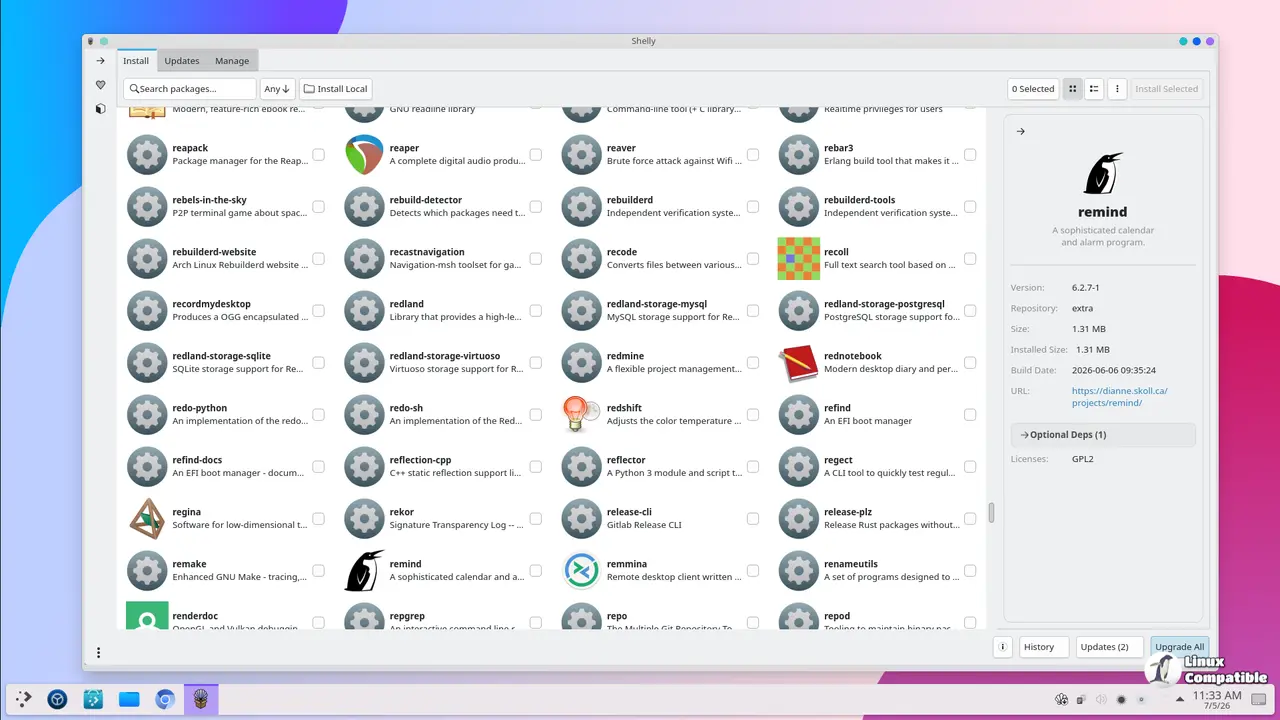
The stack behind the interface
What makes Shelly stand out is what runs underneath the hood. The core package manager is written in Zig, handling roughly 57 percent of the codebase. C# accounts for about 40 percent, with the command-line interface built on .NET 10 and the desktop app using GTK4 paired with Libadwaita. Notifications run through a tray daemon, while shell and Vala make up the remainder. It is a strange but deliberate stack for an Arch tool, and it shows in how it feels once you actually launch it. The interface is snappy, respects Wayland out of the box, and the unified search pulls from official repos, the AUR, Flatpak, and AppImage without making you jump through tabs.
On top of that, Shelly keeps adding quiet polish that most pacman frontends skip. There is a shelly purify command that scans for corrupted metadata after a hard shutdown, a searchable transaction history that actually outperforms pacman.log, and support for up to 20 parallel downloads. Flatpak management sits right alongside native packages, so toggling Flathub on and off does not require dropping into the terminal. It is a rather ambitious undertaking for a single developer, though the repository structure and dedicated test suites suggest it is getting more disciplined with age.
Production validation
The real signal that Shelly has crossed into production maturity came earlier this year when CachyOS 2604 shipped it as the default graphical package manager, quietly retiring Octopi. That endorsement matters. A third-party tool replacing a distribution’s built-in UI means someone trusts it with their root environment. As of mid-2026, the repository sits at over 3,000 commits and 86 official releases, with active work on repository modification, AppImage sandboxing, and a multi-language translation layer. The developer also maintains sponsorship links through Buy Me a Coffee and Fluxer, alongside a JetBrains open-source license grant.
Getting your hands on it
If you want to try it, you can pull it from the AUR with yay -S shelly or paru -S shelly, clone the repo and build it locally, or run sudo pacman -S shelly if you are on CachyOS. The source repo is hosted at github.com/ZoeyErinBauer/Shelly-ALPM, and the wiki covers the full feature list and roadmap. Keep in mind that you will need pacman, gtk4, glib2, sudo, tar, bash, git, and libarchive on a fresh install. Flatpak support kicks in automatically if you have flatpak sitting around.
Arch package managers tend to come and go. Most of them just reimplement pacman in another language. Shelly is doing the opposite, speaking the library directly and asking whether a modern, multi-language stack can feel faster and cleaner than the tool that has run the distribution for nearly two decades. The 2.4.1.2 update keeps the engine running smooth. We will see how the repository modification feature shakes out in the next cycle.


