Liquorix Linux Kernel 7.1-14 Ships With Upstream 7.1.9 Base and Synced Security Configs
Enthusiast scheduler tweaks ride along, but the real shift is in how the project aligns with major distribution security defaults.
The Liquorix kernel just got its first major bump of the 7.1 cycle. Version 7.1-14 dropped on August 19, 2026, pulling in the upstream 7.1.9 release alongside a notable security configuration overhaul. If you run a responsiveness-tuned kernel, this is the one to track.
Liquorix has been Steven Barrett’s passion project for years. It trades power efficiency and raw batch throughput for a snappy, low-latency desktop experience. Gamers, audio engineers, and desktop tinkerers typically flock to it. The PDS scheduler, hard kernel preemption, and a 1,000Hz tick rate are what make it feel different from a stock distribution build.
Custom kernels like this usually exist in a pretty isolated corner of the Linux world. Security hardening tends to slide down the priority list when you are chasing lower input latency. Liquorix finally addressed that gap in this release.
What Changed in 7.1-14
This build merges Linux 7.1.9 at the core. That alone brings a steady stream of driver updates, bug fixes, and hardware support straight from the mainline tree. What sets 7.1-14 apart is the LSM sync. Barrett has aligned Liquorix’s security module configuration with Arch, Debian, and Ubuntu defaults. AppArmor is now the primary mandatory access control system. CONFIG_SECURITY_LOCKDOWN_LSM is enabled for kernel memory protection. And Landlock, the unprivileged sandboxing module from Red Hat, has been added to the configuration list. It’s a security-first adjustment that doesn’t touch the performance tuning underneath.
Keep in mind that Liquorix is still a custom build aimed at interactive workloads. The PDS scheduler still runs by default. Kyber handles modern NVMe drives while BFQ takes the wheel for older single-queue storage. TCP BBR2 replaces Cubic for congestion control. These aren’t going anywhere. The underlying philosophy remains firmly rooted in responsiveness.
The Security Pivot
It’s a sensible security pivot. Distributions have quietly tightened their lockdown and sandboxing defaults over the past few years, and Liquorix is finally catching up to that baseline. However, at the same time, power-conscious laptop users should remember that this kernel favors responsiveness over battery life. The aggressive CPU frequency thresholds and higher tick rate will drain power faster than a stock build. That’s by design.
You pick up snappier framing and lower audio buffer latency. You pay for it with watts. It's arguably competing with other custom kernels in the same tier, but the security realignment gives it a cleaner profile for systems that run trusted boot or need stricter sandboxing.
Installing it is straightforward. An auto-install script handles Debian, Ubuntu, and Arch:
curl -s 'https://liquorix.net/install-liquorix.sh' | sudo bash
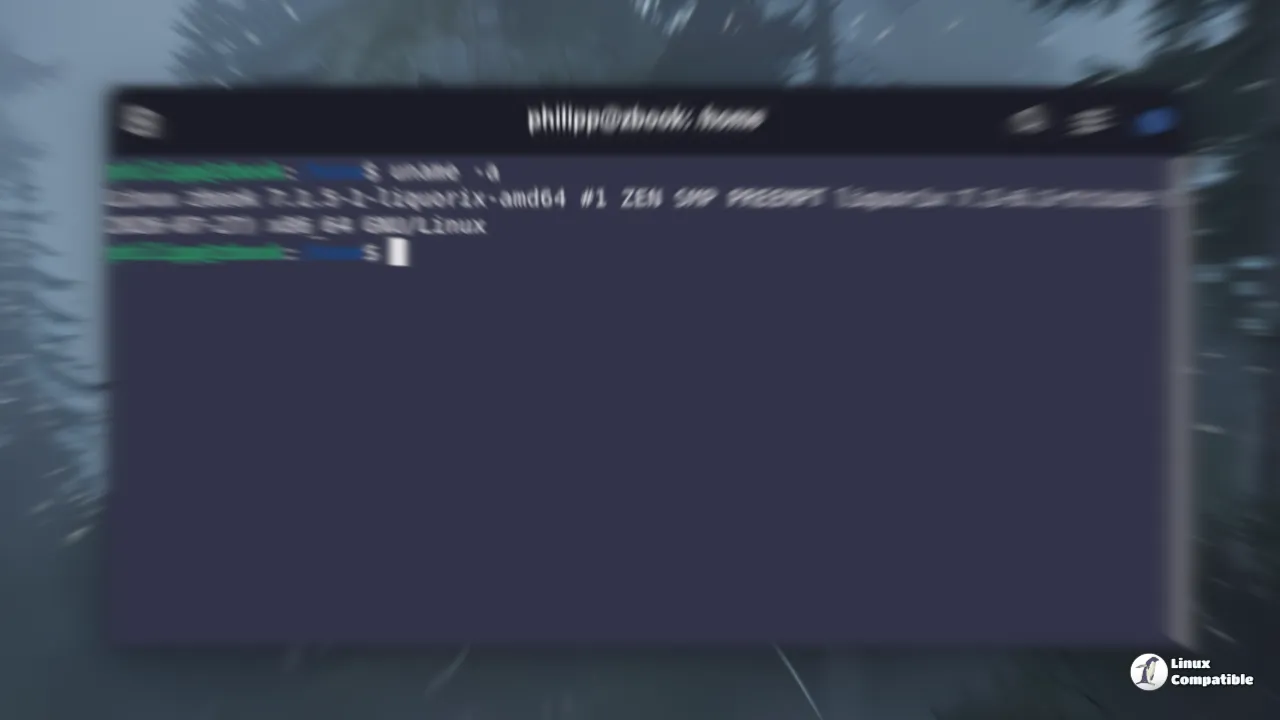
Once installed, a quick uname -r should show the 7.1.9-liquorix identifier. The project has been running smoothly since Barrett first pushed it to the community, and the commit history shows over 4,000 changes across multiple kernel cycles.


