HestiaCP Ships 1.10.8, Locking Down 2FA, Redirects, and Backups
The open-source control panel quietly stops leaking authentication secrets to a third-party QR service while tightening a pile of smaller things.
Hestia Control Panel released 1.10.8 today. The maintainers are calling it a "service release," which is panel-speak for no new features, just fixes. Three security changes lead the way, plus a round of dependency bumps and bug fixes that probably won't surface in your news feed unless you're actively patching the server.
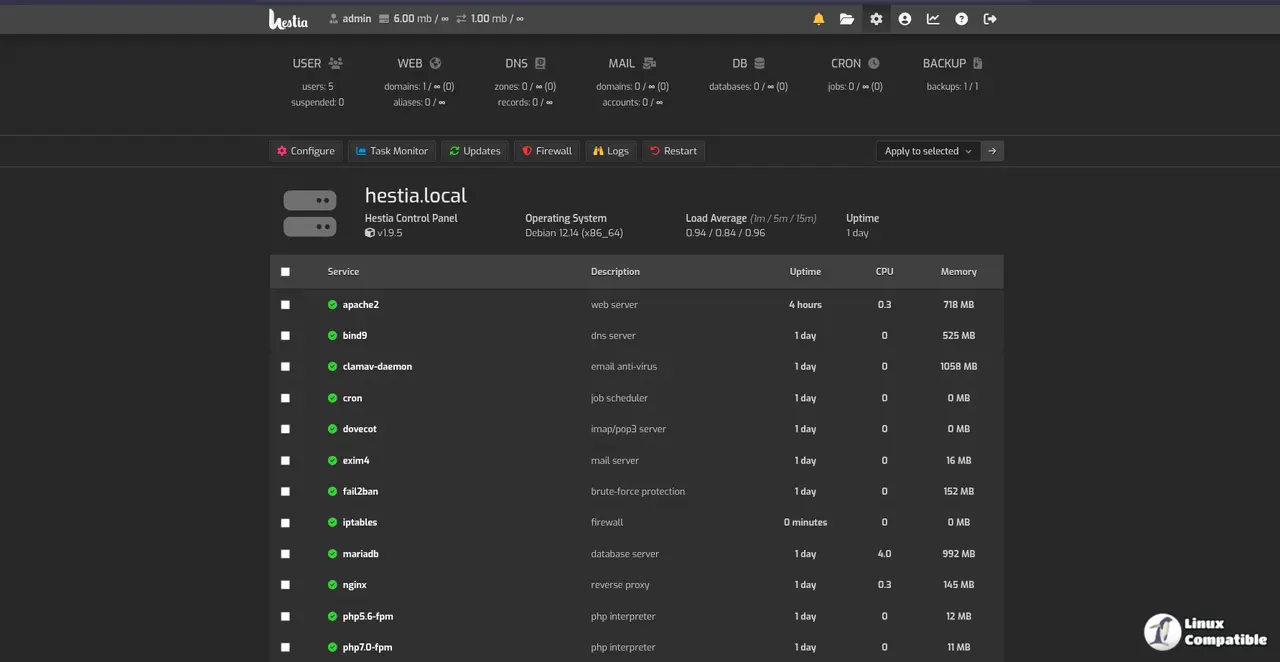
HestiaCP is the free, open-source Linux control panel that inherited the throne after VestaCP went dark. It manages web domains, mail accounts, DNS zones, and databases from a single dashboard, ships under GPL v3, and runs on what's clearly a small team.
Beyond the headline fixes
Take the two-factor enrollment flow. Before 1.10.8, turning on 2FA had the panel ask an outside service, api.qrserver.com, to draw your authentication QR code. That seems harmless until you count what actually rode along: your TOTP secret (which doubles as your recovery code), your username, and the server hostname. Now the QR is generated on-box with the Bacon QR library, so nothing leaves your machine.
The pull request also fixes a worse side effect. If QR generation failed, the panel could save an empty error string as your secret and report success, leaving you with an account that's locked out and thinks it's secure. The new v-add-user-2fa command refuses invalid secrets and exits with code 12 instead. Contributor @ootada noted the change "needs no GD or Imagick PHP extension," keeping it light.
Then there's the open redirect on the login page. The panel used to accept a redirect URL after sign-in, which someone could twist into a //evil.com-style trap and bounce authenticated users off to a phishing site. Redirects are now limited to internal /edit/ paths.
Backup downloads offered another, subtler vector. Old logic matched files by prefix, so any archive beginning with your username could be pulled down. That meant requesting another account's backup was just a matter of matching leading characters. 1.10.8 narrows downloads to your own precisely-named archives, so the <user>.<date>.tar pattern is now the only thing that comes back to you.
CSRF protection on the password and 2FA reset pages got a proper fix too. Those email links now carry a valid token and show a real session-expired message instead of silently bouncing you back to login. Failed attempts actually land in auth.log now, which helps with monitoring and trims the false alarms.
Fail2Ban's dovecot-iptables jail was likewise doing nothing. A Hestia-specific Dovecot filter was added with maxretry set to 10, so the jail now catches failed mail logins instead of matching nothing at all. Existing installs migrate automatically.
SnappyMail jumped to 3.1.3, Nginx to 1.30.7, and every non-major dependency and linter was updated. On the build side, arm64 packages now compile on native arm64 runners for cleaner integrity, and user_exec commands run from the home directory rather than the caller's working directory.
A pattern, not a one-off
Honestly, 1.10.8 makes more sense read against what came before. The 1.10.x track has been shipping fast and hard, roughly once a week for months. In November alone, three service releases landed: 1.10.6, then 1.10.7, then 1.10.8. Just days earlier, 1.10.7 already cleared out a pile of GitHub Security Advisories: symlink-following by root, hardened password-file handling, and protection for the privileged ROOT_USER SSH keys. The 1.9.x line was far worse, with unauthenticated RCE through web-terminal deserialization, second-order command injection, and a privilege escalation that let a low-privilege user become uid=0 root.
So the picture is clear. These aren't emergency firedrills. They're the methodical closing of doors left open in earlier releases, and that methodicalness is arguably the most responsible thing about the whole release. For a control panel that holds the keys to your domains, mail, and databases, a quiet update is a feature.
If you're still on something older than 1.10.8, yes, get on it. The fixes touch authentication, backup isolation, and brute-force protection, so there's genuine reason to move. Automatic updates come on by default for new installs and live under Server Settings => Updates; a manual upgrade is the usual apt-get update && apt-get upgrade dance. HestiaCP still supports Debian 13, 12 plus Ubuntu 26.04, 24.04, and runs on either Apache2 or NGINX with PHP-FPM.
Head here for the 1.10.8 release page.


