PixiEditor 2.1.2.1 Drops With Heavy Node Graph Features and Tool Overhaul
The open-source 2D editor expands its procedural workflow just a year after its massive 2.0 rewrite.
PixiEditor 2.1.2.1 has officially landed, and if you've been tracking the project since its July 2025 overhaul, the past twelve months have been nothing short of a sprint. The free, open-source graphics editor rolled out its latest build on July 28, packing a dense update focused on procedural node workflows, long-requested tools, and enough performance tweaks to keep older machines from choking.
For context, the 2.0 release gutted the legacy engine and rebuilt it around a full node graph pipeline, an animation timeline, and a precision brush system. Version 2.1.x kicked off in April 2026, and lead developer flabbet has been shipping builds every few days at peak cadence. If you download the new package, it clocks in at roughly 57 MB on Windows, 91 MB for the .deb, and 113 MB on Linux tarballs.
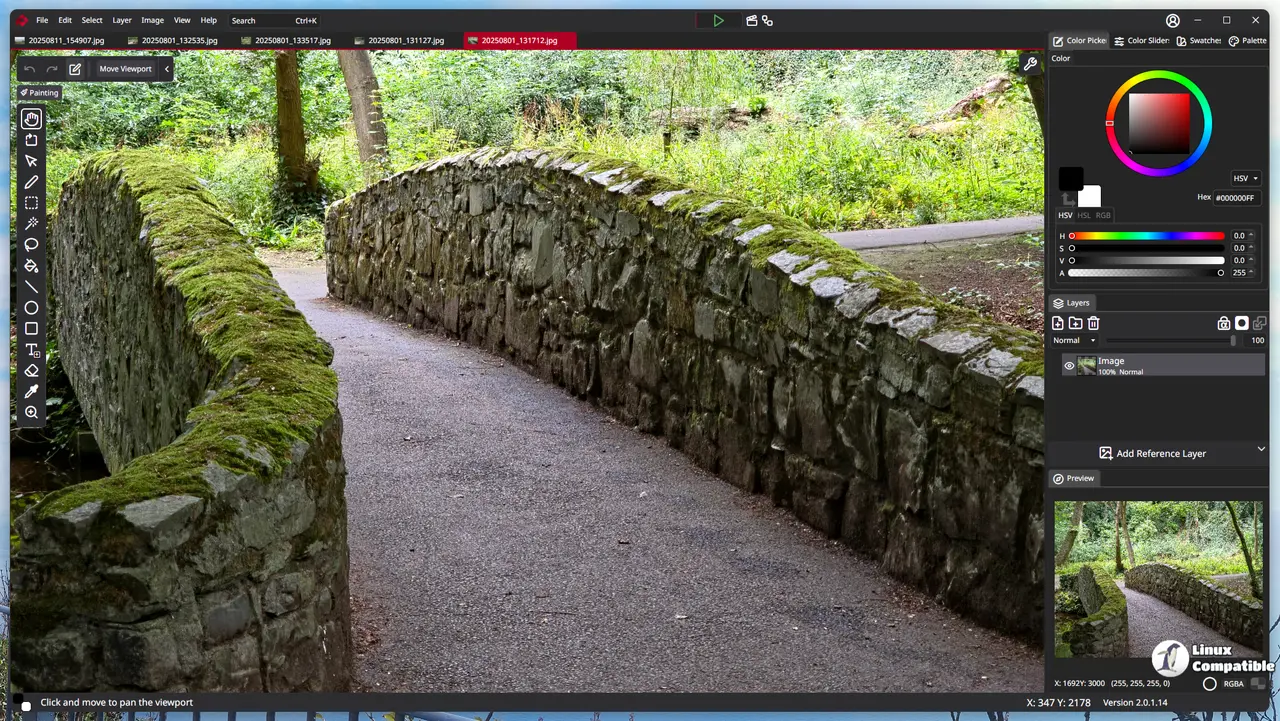
What's actually new
The biggest changes live inside the node graph. PixiEditor is adding a Color Ramp Node for procedural color interpolation, a Vector Math Node for coordinate operations, and a Random Node that actually feels useful for generative workflows. There's also a Palette and Decompose Palette Node pair, alongside a Color Mapping Node that finally lets you jump between color spaces without leaving the canvas.
Outside the graph, the update brings a Find and Replace tool, a Swap Color tool with backend speed bumps, and a Gradient Brush that paints strokes instead of filling them. Symmetry users get dedicated reset buttons, and the node graph now reads colors in a 0–1 float range rather than the clunky 0–255 integers we've been stuck with for years. Sticky Notes and Comment Nodes are also pinned directly into the workspace now, which is a quality-of-life win for anyone managing complex projects.
The community has clearly stepped up. Ghoti contributed the color and palette nodes, Equbuxu handled the color normalization work, and Laxan3000 built out the Swap Color tool. Meanwhile, flabbet pushed velocity interpolation into the brush engine, smoothed out the gradient tool, and finally let the Merge Node support more blend modes. Layer reordering bugs that plagued older builds are gone, auto-saves now land in the proper app data folder, and corrupted system fonts won't crash the app anymore.
The engine under the hood
PixiEditor still ships .pixi files as its native format, with exports covering PNG, JPG, SVG, GIF, and MP4. The four-part version numbering scheme (2.1.2.1) is unusual for an open-source project, but it tracks cleanly with Steam's store requirements and signals a fairly organized build pipeline. Keep in mind that this entire node-driven approach was a near-complete rewrite just a year ago, so the current state of polish is probably better than the raw version number suggests.
The node graph itself is the project's signature differentiator. It handles everything from gradient generation and viewport info to brush output and smart layer embedding. It's not as deep as Houdini's, but for a community-driven project that rebuilt its engine from scratch, it's remarkably close. The lack of first-party plugin support might keep some power users on the fence, but the beta Extension Browser in the works should chip away at that gap over time.
The commercial side
The project runs on a Steam-funded model, with a paid edition available on the store to support ongoing development. You can grab the GitHub build for free, but the Steam version covers Windows, macOS (universal Apple Silicon and Intel), and Linux, plus it funnels revenue directly back into the engine. The Discord server sits at roughly 7,300 members, and the project's YouTube channel already has a healthy backlog of tutorials for anyone picking up the procedural workflow for the first time.
It's arguably competing with some commercial tools at this point, especially in the vector-pixel hybrid space. The price tag is either free or a one-time Steam purchase, which helps. However, at the same time, the rapid release cadence means you should expect occasional rough edges until the 2.2 branch stabilizes. You can grab the new version from GitHub, the Steam store page, or pixieditor.net. The team isn't slowing down.


