OBS Studio 33.0.0 Release Candidate 2 ships with major CEF and plugin overhaul
OBS Studio 33.0.0-rc2 dropped on GitHub on October 16, and it's the near-final version of what's shaping up to be the biggest feature update in a while. The two headline changes are a massive browser-engine upgrade and a complete rebuild of how plugins load. Both are significant under the hood. Neither is going to change how you drag a webcam around on your stream.
OBS is the free, open-source streaming and recording tool that basically everyone and their cousin uses to push to Twitch, YouTube, and everything in between. It has roughly 77,000 stars on GitHub, runs on Linux, Windows, and macOS, and sits under the GPL-2.0 license. When a major version like 33.0 shows up, it draws attention well beyond the usual open-source crowd.
Keep in mind that RC2 is a release candidate, not a stable build. The current stable release is still 32.2.2, shipped back on August 14. If you're running a live stream for real money, stay on stable. Power users and plugin devs can opt into the beta channel to help catch whatever slips through.
The browser engine jumps two years in one shot
The most significant change here is the CEF upgrade. CEF, the Chromium Embedded Framework, is the browser engine that renders OBS's browser sources and docks. It jumps from CEF 127 to CEF 150, a move from a July 2024 codebase to one from September 2026. Nearly two years of updates, compressed into a single change.
The OBS team calls it "a massive update to the underlying framework," and notes that it's "all on the backend and should be invisible to users." They're also asking testers to report new problems with browser sources, which tells you something might break.
This isn't mostly about new features though. CEF rides along with Chromium's security patches, so this update closes about two years' worth of debt in one go. That matters because browser sources can pull in untrusted web content, and a compromised embedded browser is a genuinely concerning attack surface for millions of daily users.
Chromium 150 itself landed things like the text-fit CSS property and focusgroup keyboard navigation. You won't see either one in OBS directly. What you'll actually get is the security hardening, quietly and without fanfare.
Plugins get a fresh address book
The second big change is how OBS handles plugins at all. First-party, or "core," plugins now live in a dedicated core folder. Third-party plugins get a unified new install location and folder structure. OBS tries the new path first, and if a plugin loads cleanly it skips any duplicate lurking in a legacy spot.
Existing plugins keep working from their old locations until OBS 34. That gives plugin authors and users a real window to migrate, rather than a surprise break. Plugins still in the old layout get a "Legacy" flag in the Plugin Manager so you always know which is which.
It's the kind of structural cleanup that improves things long-term while forcing everyone to coordinate. That process is usually slower and more annoying than anyone wants, though OBS is being reasonably gracious with the OBS 34 deadline.
Smaller polish and a few real fixes
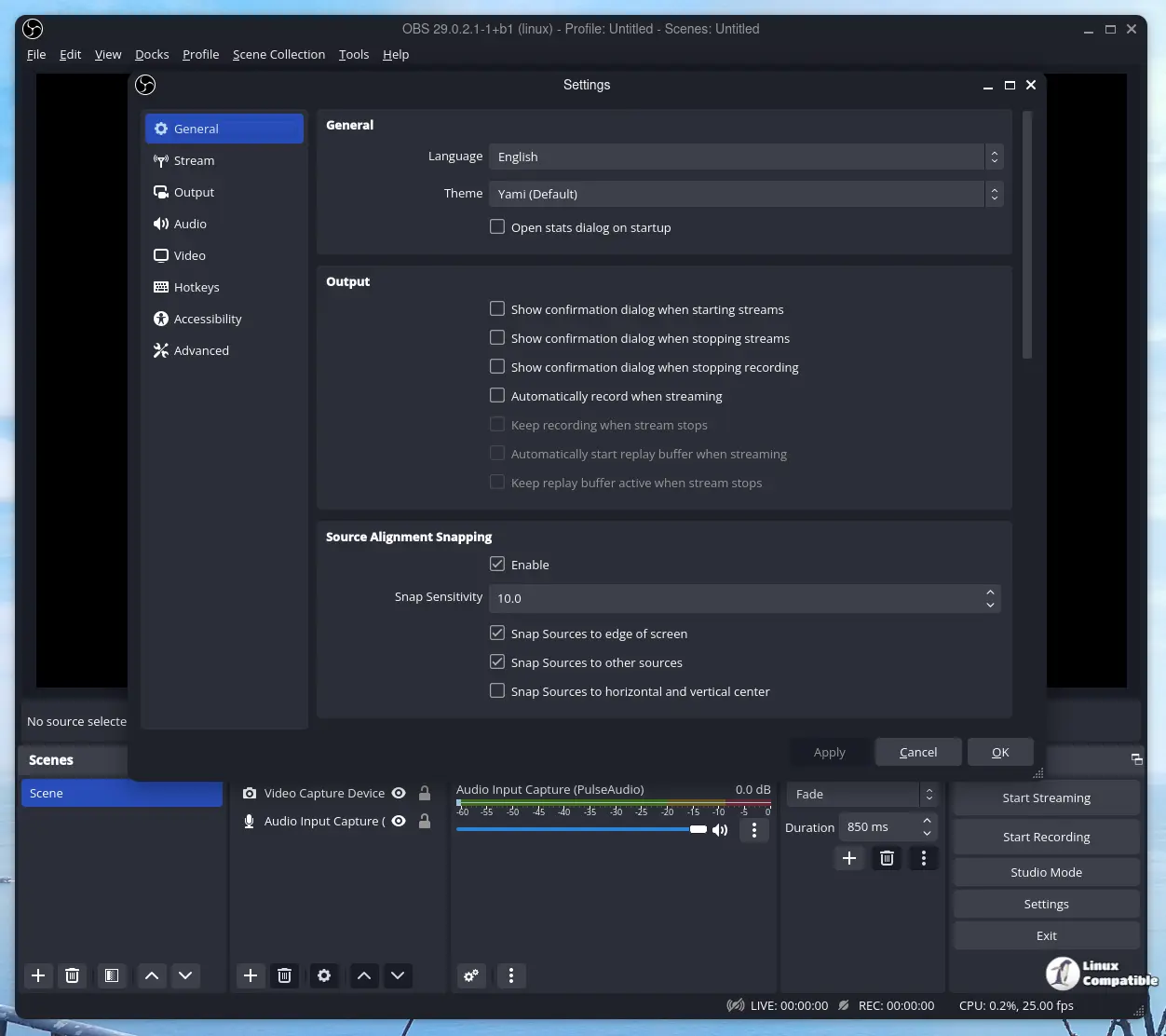
Beyond the headline items, 33.0 brings a pile of tweaks. Source snapping in the preview got better, showing a visual indicator when snapping kicks in and snapping along the entire axis. It also stops yanking visible sources around hidden ones, which was genuinely annoying behavior.
The numeric spinboxes, you know the ones in the property dialogs, were rewritten. They stopped blocking input for no reason, stopped cutting off numbers mid-type, and now only update after you press Enter without closing the dialog. Holding Shift and hitting Up or Down advances in larger steps.
There's also NVENC support on ARM64 now, a genuine first. NVENC is NVIDIA's dedicated hardware video encoder, a slice of the GPU that encodes video without chewing up your CPU. Turning it on for ARM64 means ARM machines with NVIDIA GPUs can finally get efficient hardware encoding instead of falling back to software.
Other improvements include a missing-encoder check when loading profiles, new hotkeys for audio monitoring, and improved fullscreen game detection. There's also a stream-disconnect fix for AMD's AMF encoder, which has bitten some users hard. Not to forget: OBS has dropped support for Ubuntu 24.04 LTS and now ships packages for Ubuntu 26.04.
What actually changed between RC1 and RC2
By design, the jump from RC1 (Oct 8-9) to RC2 (Oct 16) is tiny. That's the whole point of reaching feature freeze. RC2's changes were a batch of targeted fixes: a crash in the browser migration code on Windows when the plugin path contained unicode characters, incorrect paths in virtual camera install scripts, and a lingering Replay Buffer hotkey that errored on profile switches. There was also a security fix blocking the browser local file handler from being invoked by remote pages over insecure contexts.
RC1 had already cleaned up the mess from the beta phase. That batch dealt with audio monitoring briefly staying enabled at launch, browser sources going blank on refresh, and the Plugin Manager reporting third-party plugins as missing in Safe Mode.
It all points to a release that's basically done doing work. The open question now is whether it goes straight to stable or tosses one more RC at us. (The price of the release timeline has always been one of the more tedious parts of following a project like this, but a two-week beta-to-RC window is about as smooth as it gets.)
Grab it if you want to
33.0.0-rc2 is a pre-release, so keep a stable build around if streaming is how you pay the rent.
Head here to the GitHub release page.


