Liquorix Linux Kernel 7.0-13 Drops Stability Patches and Fixes Thunderbolt Stack Overflows
The Liquorix Linux Kernel 7.0-13 release lands with a solid chunk of stability patches and targeted driver fixes that actually matter for desktop workflows. Steven Barrett has pushed this update based on the latest Linux Kernel 7.0.12 to address memory leaks, Thunderbolt property parsing race conditions, and display glitches that plague AMD and Intel hardware under heavy loads.
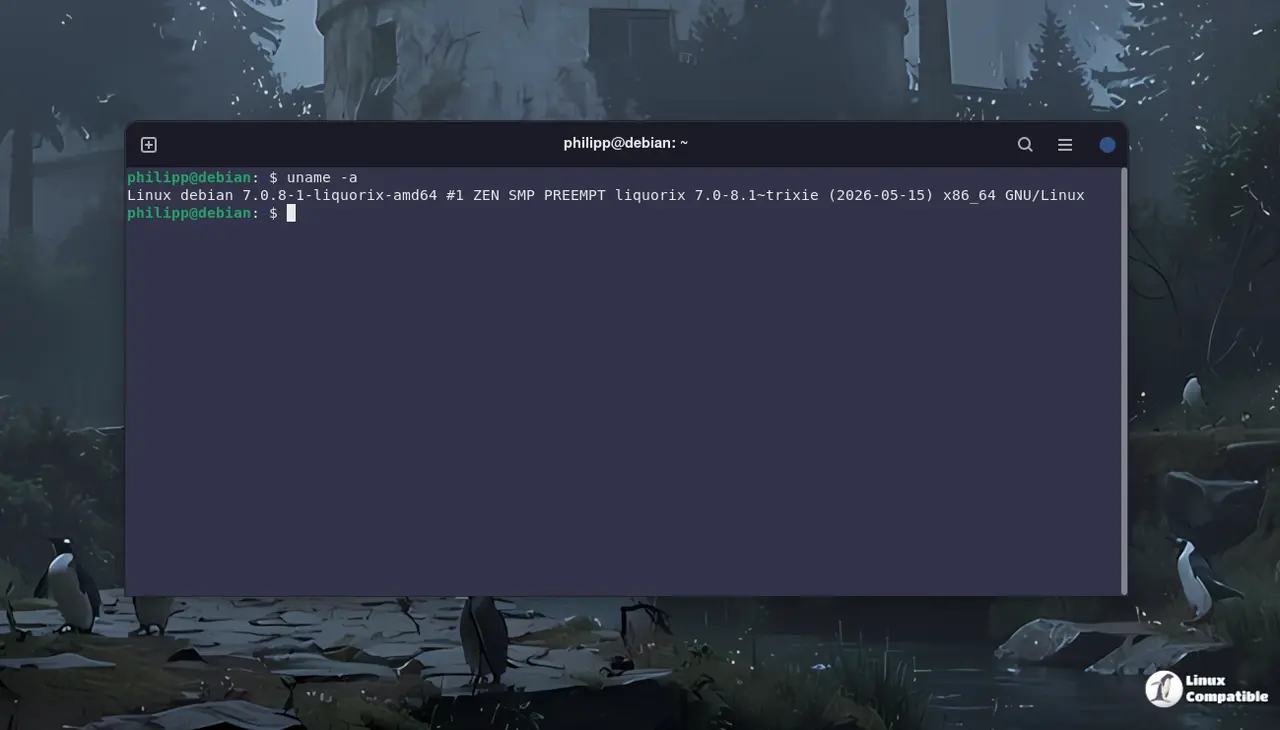
Liquorix Linux Kernel 7.0-13 Cleans Up AMD and Intel Graphics Stacks
The graphics stack gets the heaviest treatment in this release. AMD GPU drivers receive proper integer overflow checks in the KFD debugger and bounds validation for GEM object mapping info. More importantly, out of memory failures now route through correct cleanup paths, which stops leaked dma_resv locks from locking up the system. Intel i915 drivers get a critical patch for a use-after-free bug in the TTM object purge that caused general protection faults on DG2 hardware. Power management for SI GPUs also stops blocking DC states when no displays are connected, which fixes a regression that kept memory clocks pinned at maximum frequency. Users who run laptops with external monitors will appreciate the corrected display color programming loops and the fix for HDR pre-CSC LUT entries over 1.0. The random freezes that happen when switching between screens should disappear now.
Thunderbolt and Networking Fixes Prevent Stack Exhaustion and Protocol Panics
Thunderbolt property parsing gets a hard recursion limit to stop crafted peer devices from collapsing the kernel stack. The parser also rejects directory lengths under four bytes to prevent size_t underflows that led to out-of-bounds reads. Networking drivers see targeted treatments including a fix for rxrpc RESPONSE packet verification that improves the mitigation for CVE-2026-43500 by extracting UDP contents into a linear buffer instead of decrypting in place. iSCSI target drivers get bounds checks added to CHAP base64 decoding and login buffer appends to stop heap overruns. Fibre Channel transport code widens a loop counter to u32 to prevent infinite hangs from malformed FPIN frames. These network patches stop remote or physical attackers from triggering kernel panics through standard protocol exchanges. The old Thunderbolt parser was needlessly complex and allowed malicious peers to loop through property directories until the kernel stack collapsed, so the new recursion limit is a welcome cleanup.
Applying the Liquorix Linux Kernel 7.0-13 Update
The install script is mandatory here because Liquorix lives outside the official distribution repositories. Trying to manually chase the package dependencies would waste more time than just letting the script handle the repository hooks. Third party PPA managers or manual DKMS builds are completely unnecessary here. Running the curl command to fetch the script and piping it to sudo bash sets up the package manager hooks and applies the new kernel files without manual dependency chasing. Piping the output to sudo bash grants the necessary elevated privileges to modify system repositories and install packages, which saves time compared to wrestling with custom build scripts. Users should verify the active kernel version after reboot to confirm the update applied correctly.
curl -s 'https://liquorix.net/install-liquorix.sh' | sudo bash
Grab the update when your current kernel starts showing those familiar desktop stuttering issues, and enjoy a cleaner ride until the next round of patches drops.


