Kdenlive 26.08.1 Ships With Stability Fixes and Workflow Tweaks
Kdenlive has released version 26.08.1, the first maintenance patch for its 26.08 summer series. The update targets the crash conditions that inevitably pile up between a major release and the first maintenance cycle.
If you were burned by the timeline preview crashing on a fresh project or the audio recorder throwing a fit after a failed recording, this is the patch you want. The 26.08.0 launch hit on August 31, and in the roughly six weeks since, the team has been quietly patching holes in the codebase. They tackled sequence deletion crashes, ripple editing bugs, and even a splash screen hang that was tricking the operating system into flagging a false crash on restart.
Keep in mind that this is still a maintenance release, not a feature drop. The team focused on stability first. They fixed effect zones bleeding outside clip boundaries, swapped the deprecated FFmpeg -vsync flag for -fps_mode, and updated the tabbar proxy style so Windows users stop wrestling with unreadable interface elements during theme switches. macOS builds also picked up the proper entitlement files for sandboxing.
However, at the same time, the FFmpeg pipeline change means you might see slightly different render times depending on your source material. It is a minor shift, but worth a quick export test if you rely on frame-accurate timing.
What Was Actually New in 26.08.0?
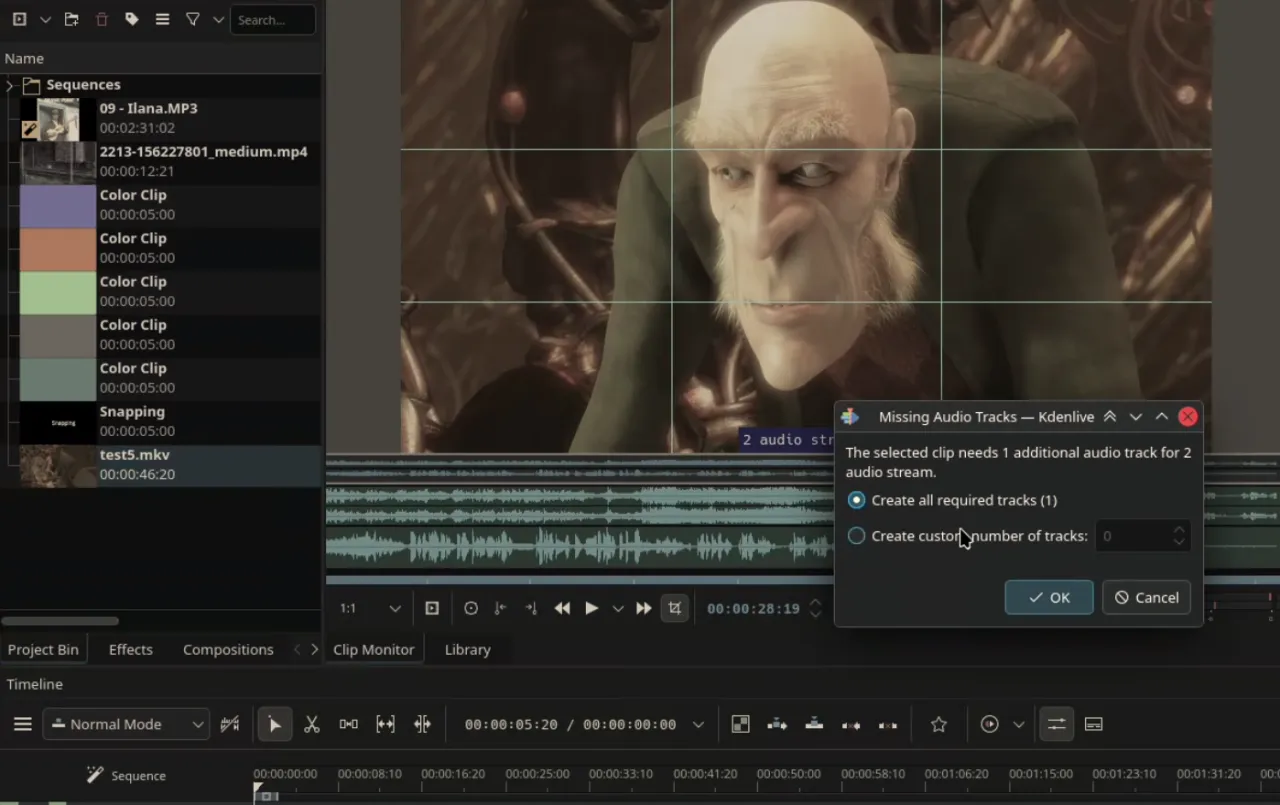
That foundational update brought a ton of changes you likely missed while chasing bugs. Audio tracks now auto-create when you drag clips onto an empty timeline. You can finally reorder tracks, snap the playhead to clip edges while holding ALT, and change the playback speed on multiple clips at once. The title editor got snapping, rounded rectangle shapes with a draggable radius slider, and actual copy-paste functionality. Under the hood, they ported the QML loader to use QJSEngine instead of MLT for effect parameter evaluation, bumped the minimum MLT version to 7.38.0, and quietly dropped the problematic LV2 and Libplacebo plugins.
The project's footprint remains surprisingly large for a community-driven effort. According to the State of Kdenlive 2026 report, the official download page saw 11.5 million installs last year. The Flatpak on Flathub pulls in roughly 41,499 downloads monthly. Thirty-eight people contributed code in 2025, with maintainer Jean-Baptiste Mardelle alone pushing 878 commits. Donations sat at €9,344.80, down slightly from the previous year, though about 30 percent of those are recurring pledges. The funding curve flattened a bit. It still keeps the lights on.
Several team members are heading to Akademy 2026 in Graz, Austria, next week to celebrate KDE's thirtieth anniversary. Mardelle is scheduled to give a talk titled "Kdenlive — take risks while having fun" on September 19. His pitch asks some honest questions about the project's relevance and GPU support ambitions. It serves as a good reminder that this software runs on volunteer momentum as much as it does on commit logs.
The Dopesheet and What Comes Next
Just days before this patch landed, Mardelle published a status update on an ongoing major project: a complete refactoring of the keyframe system. Funded by an NGI Zero Commons grant via NLnet, the new Dopesheet arrives in the upcoming 26.12.0 release expected in December. It allows per-parameter keyframing, a unified keyframe panel, and keyboard-based scaling. Clips with over a thousand keyframes reportedly load twice as fast, and the previously laggy keyframe value adjustments now feel snappy.
Head here to grab the latest stable.


