KDE shipped Plasma 6.8.1, its first Wayland-exclusive point release. The bugfix-only update packs fixes across roughly 40 projects, with the heaviest work landing in KWin, remote desktop, and power management. Most users will feel the change in daily tasks: Windows RDP connections connect cleanly, cursor flicker disappears, and multi-GPU setups stop crashing. It sits between the 6.8.0 milestone and the 6.9 feature release due late February 2027.
KDE Plasma 6.8.1 lands during KDE's 30th anniversary week
The first Wayland-exclusive point release hardens 6.8.0 with fixes for KWin, remote desktop, and stability.
KDE shipped Plasma 6.8.1 on today. It's a bugfix-only release, which normally just means "tidying up the mess." This one carries a little extra, though. 6.8.1 is the first point update in the 6.8 line, and the first Plasma release that runs exclusively on Wayland.
You likely know Plasma as the desktop environment that ships on plenty of Linux distros out of the box. It's the panels, the desktop, the window decorations, the system tray, and the little animations that follow your cursor. That's really what "the look and feel" of Linux comes down to. KDE started back in 1992, when founder Matthias Ettrich called it a "fun project" to make Unix more approachable. Three decades on, it's grown into something much bigger, producing a full desktop, office tools, and hundreds of apps in over 60 languages.
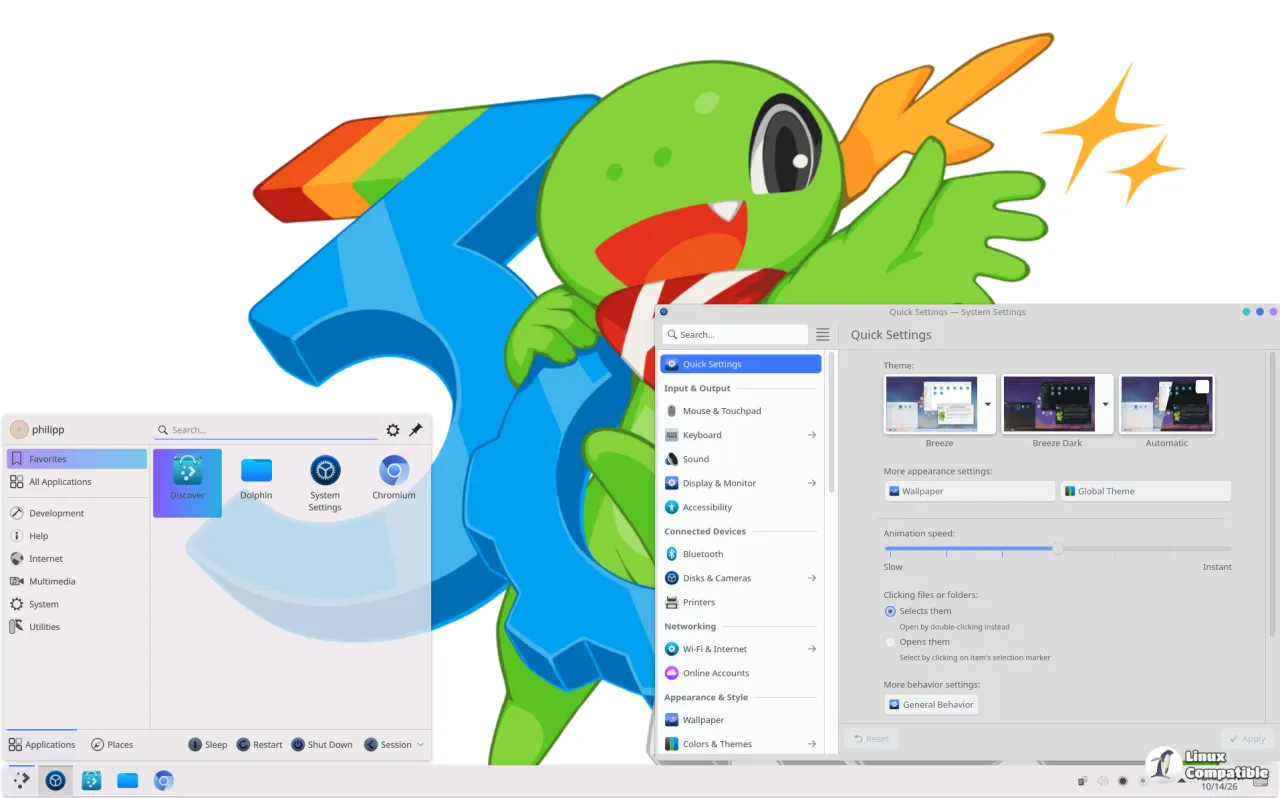
The piece that matters for this release is the Wayland pivot. Plasma 6.0 made Wayland the default back in early 2024, and KDE split its window manager, KWin, into separate X11 and Wayland branches. With 6.8, shipped six days earlier on October 14, support for starting X11 sessions was officially pulled. Wayland is now the only supported protocol for the desktop itself. Legacy X11 apps keep working through XWayland, and KDE apps can still reach X11 servers, but the desktop no longer boots under X11.
That timing isn't lost on anyone. This release lands during KDE's 30th anniversary week, sitting on top of 6.8.0, the "30th Anniversary Edition."
What 6.8.1 actually does
Before 6.8.1, there was 6.8.0. KDE described that feature release as one about launching Plasma into the future, mixing user-facing upgrades with backend work meant to outlive the current one. Headline additions included a built-in "dwell clicker" for users with mobility limits, CPU affinity controls in System Monitor, and a big refresh of the KRdp remote desktop server. Spectacle gained system-audio and microphone capture, window rules could finally round the corners on third-party windows, and a theming system called Union hit beta.
6.8.1 takes that rich base and firms it up. That's the whole job of a point release.
KDE says these bugfixes are "typically small but important." The changelog spans roughly 40 component projects and hundreds of commits. Most of the effort went into KWin, the Wayland compositor, which tracks with 6.8 being Wayland-only.
The window manager picked up fixes for the tabbox and window-switcher popups (now non-grabbing), zoom behavior toward the pointer, and multi-GPU workarounds for both NVIDIA and AMD hardware. There are suspend and power tweaks too, including actually turning the screens off before suspend instead of fudging it. Remote desktop got attention as well: KDE fixed Windows RDP client connections and auth, corrected swapped cursor color channels, and stopped rolling out TLS certificates that expire after a single day. One less certificate to babysit.
The rest of the stack got the smaller stuff. Kicker, Klipper, the wallpaper engine, and Powerdevil's brightness indicator all got patched, along with Spectacle's save behavior and Plasma Mobile's lockscreen state handling. Discover, KScreen, Bluedevil, and the login manager rounded out a long list.
Getting it and where this goes
The fixes cluster where you'd expect: pointer focus, pointer locking, multi-GPU support, remote desktop. Those are exactly the areas where Wayland desktops used to lag behind X11. This is the payoff of a deliberate migration, plain in the diff.
It's also the kind of update that matters without much fanfare. 6.8.0 pulled the headlines for dropping X11 and hitting a milestone. But 6.8.1 is where daily users feel it. Remote desktop to a Windows client suddenly connects, cursor flicker stops, and multi-GPU crashes go away.
Keep in mind that this is all volunteer work underwritten by corporate patrons, including Canonical, Google, SUSE, The Qt Company, Slimbook, TUXEDO Computers, and Framework. That's free software the way it actually gets built.
The release cadence is fast. 6.8.0 landed on October 14, 6.8.1 came six days later, and 6.8.2 is slated for October 27. The 6.x line is expected to run through 6.9 in late February 2027.
If you want to try it without installing, live and Docker images are available. Source builds are covered in KDE's build docs.
KDE is quick to point out that distro packages "might not be available on all distributions at the time of this announcement." Rolling releases like Arch, openSUSE Tumbleweed, and KDE neon pick things up first; point-based distros backport on their own schedule.
Head here to the release page.


