KDE Gear 26.08.2 ships, patching 180+ apps with zero new features
KDE e.V. pushed its third bugfix point release of the year Thursday, fixing crashes, memory-safety holes, and a few odd quirks across the entire application bundle.
KDE e.V. released KDE Gear 26.08.2 on Thursday, October 8th, 2026. Read that again: no new features. It's a bugfix-only point release covering every application bundled under the "KDE Gear" umbrella, which currently spans well over 180 apps plus a pile of libraries and plugins.
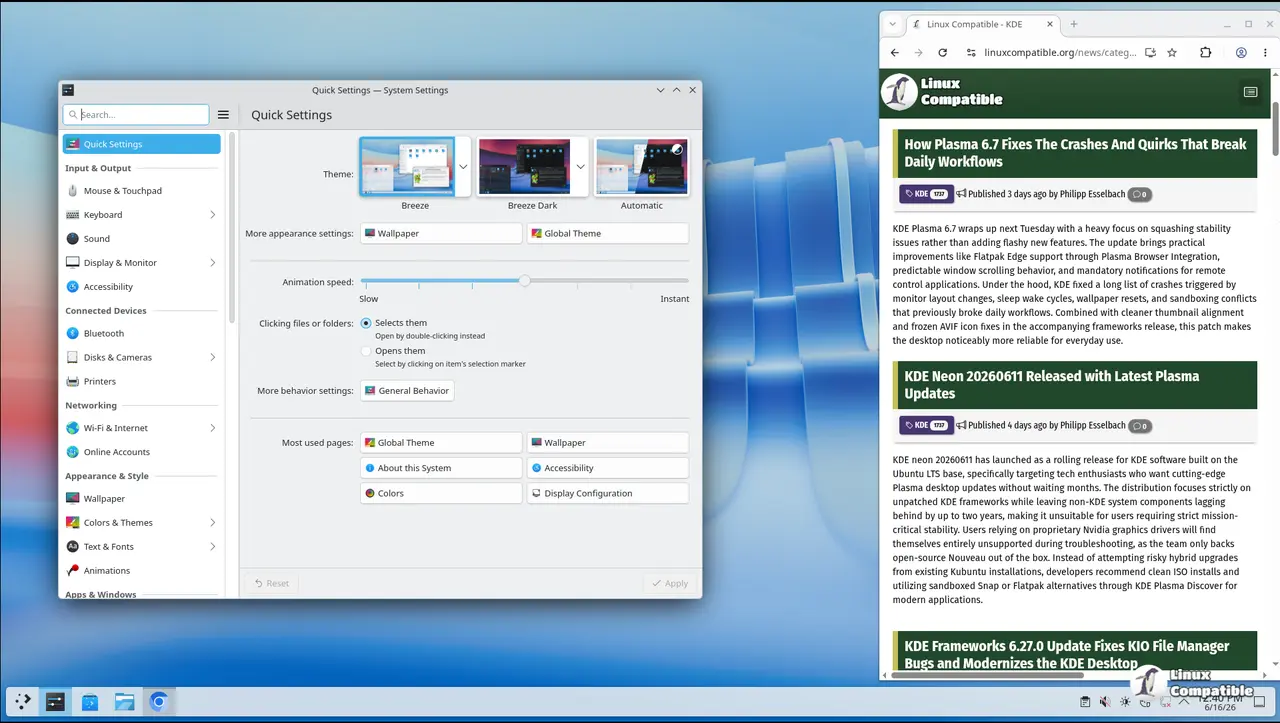
If you run Plasma, then Kate, Dolphin, and Kmail all get updated source tarballs at once, with freshly synced translations folded in. The 26.08.2 designation means this is the second maintenance increment of the August 2026 feature release. It follows 26.08.0 and 26.08.1 and fits KDE's predictable four-releases-per-year cadence.
Not exciting. But also exactly what you want from a point release.
What's actually being fixed
The headline fixes KDE called out are small and specific. kdev-python gets its undefined behavior in popExpression() squashed. Kmail stops crashing when you send signed email. PlasmaTube no longer chops the protocol off your URLs, a quirk that would leave you with a half-broken link every single time.
The full changelog tells a bigger story, though. Kdenlive, the video editor, got a broad stability pass. There's a crash from an uninitialized track in fresh projects, broken master audio levels tied to the latest MLT library, proxy crashes, and what looks like a real headache for GPU users: broken NVIDIA encoding parameters.
The memory-safety work in Okular is the piece I'd actually pay attention to. KDE scoped Okular's JavaScript engine interval timers to the document itself instead of letting them outlive the app, made bridge objects C++-owned, and stopped raw pointers from escaping. That's textbook use-after-free language, and it's the kind of fix that usually doesn't make headlines until something breaks in the worst way.
PlasmaTube and Kmail round out the trio of officially highlighted bugs.
Who actually benefits
Here's the catch: most Linux users never download KDE source tarballs. You get these apps through your distro's repos or an app store. That's why KDE's announcement ends with a direct plea aimed squarely at packagers, quoting a call to have "distro and app store packagers" update their packages. Rebuild and push, basically. That's the only path from a source tarball to your actual desktop.
KDE's also quietly pushing through a Qt 6 migration across the suite. Several build fixes this round drop the last vestiges of Qt 5, alongside MSVC compilation and iOS/snap build problems. Not announced as a feature, but it's the behind-the-scenes portability work that keeps the whole thing runnable on phones and embedded targets down the line.
There's also the oddball charm of the thing. KDE Itinerary picked up extractors for everything from Snållåget PDF tickets to Delta and Frontier confirmation emails and Spanish ALSA bus tickets. If you've ever manually logged a train ride into a spreadsheet, you'll understand why a tool that just starts working like that is kind of wonderful.
No prices anywhere, obviously. This is free software under the open-source licenses KDE's been pushing for over two decades, and it runs on Linux, BSD, Windows, Haiku, and macOS.
Where to get it
Head here to the downloads and here to the release announcement.


