GOverlay 1.9.1 adds MAKO support, lossless scaling upgrades
The new release tightens Vulkan tooling for Linux gaming with new frame generation, FSR selector, and UI polish.
GOverlay 1.9.1 has landed. Released today by maintainer Benjamim Gois, the update brings lsfg-vk 2.0, MAKO frame generation, and a much-needed FSR version selector to one of Linux's most useful gaming utilities.
If you've been chasing performance on Linux without wanting to live in a terminal, GOverlay has likely crossed your path. It's a Qt6 GUI app that handles MangoHud, vkBasalt, vkSumi, OptiScaler, and environment tweaks, then spits out launch commands ready for Steam or Lutris.
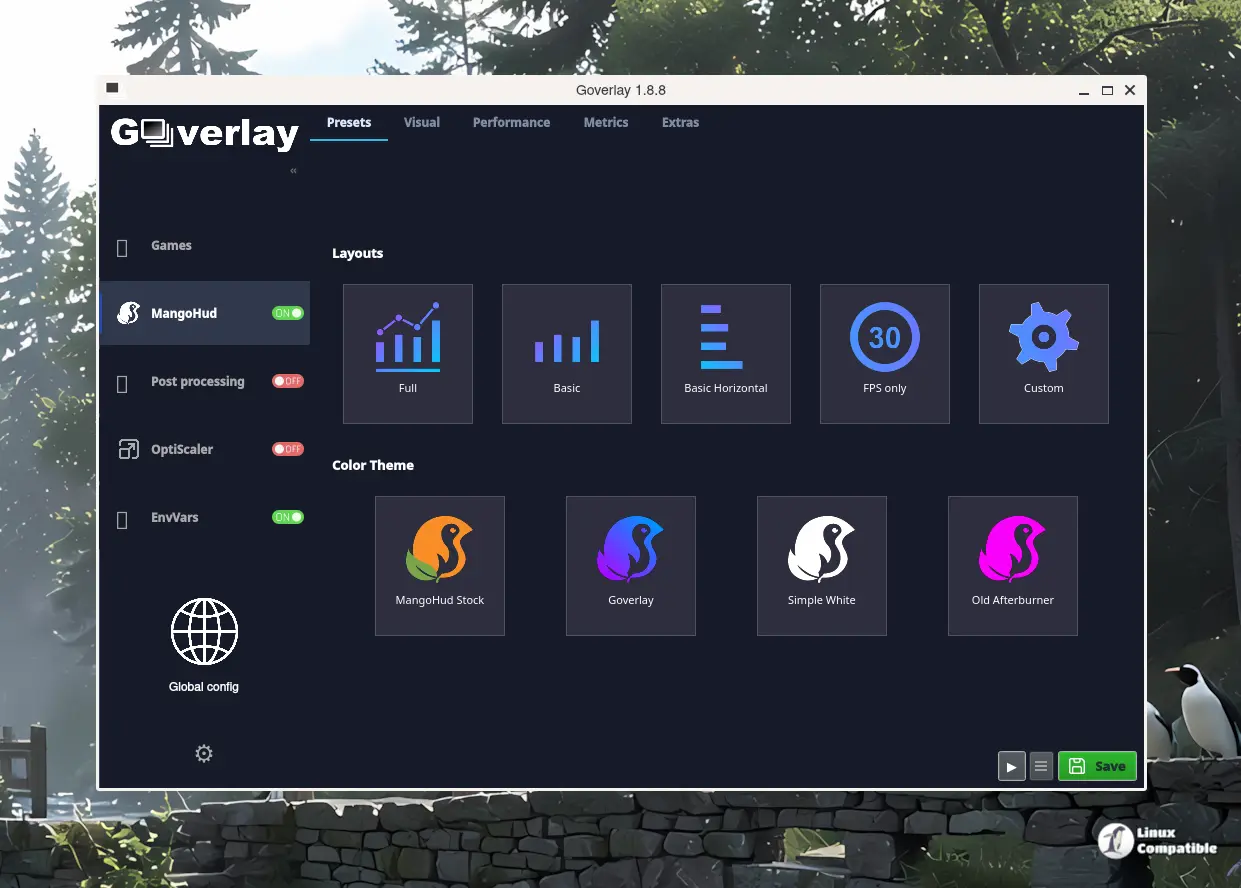
Lossless scaling gets a serious upgrade
The biggest change involves how GOverlay handles lossless scaling. Version 1.9.1 jumps to lsfg-vk 2.0 and adds native support for the MAKO Vulkan layer. That combination gives you frame generation and spatial scaling without needing NVIDIA hardware.
There's a migration assistant if you're coming from an older config. The tool now validates DLLs on the fly, which should catch mismatched binaries before they cause runtime headaches. MAKO downloads in the background, so you're not staring at a blank screen during setup.
FSR selector and UI polish
For OptiScaler and DLSS, Gois has added Streamline SDK deployment with backup support via the bgmod wrapper. You can also pick FSR versions now. A new combobox lets you switch between the latest AMD FidelityFX Super Resolution build and RDNA2-optimized variants like 4.1.1b or 4.0.2c. This matters if you're running an RX 6000 series card and the absolute newest shader isn't optimized for your architecture.
The Environment Variables tab got a visual overhaul. It now uses a card-based layout with color-coded badges: red for RADEON tweaks, green for NVIDIA. It's a small touch, but it saves you from guessing which variable applies to which chip.
There's also a dedicated Lutris platform tab in the Finish Configuration dialog, making it easier to spot the launch command if you're not using Steam.
Diagnostics and packaging
Troubleshooting just got a bit easier. Gois has centralized logs from OptiScaler, DLSS Enabler, MAKO, vkBasalt, vkSumi, and MangoHud into ~/.local/share/goverlay/logs/<GameTitle>/. Logs sync in real-time during sessions, and you can open config folders directly from the menu using your system's default file manager.
On the packaging front, the Flatpak runtime has moved to KDE Platform 6.11, and the AppImage now includes .zsync files for efficient delta updates. The Flatpak extension support is also declared for org.freedesktop.Platform.VulkanLayer.lsfgvk.
Head here to grab the release assets directly from GitHub. FGois accepts donations via Ko-fi and PayPal if you want to support the ongoing work.


