GOverlay 1.8.10 adds automated testing and polish in one-week sprint
GOverlay 1.8.10 shipped today, and it's the most aggressive push this Linux gaming tool has ever made. The update brings 34 commits, nearly 6,000 lines of added code, and a shift toward automated testing that feels a bit out of place for a solo-maintained project.
Benjamim Gois runs GOverlay. He's responsible for 89% of the 1,591 commits. That's a lot of weight for one person. Yet, the tool has 1,406 GitHub stars and over 10,000 monthly Flatpak downloads. One maintainer. Big output. You might find that balance surprising.
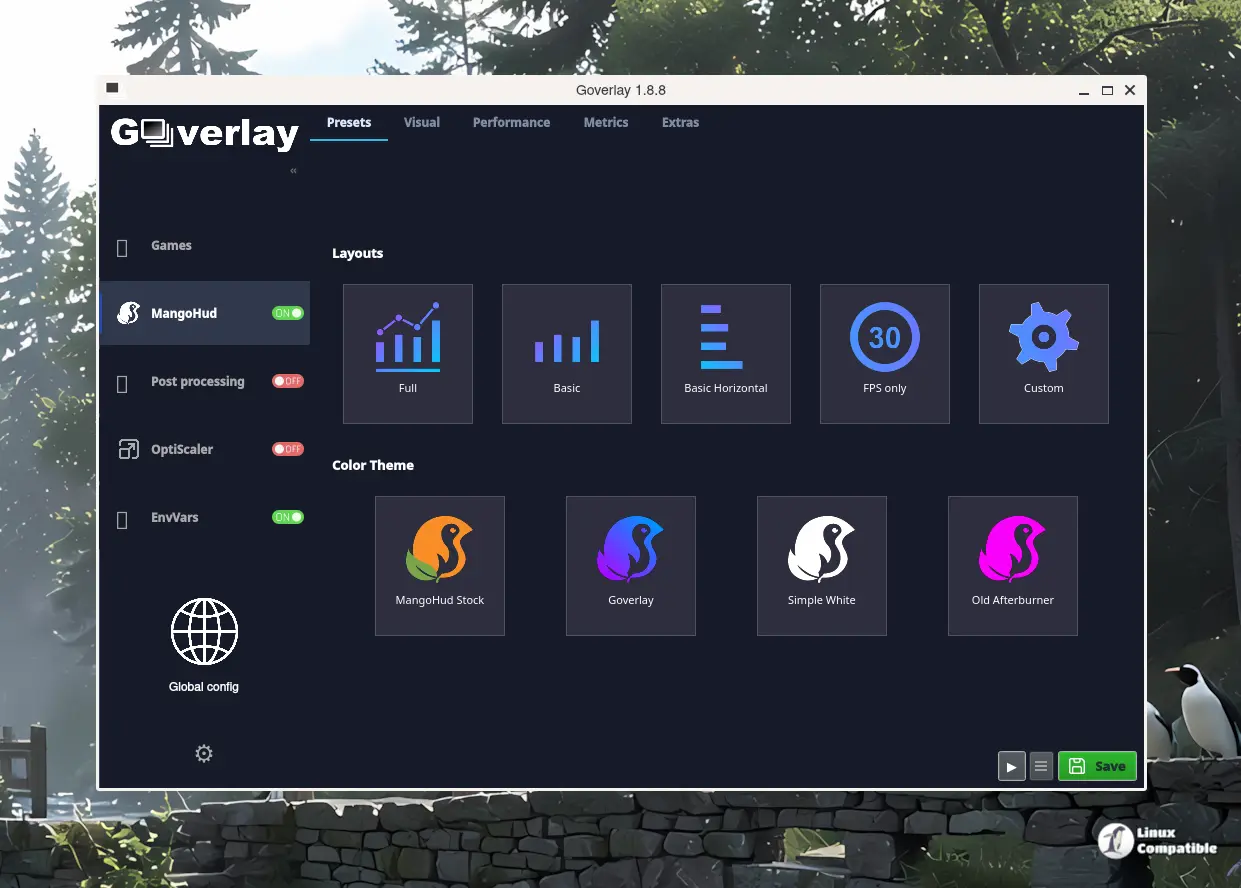
GOverlay provides a Qt6 GUI for configuring performance tools like MangoHud, vkBasalt, vkSumi, and OptiScaler. If you're running Steam games on Linux and tired of editing config files by hand, this is likely in your toolbox. Keep in mind that GOverlay targets both x86_64 and aarch64 systems, with packages for Arch, Debian, Fedora, OpenSUSE, and Solus. The 1.8.10 release tackles stability issues that have been nagging users, alongside a UI overhaul that brings the tool up to modern standards.
Real polish, not just features
This isn't a feature dump. It's a polish pass with bite. The AppImage build now integrates cmem memory allocation and guards against the runtime thread creation crash that's been plaguing users. Flatpak gets /run/media:ro sandbox permissions for external drives. Config persistence finally works for MangoHud settings like gl_vsync and Vulkan VSync hints.
The UI got a refresh, too. You get a fully fluid resizable main window now. Sidebar toggles trigger toast notifications. The environment variables and ReShade effects sections switched to multi-column layouts.
On top of that, GOverlay ditched Nerd Font icons for proper PNG assets. If you've spent time in Arch forums wondering why your sidebar looks like hieroglyphics, this is the fix.
Next, Gois also added support for PROTON_VKD3D_LOWLATENCY. If you're running competitive titles through Proton, that enables low-latency mode for the Vulkan-to-DirectX translation layer. PasCube, the built-in Vulkan demo, now syncs hardware comparison tooltips with a live reference database. You can see how your GPU stacks up against real-world scores right inside the tool.
Enterprise dev practices for an open-source tool
The most interesting shift might be how Gois is building the tool. Release 1.8.10 includes 25+ OpenSpec design documents. These cover discrete features and fixes, complete with test plans. The project also added 1,800+ lines of test code across tests/common, tests/gui, and tests/logic.
Adopting a design-document workflow at this scale is unusual for a hobbyist tool. It suggests GOverlay is maturing fast. That structure came together during a heavy sprint. The release spans July 22 through July 29, with the bulk landing July 27–28.
Head here to check the repo if you want to see the specs yourself.
Samueru-sama and stephanlachnit round out the contributors with 51 and 42 commits, respectively. Gois has 1,419 of the 1,591 commits. That's a massive amount of code for one network engineer.
It's impressive, though the reliance on a single prolific author is a risk factor worth watching. However, at the same time, the OpenSpec process and automated tests should make the codebase easier for new contributors to pick up.
Not everything is locked down. Issue #344 reports the GUI can still get too small on UHD monitors. OptiScaler settings have a reputation for not saving correctly, though this release addressed several of those cases. Profile management for vkBasalt and vkSumi is still on the roadmap. If you need DLSS enabler support, that's tracked as issue #370.
GOverlay 1.8.10 is available now. Flatpak, AppImage, Arch, OpenSUSE, Solus, and Debian-based distros are all covered.
flatpak install flathub io.github.benjamimgois.goverlay
GOverlay continues to be the Swiss Army knife for Linux gaming config. This update proves that even without a team, an open-source project can hit professional polish levels.


