Godot 4.8 Dev Snapshot 5 Lands Mip-Level Texture Streaming Ahead of Feature Freeze
The open-source engine adds one of its most requested features in the fifth dev snapshot of the 4.8 cycle.
Godot 4.8 dev snapshot 5 has arrived. The build brings mip-level texture streaming to the engine—one of the most requested features in the project's history. Alongside that, contributors have shipped a cleaner 2D editor toolbar and fixed alpha test coverage degradation on mipmaps.
Feature freeze is scheduled for later this month. This snapshot sits just before that cutoff, meaning many of the changes here are likely to land in the stable 4.8 release once it ships. If you're building open-world games or working with tight VRAM budgets, the new texture streaming system is worth testing now.
The streaming system
The long-awaited texture streaming system has finally landed. Implemented by Trevor Davenport, the feature avoids traditional texture swapping based on camera distance. Instead, it loads only the necessary mipmap levels for each texture.
You can enable this via a new project setting. The setting requires an editor restart, so plan accordingly. If you need to toggle streaming dynamically at runtime, the TextureStreaming singleton is available for that.
Import workflows also get an update. You can now import textures as the new Texture 2D Streamed type. This exposes per-texture min/max resolution overrides, letting you fine-tune how individual assets behave.
Then there's the alpha coverage fix from Kasper Arnklit Frandsen. If you've used alpha scissor shaders for foliage or fences, you likely noticed the alpha channel degrading at a distance as mipmapping kicked in. The new option preserves alpha data when textures fall back to lower-resolution mipmap levels, so your cutouts stay crisp regardless of distance.
Editor polish and past momentum
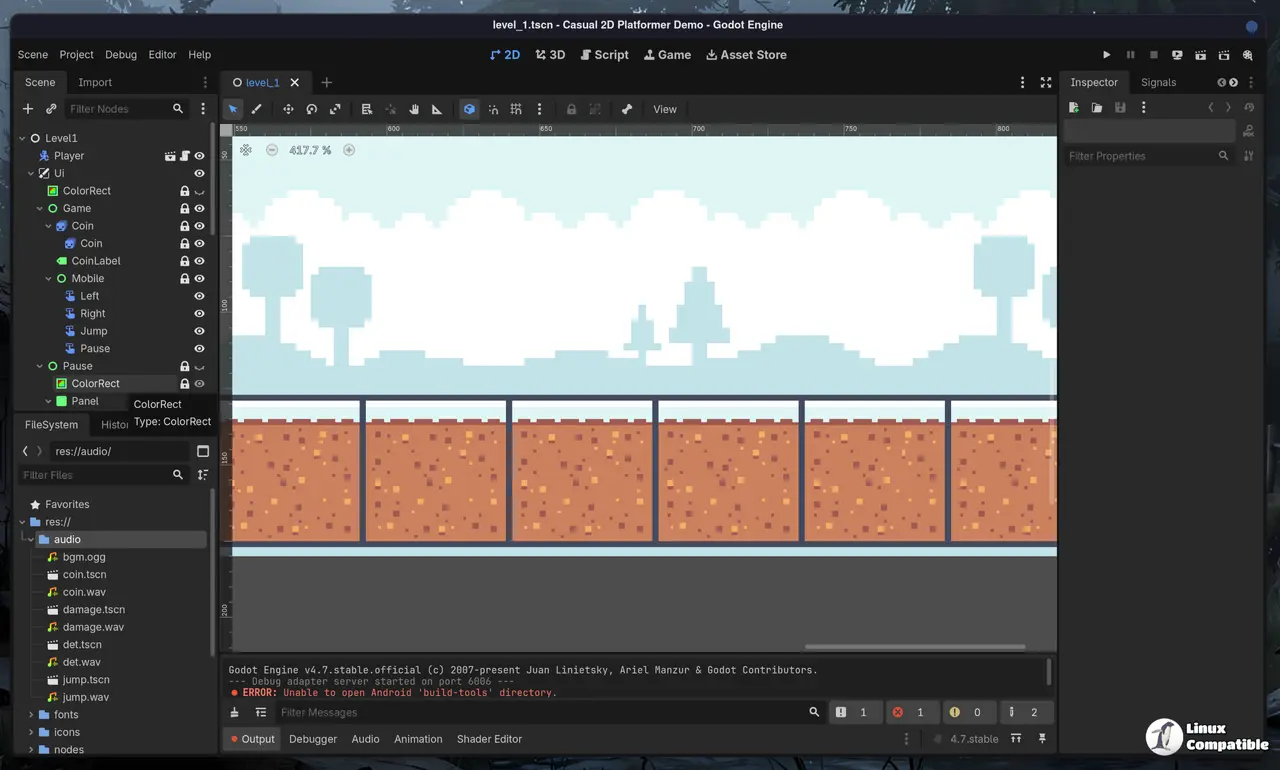
The editor received a UI update too. Jayden Sipe has streamlined the 2D toolbar, bringing it to parity with the recently overhauled game view toolbar. It's a consistency pass that makes the docks feel more cohesive.
This snapshot follows dev 4, which dropped on August 26. That previous build was packed with features: a native Trail3D node, visual shader groups, multi-bounce ambient occlusion, and directional lightmap specular. It also moved main screen plugins to the EditorDock system, allowing all main screens to close or float.
Dev snapshot 5 involved 78 contributors and 183 changes. Dev 4 saw 86 contributors and 224 fixes. The engine remains maintained by hundreds of open-source contributors and a small team of paid developers funded through donations via the Godot Development Fund.
You can download dev snapshot 5 from the archive. Standard and .NET builds are available for Linux, macOS, and Windows. A web editor build is also live, along with an XR build for Meta Quest. Android users can grab the editor from Google Play, though pre-release access requires joining the testing group.
Head here to the interactive changelog for the full list of 183 changes. Keep in mind that this is a development build, so expect bugs. But for texture streaming, this is the moment you've been waiting for.


