Godot Engine 4.8 dev snapshot lands, doubling down on editor polish
The Godot Engine has officially kicked off its 4.8 development cycle with a first development snapshot dropping today. Just over two weeks after the 4.7 stable release, the team is handing developers a new feature set to break in.
While the maintainers are simultaneously prepping the first release candidate for a 4.7.1 maintenance patch, this build flips the focus squarely toward workflow improvements. You won't find major architectural rewrites here. Instead, you're looking at a carefully curated list of tweaks designed to make day-to-day development feel less like herding cats.
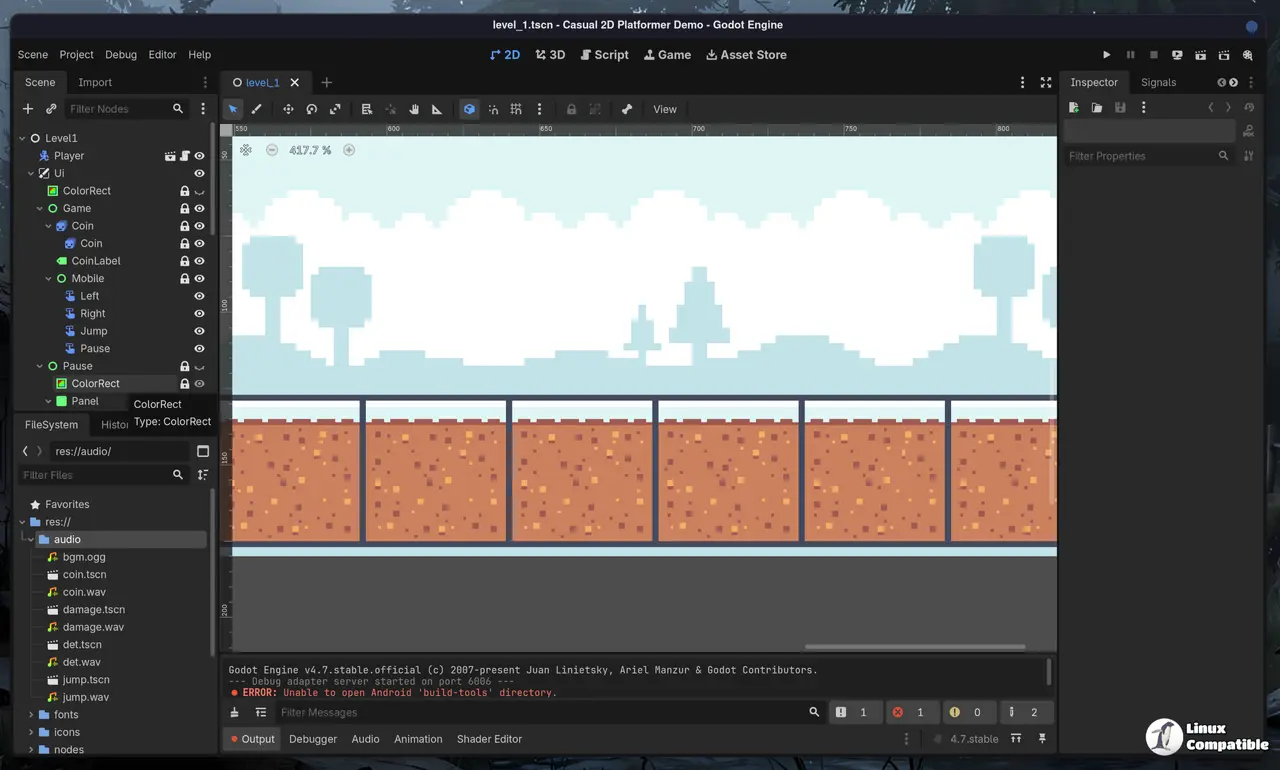
The editor gets a serious tuneup
The biggest workflow shift is also the most obvious. The embedded game view inside the editor is now the default for all new projects. It used to live as a floating window because desktop platform support was spotty. That changed. Michael Alexsander moved the setting to default in PR GH-120736, and Jayden Sipe followed up with a redesigned toolbar that actually puts important buttons where you can find them. Existing projects will need to toggle the option on manually, but the learning curve is basically nonexistent.
The scene tree picked up drag-toggle visibility next. Click a node's visibility flag and drag across a list to apply the same state. Not bad for bulk editing. 3D viewports can now dynamically override the GridMap editor axis when you hover over them, assuming you leave the new viewport override switch checked. And if you've been manually testing localization strings by swapping languages back and forth, there's a proper pseudolocalization preview built right into the editor now. Tomasz Chabora, the same person who enabled hot-swapping languages in the interface, is the one who shipped it.
The GUI layer got its own round of upgrades. Tree nodes can now pin headers to the top of the scroll view when you're working with deeply nested data. Touch input finally gets first-class support in both TextEdit and CodeEdit. Tap positions the cursor and triggers the keyboard. Drags scroll with inertia. Double-taps select words. The code completion popup isn't left out either.
Then there's the FuzzySearch API. The engine has been running internal fuzzy matching for the quick-open menu for nearly two years. Adam Johnston originally built it. Now it's finally exposed to the public binding API. You can drop it into your own code with a handful of lines.
var items := ["Potion of Healing", "Greater Health Potion", "Poison Vial"]
var fuzzy := FuzzySearch.new()

for result in fuzzy.search_all("health potion", items):
    print(result.target)
It's a pretty solid preview for what 4.8 is shaping up to be. The Godot 4.x timeline has always been a bit of a moving target for newcomers. We remember when 4.0 launched as a complete rewrite, leaving half the community scrambling to port their 3.x projects. Three major feature releases later, that migration headache has finally faded, and the team is clearly betting that workflow polish is the new battleground. However, at the same time, the focus on editor UX over engine-level rewrites means the 4.8 cycle will likely feel less about adding new rendering backends and more about making the interface itself feel polished out of the box.
135 contributors submitted 314 changes for this snapshot. There are no known issues introduced by this build, though as always, you'll want to keep backups handy when testing pre-release software. Head here to the official download page to grab the standard or .NET builds for Linux, Windows, or macOS. You can also spin up the web editor directly in your browser or request access to the Android version through the Godot testers group.
The release announcement can be found here. Godot 4.8 stable is still a ways off, but the development clock is officially ticking.


