Faugus Launcher Ships Day-Before Patch, Developer Promises Less Activity After World of Warcraft: Forever
A Linux game launcher picked up a maintenance sprint the day before WoW Forever launches, and its developer plans to step back afterward, to play the game.
Faugus Launcher just pushed version 2.5.7 today, the day before World of Warcraft: Forever ships, and its developer says he's about to go quiet. There's a plain reason for it. He wants to log in and play the thing himself.
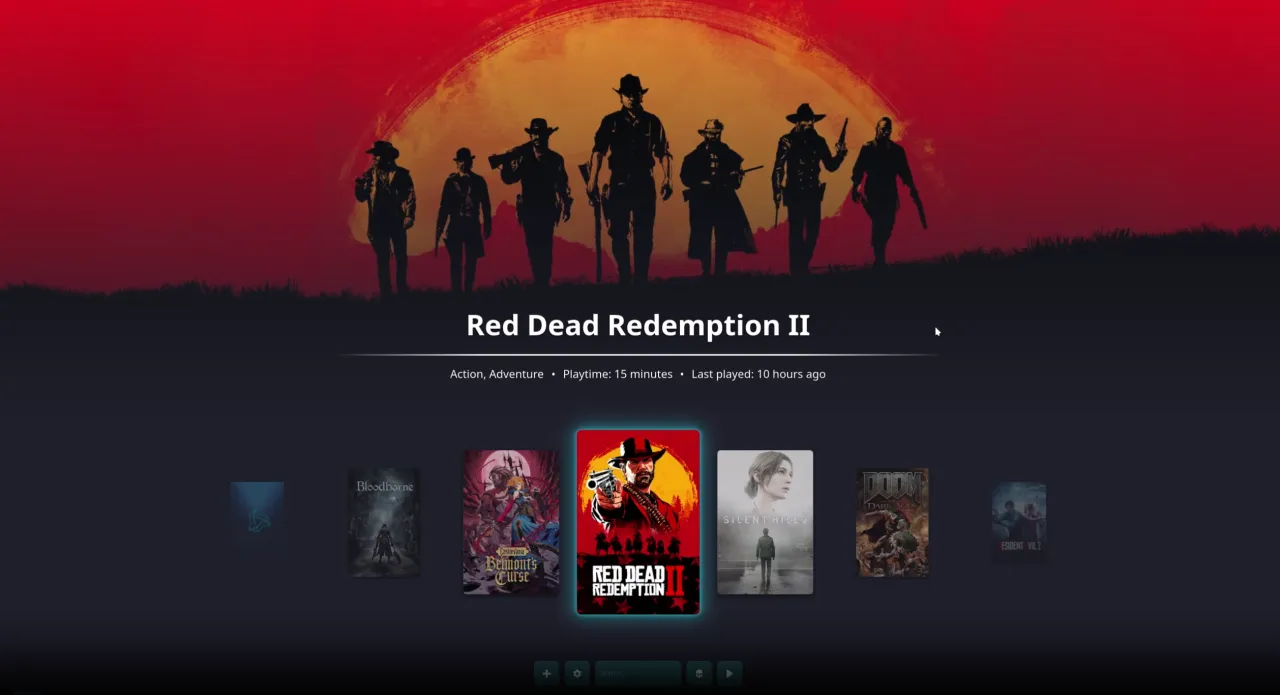
Faugus Launcher is a free, open-source desktop app that lets Linux users run Windows games through Valve's Proton compatibility layer. Battle.net, Ubisoft Connect, and the EA App all go through it. There's no command line involved, and no Steam install required.
It's written almost entirely in Python, built on GTK 4 with libadwaita, and packaged with the Meson build system. The whole thing sits under the MIT license. The project describes itself as "a simple and lightweight app for running Windows games using UMU-Launcher," and honestly, that's about as accurate a description as you'll get.
The engine doing the heavy lifting is UMU-Launcher, a community project under the Open-Wine-Components umbrella. It standardizes how launchers talk to Proton and apply per-game fixes, so a game launched through Faugus runs just like a native Steam title. The only catch is that it doesn't have to live in Steam's library. In short, Faugus is the friendly face. UMU does the lifting.
The project started in June 2024 by a single developer known online simply as "Faugus". By late 2026 it had drawn about 2,600 GitHub stars and nearly 100 forks. The bulk of that code comes from one person, propped up by a Weblate translation bot and a small circle of regular contributors.
What 2.5.7 actually contains
The release landed on November 3 at 16:38 GitHub local time, tagged as commit 9af5f7f. One more commit had already hit main by reporting time. It shipped six downloadable assets and earned a warm reception, with six users tossing on the hooray, heart, and rocket emojis.
The developer opened the notes with a candid paragraph, and it's the key to the whole version:
"Sorry for releasing so many versions in such a short period. I'm trying to get everything in order before the release of World of Warcraft: Forever, as I'll be a bit less active here afterward. However, some issues have been coming up that require attention."
That single block explains both the unusual release pace and the narrow, fix-only scope at once. Not a feature milestone. A maintenance sprint.
The headline change gives each launched game its own window class. That fixes Windows taskbar grouping, so games no longer pile up into a single stacked button. There's a caveat, though: games launched through another app, like WoW via Battle.net, stay grouped together because that stems from a Wine/Proton-level issue outside the launcher's control.
Pinned shortcuts are repaired too, but with a wrinkle. Existing ones need to be re-created to work under the new system. The SteamGridDB asset picker gains a suggestion menu for finding box arts and covers, and the launcher now skips fetching an asset when a title entry loses focus mid-edit. That dodges a needless network call.
The fixes round it out. The sleep inhibitor was leaking, the mechanism that stops your PC from sleeping mid-game wasn't released when a game exited. Gamepad navigation is now locked by window focus instead of by whether a game is running, a subtle but real correction for controller-driven UI. And the retained memory that used to linger after downloads and dialog closures finally gets cleaned up, continuing a theme from the previous release.
The taskbar fix is the one most people will actually notice. The rest is housekeeping that keeps the app from feeling shaky after hours of use.
The World of Warcraft: Forever connection
The release note's central reference is World of Warcraft: Forever, and its November 4 launch, 3:00 p.m. Pacific, is the whole reason for the sprint. Blizzard has positioned it as a permanent home for the game alongside modern WoW and Classic WoW, with level-60 progression, original continents, and new stories. Raids are slated to unlock December 9.
The name is also claimed by independent fan projects like wowforever.info and ForeverWoW, neither affiliated with Blizzard. That naming overlap is a well-documented source of confusion, so it's worth flagging that Faugus's note refers to the official Blizzard release, not the fan servers.
The link to Faugus is direct and practical, though. It runs Windows games through Proton, including storefront clients like Battle.net, the very platform delivering WoW. People wanting to play the new game on Linux are exactly the audience it serves. That probably explains both the developer's personal investment in the launch date and his note about stepping back. He plans to spend time on his own WoW Forever experience.
Known issues and community state
As of the release date, the repo had a single open issue: Battle.net not launching or installing (#1081). Faugus filed it himself on November 3, the same day as the release, and it concerns the storefront that delivers WoW. That's notable for two reasons. It was filed alongside the release, and it targets the one thing that matters most right now. It suggests the developer is actively tracking a real-world pain point just as the game goes live.
Otherwise the project looks healthy. About 2,600 stars, roughly 96 forks, 3,200-plus commits on main, and a translation effort running through hosted Weblate. Regular contributors include @Ganeron11, @nixxo, @EyKettle, and @grego9, though Faugus accounts for around 1,980 of the commits. That's a lot for one person.
Why it matters
2.5.7 is small by feature count, but it points at bigger shifts in Linux gaming.
First, the rise of friendly front-ends over terminal tinkering. When WoW Forever launches, millions will want to play it, including Linux users, and tools like Faugus remove the need to hand-configure Wine and inject DLLs. The compatibility work gets pushed onto community-maintained backends like UMU.
Second, one-person projects at scale. A single developer keeping a 2,600-star project alive with daily releases during a high-profile launch window is unusual, and his "I'll be less active now" note reminds you how fragile community open source can be. Commercial products rarely have to admit that.
Third, the UMU/Proton standardization wave. Faugus benefits from a broader movement that also includes Lutris, Heroic, and Bottles toward a unified way of running Windows games on Linux, meaning fixes ripple across the whole ecosystem instead of being siloed per launcher.
And lastly, fix-focused maintenance under pressure. The window classes, the sleep-inhibitor release, the memory cleanup, these are exactly the polish that separates a usable launcher from a frustrating one, and they landed because a major launch was imminent. It's a reminder that the best bug fixes often show up right before the crunch.
How to install it
If you want to try it, Faugus ships across the major channels. Arch users can pull it from the AUR with yay, Fedora users enable a COPR repo, and Ubuntu, Mint, and KDE Neon get a PPA. There are also Flatpak and AppImage builds, plus source if you're comfortable with Meson and Ninja.
# Arch (AUR)
yay -S --noconfirm faugus-launcher

# Fedora / Nobara (COPR)
sudo dnf -y copr enable faugus/faugus-launcher
sudo dnf -y install faugus-launcher

# Ubuntu / Mint / KDE Neon (PPA)
sudo dpkg --add-architecture i386
sudo add-apt-repository -y ppa:faugus/faugus-launcher
sudo apt update
sudo apt install -y faugus-launcher

# Flatpak
flatpak install flathub io.github.Faugus.faugus-launcher
One thing to keep in mind: the AppImage can't bundle certain libraries, so you'll need pygobject, gtk4, libadwaita, and libmanette installed system-wide no matter which build you pick.
Faugus will be around less for the time being, given his stated plans. The live thread to watch right now is the Battle.net issue, since that's the one real-world pain point currently in the open. Keep an eye on it there as the WoW Forever launch plays out.
Head here to the GitHub release page.


