Debian 11 "Bullseye" LTS Ends Today, August 31, 2026
The long support window for Debian 11 is finally closing.
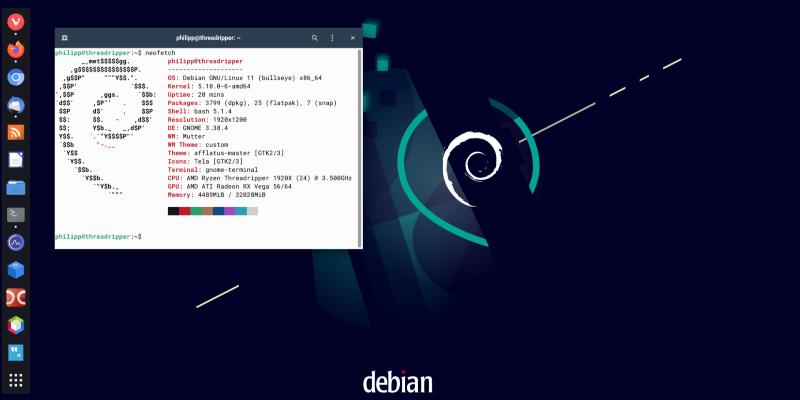
The Debian Long Term Support team announced today that bullseye's official LTS program ends August 31, 2026. That's exactly five years after the initial release on August 14, 2021. Starting in September, no more security updates will flow through the official channels.
If you're still running bullseye, you've got options. Some are better than others.
What Happens When the Clock Runs Out
From September 1 onward, the Debian Security Team and LTS Team stop publishing advisories for bullseye packages. That's it. No more patches. No more fixes for newly discovered vulnerabilities.
You can check which of your installed packages are now unsupported by running debian-security-support. It's not a perfect solution, but it tells you where you stand.
The good news: you're not entirely on your own. Freexian will step in with Extended Long-Term Support starting September 1, 2026. This runs through June 30, 2031, five more years of commercial backing.
Keep in mind that ELTS isn't an official Debian project. It's a commercial offering managed entirely by Freexian. The scope of supported packages is defined by subscribing organizations to ensure complete security coverage. If you're not a paying subscriber, you're likely out of luck for most packages.
Not all architectures survive the transition either. During official LTS, bullseye supported i386, amd64, armhf, arm64, armel, mipsel, mips64el, and s390x. ELTS drops armel, mipsel, mips64el, and s390x. If you're running one of those, you need to migrate now.
The Upgrade Path
Your best bet is upgrading to Debian 12 (bookworm) or Debian 13 (trixie). Bookworm is currently in LTS, supported until June 30, 2028. It covers i386, amd64, armhf, arm64, and ppc64el. ELTS from Freexian extends that to June 30, 2033.
Trixie, Debian's current stable release since August 9, 2025, gets security support until August 9, 2028, LTS until June 30, 2030, and ELTS until June 30, 2035.
The official upgrade path from bullseye involves updating /etc/apt/sources.list, running apt-get update, then apt upgrade and apt dist-upgrade. Review debconf prompts carefully. Configuration files will need attention.
A 10-Year Support Window
Debian has maintained a consistent lifecycle pattern since the LTS program began in 2014: three years of official security support, two years of volunteer-run LTS, and five more years of commercial ELTS. That's up to 10 years of total support.
It's one of the longest support windows of any major Linux distribution. You can probably spot the appeal.
However, at the same time, you need to weigh the effort. Upgrading six-year-old systems isn't always straightforward, especially in enterprise environments where stability trumps new features. That's where ELTS earns its keep. The choice is yours. The clock just started ticking.


