Bazaar 0.9.2 ships with daemon architecture, auto-updates, and official translation support
Bazaar 0.9.2 has landed, and it's the final release in the Flatpak app store's current development cycle. The headline change is the introduction of bazaar-daemon, a separate background process that splits the workload from the main GUI. Your system no longer has to keep Bazaar resident in memory just to handle desktop search or background updates.
The daemon wakes up. Does its job. Exits. No idle RAM hog.
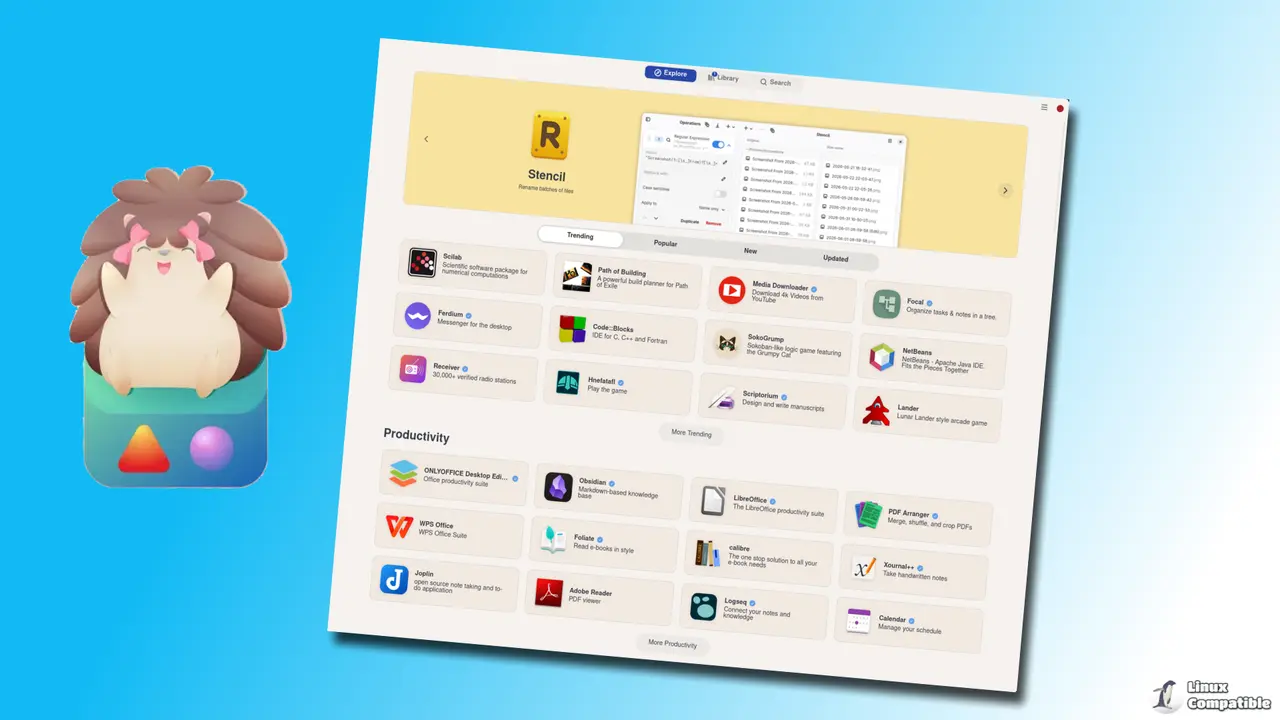
Created by developer kolunmi, Bazaar is a GNOME-native Flatpak app store built in C with GTK4 and Libadwaita. It sits at roughly 12 MiB on disk and focuses on curated discovery alongside standard Flathub browsing. This release marks a significant architectural shift rather than an incremental feature dump.
Daemon first, features second
Before v0.9.2, Bazaar's main process handled everything: spawning search results for GNOME Shell, checking for updates, and managing indexing. All of that stayed resident. Keep in mind that if you weren't actively using the app, you still had that overhead.
Now, Bazaar splits into three binaries: the main bazaar executable, bazaar-daemon, and a download worker called bazaar-dl-worker.
The daemon handles GNOME Shell search requests via D-Bus, schedules auto-updates, and manages indexing. It's designed to self-exit when idle, particularly when background updates are disabled. That's a meaningful win for systems that prefer lightweight background services.
The auto-updater itself is new, too. Users can toggle automatic Flatpak update checks directly in preferences, with the daemon handling the scheduling.
Developer-facing changes include a .metainfo.xml preview. Click the file in your file manager, and you'll see how your app listing will render on Flathub before pushing it live. The screenshot viewer also got a UX tweak: zoom in, and scrollbars appear at the screen edges for easier panning.
Translations are now officially supported via GNOME Damned Lies, with Polish, Czech, French, Russian, Turkish, Japanese, Basque, and Cornish included in this release.
Bazaar is becoming the standard
The release arrives as Bazaar solidifies its position in the desktop ecosystem. Bazzite, Bluefin, and Aurora are all shipping it as the default Flatpak app store.
Bazzite is the immutable gaming distro based on Fedora Atomic. Bluefin is the developer-focused Silverblue derivative. Aurora just joined the party with its first update cycle using Bazaar by default. That's three major distributions trusting Bazaar to handle Flatpak management out of the box.
The project has crossed 1,600 stars and 134 forks on GitHub, with 2,540 commits on the main branch. Eleven contributors worked on v0.9.2 alone. The community response on GitHub has been positive, with six "hooray" and four "heart" reactions logged since the drop.
The v0.9.x series has been a rapid-fire stretch: three major releases in roughly five weeks from July 3 to August 5. The "final release" tag suggests a milestone pause rather than a retirement. The daemon architecture establishes a mature foundation for future work.
It's a rather ambitious tool for a project that gained significant traction so quickly, though the clean architecture and multi-threaded design back it up. Users on non-GNOME desktops should note that while a KRunner plugin exists for KDE, the primary focus remains GNOME.
You can grab Bazaar 0.9.2 from Flathub right now. Head here to the full release notes.


