Zed Editor 1.11.3 adds dedicated Git views and expands AI model support
The Rust-based editor ships staged/unstaged changes panels, new Bedrock model support, and over 60 bug fixes as of July 15, 2026.
Zed Industries has released version 1.11.3 of its code editor today. The update brings dedicated views for staged and unstaged Git changes, expands support for newer AI models across cloud providers, and shakes off more than 60 bugs.
If you're keeping score, this is the third release in a week. Zed's been moving on a blistering cadence, with the 1.10.1 stable branch and a 1.11 preview dropping just six days ago on July 9. The 1.11.3 build lands as the latest stable release, following the 1.0 milestone that marked the editor's transition from beta in April.
The headline feature for most developers will be Git. Zed finally introduces dedicated multibuffer views for staged and unstaged changes. You can now run git: view staged changes or git: view unstaged changes to review, stage, or restore individual hunks without leaving the editor. It's a workflow gap that's existed since Zed added native Git support, and it closes a significant gap with competitors like VS Code.
The Git panel gets polish alongside the new views. PR #46541 (contributed by drbh) brings diff stat numbers for at-a-glance impact assessment, tag labels to the commit history graph, and full Markdown rendering for commit messages in the details panel. Performance tweaks also reduce git process spawning when calculating diffs and stop re-checking repository access on every file change.
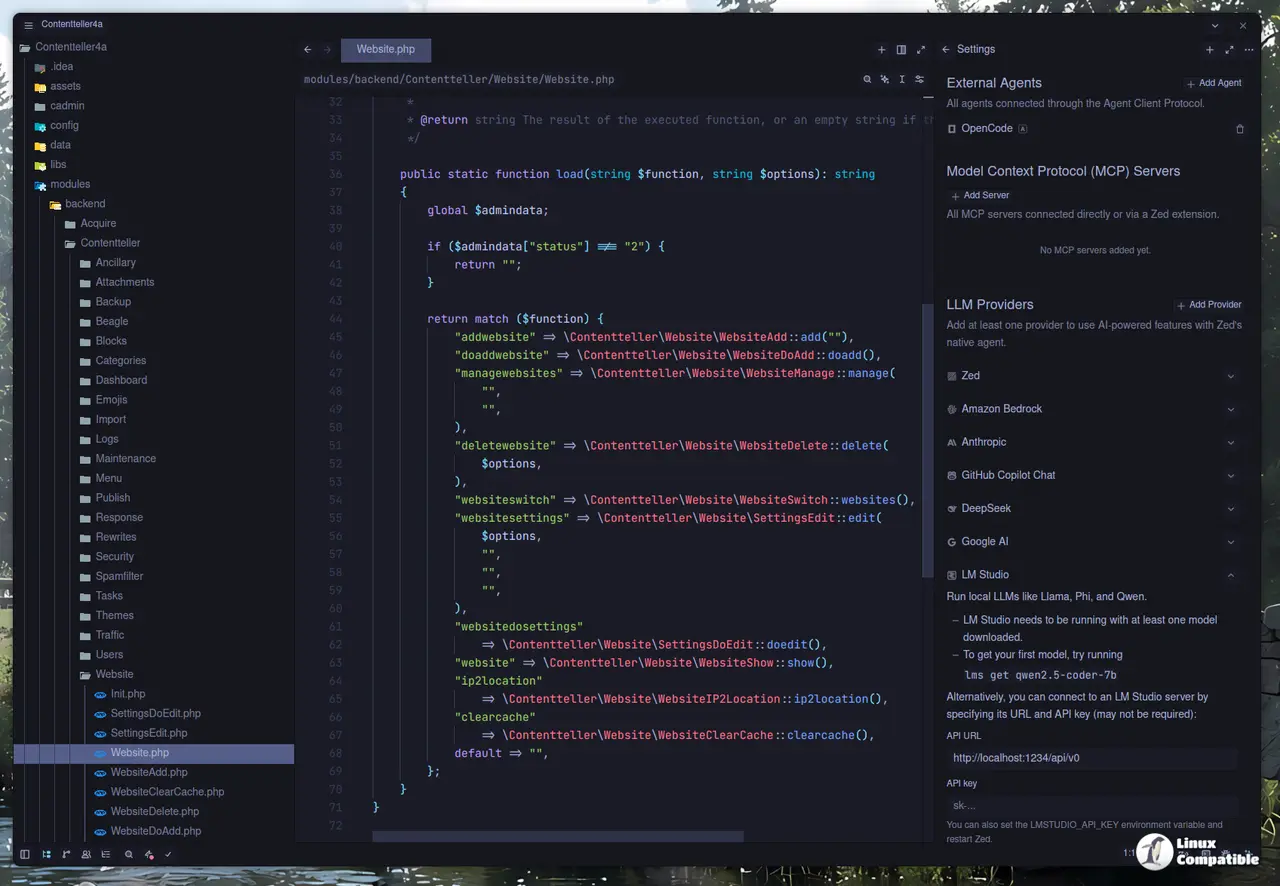
Git workflow and AI deepening
AI integration sees some targeted improvements too. The agent panel now supports terminal thread search using cmd-f or ctrl-f, a feature that ties directly into the Terminal Threads announcement from May. Feedback commands are streamlined with /helpful and /not-helpful slash commands, and a new "copy last response" button sits next to the thread controls.
Model support has broadened significantly. Zed now supports the AWS Bedrock Mantle endpoint, which enables GPT-5.5, GPT-5.4, and Grok 4.3 through Bedrock. Claude Sonnet 5 and Fable 5 are added to the Bedrock list as well. OpenCode Zen models get a refresh, with Fable 5, Sonnet 5, GLM 5.2, Kimi K2.7 Code, and Minimax M3 added, plus default parallel tool calls.
Keep in mind that Zed is positioning itself as a universal AI platform rather than a single-model editor. The expansion to Bedrock, combined with existing OpenAI and local model support, signals an effort to keep AI costs and capabilities flexible for users.
Zed also shook out a lot of stability issues. The release includes over 60 bug fixes. There are critical crash fixes for the text finder, including a memory leak and hangs. A panic when confirming completion in a multibuffer after the cursor moves is resolved. Platform-specific issues include a macOS crash on display configuration changes, a Linux window handling panic, and Windows path fixes for agent hyperlinks with spaces or shell-style drive prefixes.
Stability first. Or at least, Zed is treating it that way. The volume of crash and panic fixes suggests the team is hardening the codebase aggressively ahead of broader enterprise adoption. The Business plan, launched in May at $30/seat/month, includes org-wide AI policies and data governance, and a stable editor is obviously a requirement there.
What this means for Zed
Zed's release velocity is hard to ignore. The company, founded by the creators of Atom and the Electron framework, has maintained a rapid shipping pace since its seed round from Root Ventures and V1 Ventures, and a Series A & B led by Redpoint and Sequoia in August 2025.
The Git improvements in 1.11.3 address the "batteries included" expectation that many developers bring from VS Code. While Zed's Rust architecture offers speed, the UX depth is what wins teams. The dedicated staged/unstaged views, combined with the graph customizations and Markdown commit messages, make the editor significantly more viable for complex version control workflows.
On the AI side, the diversification is notable. Zed announced its custom Zeta 2.1 model in May, promising 50ms faster predictions, but 1.11.3 shows Zed isn't betting the farm on a single model. Supporting Sonnet 5, Fable 5, and GPT-5.5 through Bedrock gives users room to experiment with pricing and latency. The DeltaDB announcement in June hinted at a future where AI conversations drive version control, but for now, Zed is solidifying the core editor experience.
The download stats tell a familiar story. As of today, macOS dominates the install base, with Apple Silicon accounting for over 5,000 downloads of the update. Linux x86_64 follows, reflecting Zed's strong presence on Linux developer machines. The personal plan remains free with 2,000 edit predictions per month, while the Pro tier stays at $10/month for unlimited predictions and token credits.
It's a solid step forward, though the rapid cadence keeps you wondering if there's ever a pause for deeper architectural refactoring. The community is growing too, with the Champions Program launching in June and the Zed Guild retrospective drawing attention. For what it's worth, Zed is closing the distance on the editors that have had years to polish their Git and AI integrations.
You can grab version 1.11.3 now. Head here to download the update for macOS, Windows, or Linux. The GitHub releases page has the full changelog if you want to dig into the PR list.


