Zed 1.27.0 quietly refines the editor six months after 1.0
The weekly stable release trims memory, smooths Git Graph rendering, and reworks how its AI writes commit messages, plus two changes that will trip up some users.
Zed Industries shipped Zed 1.27.0 today, and if you were hoping for a headline feature drop, this isn't it. The release lands squarely in the editor's usual weekly stable cadence. Its biggest moves are about subtraction: dropping a couple of old macOS versions and quietly retiring the agent "checkpoints" feature that had been bogging down large repositories.
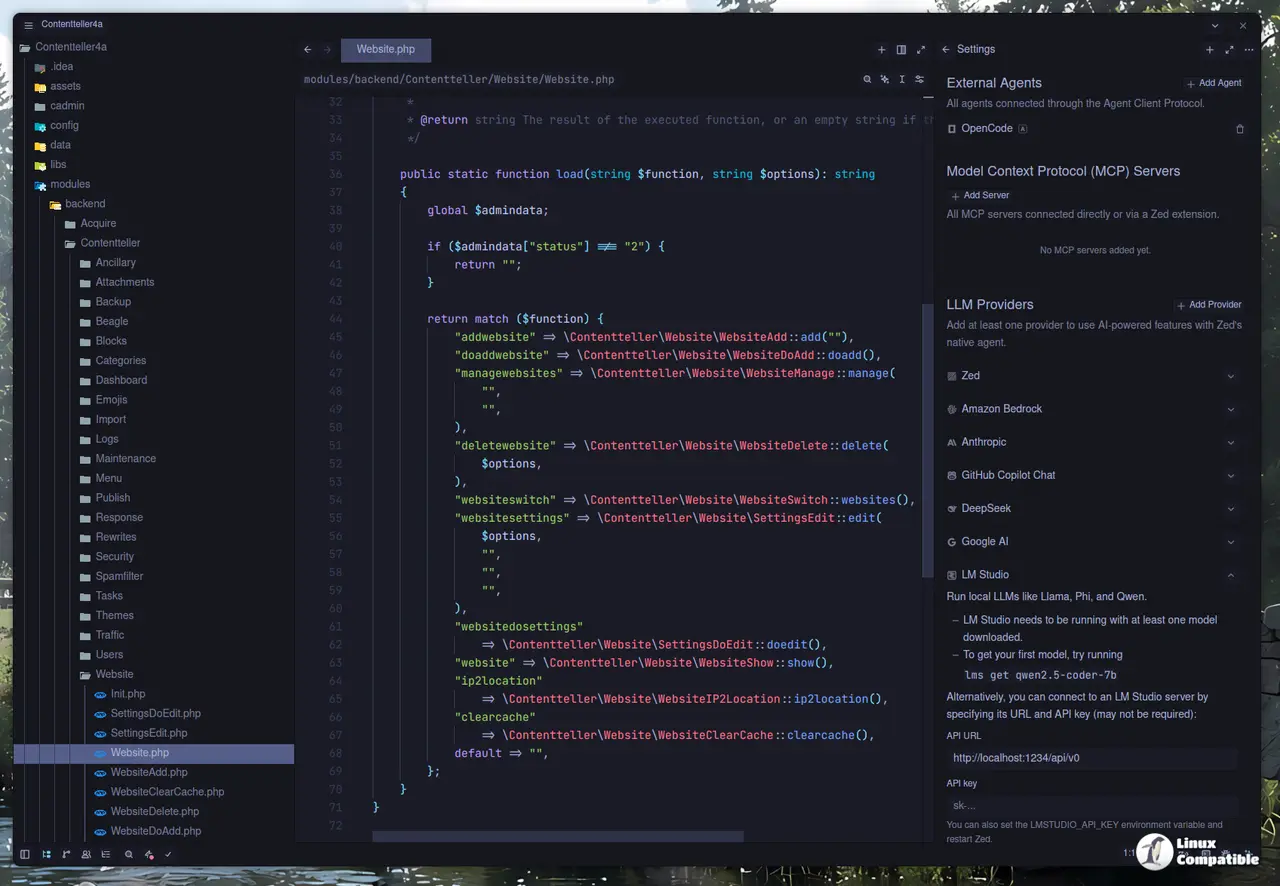
Keep in mind that this is exactly the kind of release that signals maturity. Zed hit 1.0 back in April 2026, after roughly five years of development and more than a thousand versions. It's now in the refinement phase, which is arguably where a GPU-accelerated, AI-native editor either earns its keep or starts to feel stale. This week it clearly does the former.
For anyone tracking Zed from the outside, the name still sometimes conjures up Atom, the GitHub editor that got quietly killed in 2022. Founder Nathan Sobo had run that community before teaming up with Antonio Scandurra and Max Brunsfeld to build something that wouldn't hit the Electron ceiling. That decision to ship Zed like a video game is what lets it render at up to 120fps. The app feeds data to shaders on the GPU and runs a from-scratch Rust UI framework they call GPUI. It stays notably lighter than the webpage-adjacent rivals that still dominate the market.
The AI work this round is small but pointed. Zed now generates commit messages using your three most recent commit messages as style examples, so suggestions match a project's real conventions instead of some generic corporate tone. The change came from a contributor named matheuslrd in pull request #61528, which is worth flagging because a large chunk of this release is credited to external developers.
There's also real memory work in the Agent Panel. Tool-call diffs and thread-message Markdown now load only when you first open them, not eagerly the moment a thread is pulled in. Run long agent sessions or keep a dozen threads open at once, and that should ease the pressure. CPU and disk reads during active agent work got trimmed too, with the biggest gains showing up in large codebases.
Git gets the lighter touch. Git Graph rendering is smoother and faster, and a batch of previously missing tooltips finally landed on the commit details buttons. When a push is rejected because you're behind, Zed now actually tells you to fetch and integrate before pushing again. That courtesy has apparently been missing long enough to warrant its own fix, so at this point I'm not even surprised.
Language support gains Go 1.27 generic-method highlighting, keeping the Tree-sitter grammars current. And if you like auto-opening documentation, there's a new option to make a window open a project's README on launch.
Two changes that will bump some users
First, macOS. Zed now requires version 12.0, Monterey, or later. It no longer supports Catalina or Big Sur, so if you're still on an older Mac build you'll need to either upgrade your OS or keep an older Zed around. Not surprising, given how far Apple's drifted since those releases.
Second, the agent checkpoints are gone. That was the snapshot-taken-before-every-message mechanism, complete with a "Restore Checkpoint" button. Zed pulled it because taking a checkpoint before each agent message made the tool slow to respond or hang outright in big Git repos. To undo an agent's edits now, you reject them or fall back to Git. The company frames both changes as pragmatism. Dropping old OS support cuts maintenance, and dropping checkpoints prioritizes responsiveness over a safety net that proved counterproductive at scale.
The release also bundled roughly 35 bug fixes. Highlights include a Solargraph completion crash, a hang in Vim visual-block mode at the end of a wrapped file, and a macOS quit crash that fired specifically on cmd-q. There's also a batch touching provider integration: retryable failures for OpenAI and Google AI streams, failed model-list fetches that were being silently dropped, and LLM credentials being read even when AI was disabled. If your editor's been throwing unexpected quits or quietly eating provider errors, this one's worth the update.
Zed's operating model is as much about velocity as it is about its tech. The team is founder-controlled, Sobo, Scandurra, and Brunsfeld own the company, which is why venture backing hasn't forced a rush toward monetization. They've raised roughly $61 million across four rounds, including a Series B of about $32.4 million led by Sequoia in November 2024. That kind of runway lets them keep a steady weekly cadence and lean on a large open-source community for the actual coding.
Compared to the incumbent, the trade-off is still the ecosystem. VS Code still commands something like three-quarters of professional developers and tens of thousands of extensions, while Zed's extension list sits in the low hundreds. The general consensus in 2026 is that Zed wins on pure coding speed while VS Code stays the safer default for teams leaning on managed cloud environments like GitHub Codespaces. Zed's edge is that it owns its whole stack, editor, GPU UI framework, and an open agent protocol, rather than forking Electron like so many of the AI-editor cousins.
It's arguably the most disciplined version of the "fast editor" pitch out there right now. It's also a reminder that Zed's greatest strengths come with a steeper learning curve and a smaller plugin world. If you've outgrown the friction of Electron and want your editor to get out of your way, the ongoing refinement is a good sign. If you lean on a sprawling extension ecosystem, you'll still be measuring Zed against VS Code on its home turf.
Head here to grab it. The stable channel installs with a one-liner:
curl -f https://zed.dev/install.sh | sh
If you'd rather test what's next, the preview channel takes a slightly different flag:
curl -f https://zed.dev/install.sh | ZED_CHANNEL=preview sh
The full release notes, down to individual pull requests, live on Zed's GitHub.


