Zed 1.22.0 ships on-the-fly model switching and more autonomous subagents
Zed Industries' latest stable release doubles down on agent flexibility, adds bring-your-own-key support for GPT-6.1 Sol, and quietly reassigns a shortcut you'll want to remap before it bites you.
Zed Industries released version 1.22.0 today, a stable build that leans hard into giving developers finer control over which AI model powers each piece of work. It arrives with both welcome flexibility and a handful of changes that will make you relearn some muscle memory.
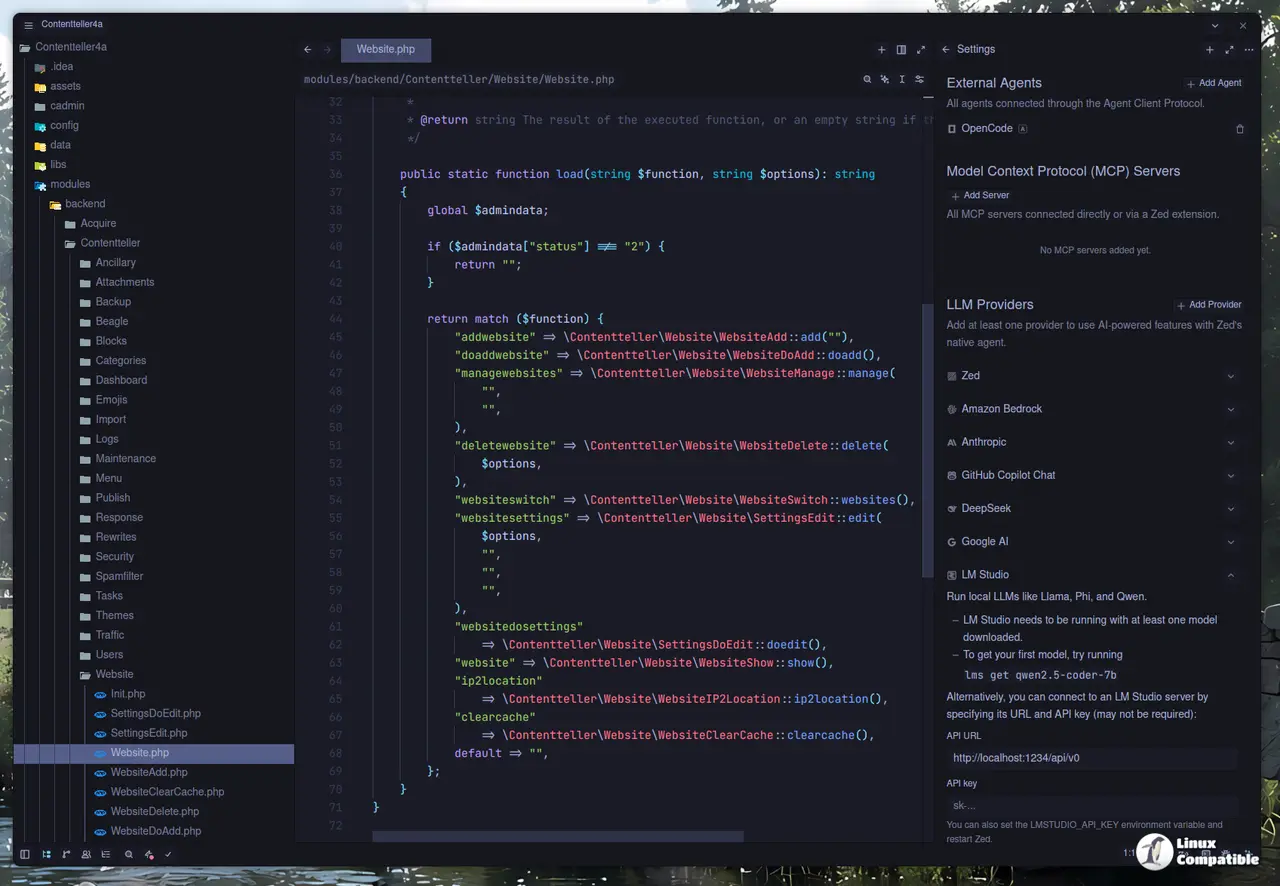
The biggest headline is on-the-fly model selection for subagents. Zed now lets you pick the model for a newly spawned agent at spawn time instead of inheriting whatever default you configured. That means you can route an expensive reasoning task to a beefier model while keeping cheap, high-volume spawns on something faster and lighter, all without leaving the session.
The rest of the release follows the same logic. Add bring-your-own-key support for GPT-6.1 Sol, make Grok 4.7 the recommended default across xAI and SuperGrok, give subagents the ability to compact their own conversation history, and you get a fairly coherent thesis about how agent-heavy editing should work. Keep in mind that Zed's pitch has never been to invent the next big thing so much as to make existing machinery feel instant.
The model ecosystem gets more flexible
One thing stands out about this release: Zed treats the Agent as a first-class citizen rather than a side panel bolted on after the fact. The tweaks in 1.22.0 build on that framing. For a while Zed was macOS-only, and the Windows and Linux ports arrived only recently, which read as a clear signal that the company wanted the full share of developers rather than just a niche slice. It's stuck with that intent ever since.
BYOK for GPT-6.1 Sol is the request that keeps coming up from serious AI users, and it makes sense. Supply your own OpenAI key, bill the model directly, and you control cost, privacy, and which models your organization actually pays for.
Zed also expanded its xAI integration. Grok 4.7 now joins the SuperGrok and xAI providers and becomes the recommended default there. The provider-agnostic stance matters more than Zed sometimes lets on, especially for developers who refuse to be pinned to one vendor's model family.
The subagent selection change is the more technically interesting one. Zed added an optional model parameter to spawn_agent, letting you choose a model per spawn. The active model shows up in the agent's card, so you always know which brain is doing the thinking.
Then there's subagent compaction (PR #64135). Compaction compresses a long conversation into a summary, freeing working memory so an extended session doesn't grow unbounded. Giving subagents this capability is a genuine step toward agents that can carry out multi-step tasks without degrading mid-run. It's arguably the most architecturally significant change in the whole release, even though it happens quietly in the background.
Zed also made its OpenCode integration smarter, fetching the Zen and Go model list at runtime instead of relying on a bundled snapshot. Your available models stay current without a full editor upgrade, and deprecated ones get hidden.
Smaller edits, one recurring theme
Beyond agents, the release leans on a pattern Zed has been building toward: letting project settings extend inherited ones rather than replace them. Using "..." as a placeholder, you can append rules instead of rewriting them wholesale.
This shows up in edit predictions, file scanning, hidden-file handling, and terminal path hyperlink regexes, all handled by contributor porada across a cluster of PRs. The payoff is real in monorepos, where configuration duplication across nested projects is a familiar annoyance. There's one nuance though. For terminal.path_hyperlink_regexes, a top-level "..." now inserts inherited regexes, so keeping the old three-character literal means replacing that entry with ["..."].
Git got a small win too. Diffs opened from the command line with zed --diff now toggle between unified and split views, so you don't have to leave the shell to change perspectives. Zed also sped up how quickly branch diffs show their first changes when a branch has drifted far from its base.
If you shell out constantly, the terminal memory fix is worth a mention. Terminals were retaining roughly 2 MB per command after completion. Over a long session with a busy prompt, that adds up faster than you'd think.
Platform touches rounded out the release. macOS gained three-finger Look Up and translation gestures for text in Markdown previews, and Windows picked up MicaBackdrop and MicaAltBackdrop theme options. Nothing that reshapes your workflow, but the little things accumulate.
What breaks before you upgrade
Here's where you should slow down. Zed 1.22.0 ships several changes that affect existing configs and reflexes.
The most visible is the "close active dock" shortcut, which moves from cmd-w (macOS) or ctrl-w (Linux and Windows) to ctrl-alt-w on all platforms (PR #64515). The old shortcut closed the active pane item instead of the dock, and it's been a longstanding complaint. Still, reassigning a shortcut used so often is going to bite people for a while. Plan to remap it now rather than after the upgrade.
Other changes to plan around:
- Threads Sidebar settings were renamed and grouped, with automatic migration of existing values, so you shouldn't have to touch anything manually.
- Stop controls were removed from external-agent-managed terminals. Those are controlled by the agent rather than a local process, so the removal tracks.
- The VS Code import no longer pulls files.watcherInclude into file_scan_inclusions. Watch roots aren't really Git-ignore overrides, and the reasoning holds up.
Zed also fixed a broad sweep of bugs, from columnar selections landing in the wrong column around non-ASCII text to a crash on Linux X11 after GPU device recovery, and from cursor drift at high scroll margins to language servers simply not starting on Windows UNC paths. It's the kind of mundane, unglamorous maintenance that separates a polished editor from a promising one.
What this signals
Zed 1.22.0 reinforces an idea the company has pursued since its agent push: speed and agent flexibility don't have to be in tension. While competitors build ever-more-autonomous, session-long agents, Zed keeps emphasizing the plumbing by model selection per task, compaction for long sessions, dynamic model catalogs, and provider choice to dodge vendor lock-in.
It's a credible challenge to legacy editors and to the newest wave of purpose-built agentic tools. That said, the breaking changes remind you that moving fast carries friction. Reassigning an entrenched shortcut and reshuffling settings trades short-term annoyance for longer-term clarity. For a project maintained by a lean team, the pace is notable, and it mirrors the same "ship often" culture that gave Zed its reputation.
Head here for the release notes and download links.


