XanMod Ships Linux 7.2.12 and 6.18.58 Kernels
Fresh stable builds across all three branches landed on October 21, pushing upstream fixes over XanMod's heavily optimized x86-64 kernels.
The XanMod project released new stable builds simultaneously across its MAIN, LTS, and RT branches. MAIN now rides Linux 7.2.12. Both the LTS and RT branches follow 6.18.58. Each was tagged by maintainer Alexandre Frade today, built on the latest upstream stable updates that Greg Kroah-Hartman had already curated.
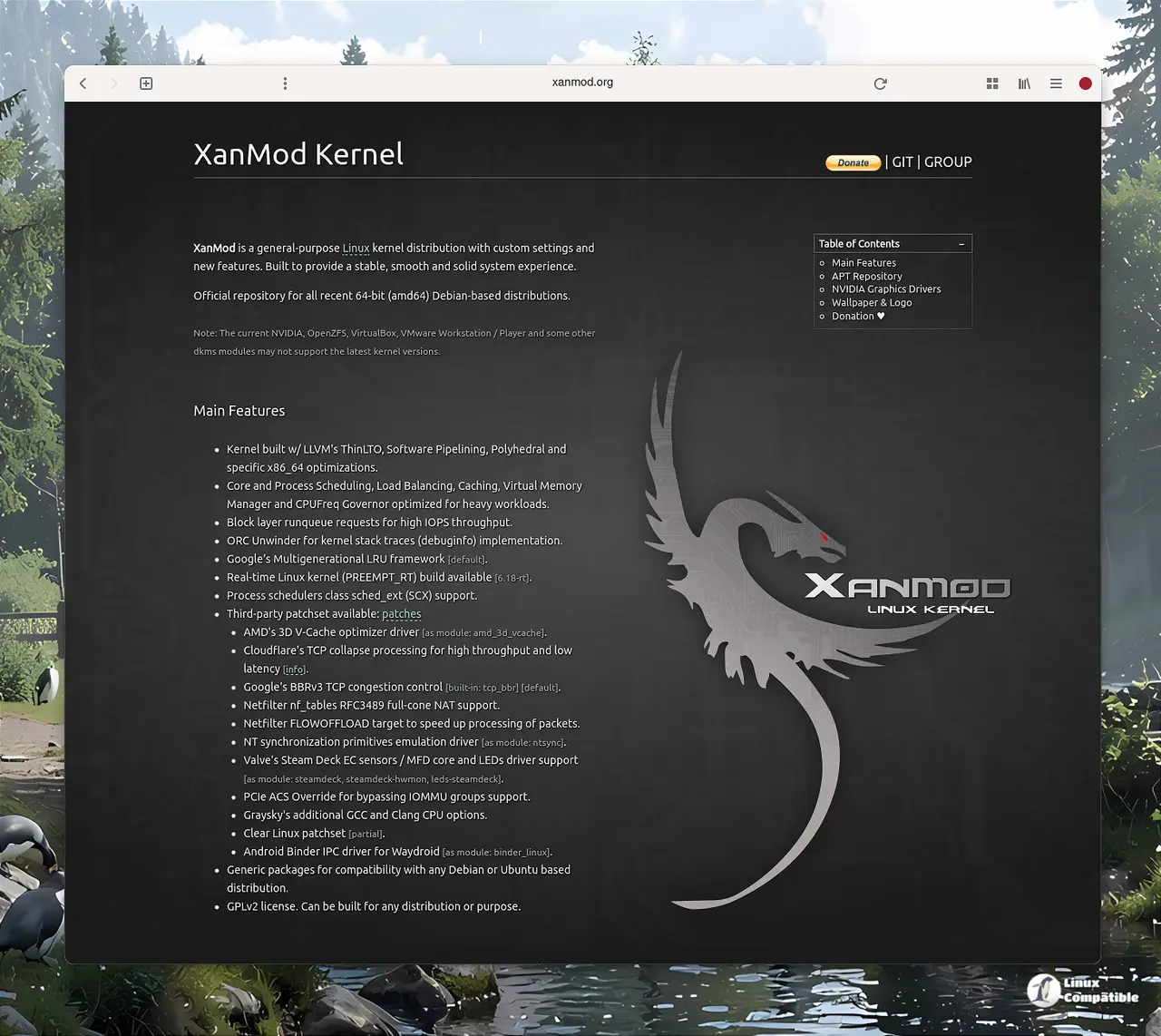
If you run a Debian-based distro and want extra performance without patching source code yourself, these are worth a look.
XanMod describes itself as "a general-purpose Linux kernel distribution with custom settings and new features. Built to provide a stable, smooth and solid system experience." In practice, it takes the upstream source, rebuilds it with different defaults, and layers on x86-64 optimizations that most distro kernels skip. The crowd it's after is desktop users, gamers, and anyone who wants a snappier system.
Not for everyone though. Builds only go to x86-64 machines and only to Debian-based distros. And this project has been running essentially on one person's time since 2015, with Frade still personally committing and signing every release.
The features worth caring about
The 7.2.12 MAIN build is the flashy one. It carries cache-aware task scheduling, the centerpiece of the 7.2 release, which co-locates tasks that share data within the same cache domain to reduce misses. It also picks up the "fair" GPU scheduler (the same one that regressed early and got reverted to FIFO), USB4STREAM packet streaming, and meaningful Btrfs throughput gains.
If you're running an enterprise or stability-focused box, 6.18.58 is the smarter bet. It's this year's LTS line, expected to get five or six years of support. That same source feeds a PREEMPT_RT real-time build as well, reworking the scheduler for deterministic, low-latency response. That distinction matters for audio work and anything where a scheduling hiccup actually costs you.
What actually sets XanMod apart from a stock kernel? The builds compile with LLVM plus software pipelining and polyhedral optimizations, and they ship Google's multigenerational LRU as the default. You also get Cloudflare's TCP collapse handling and BBRv3 enabled out of the box, on top of scheduler and block-layer tweaks aimed at higher IOPS. There's a curated third-party patchset layered over all of this too, including PCIe ACS override for IOMMU group headaches and Valve's Steam Deck EC sensor driver.
Why bother upgrading
The features draw people in. The fixes are why you should actually change kernels.
Both stable trees picked up a batch of backported patches, and a couple are worth stopping for. There's a KVM hardening that closes a hole where a guest could trigger spurious MMIO exits to sidestep write-tracking, and ksmbd gets patched for a heap out-of-bounds write in its Kerberos auth path. SMB servers talking to untrusted clients are arguably worth an upgrade on those grounds alone. sched_ext also gets a CPU-hotplug hang fix that's easy to ignore unless you run BPF schedulers on servers.
The branches split on a few specifics. 7.2.12 alone repairs an ath9k wifi regression that had bricked an AR9271 USB adapter. On the 6.18 side, PostgreSQL users get relief from an io_uring memlock accounting bug that previously capped them at 21 of 64 rings.
The XanMod difference here is real, even if the payoff depends on what you're chasing. The 7.2.12 build is arguably competing with a fair amount of hand-tuned setup for desktop snappiness, though most everyday users probably won't feel the cache-aware scheduling in day-to-day use. The 6.18.58 LTS and real-time options land somewhere more broadly useful.
Installing is a one-command affair if you're already in the Debian-or-Ubuntu world. Packages flow through an official APT repository, with the current supported codenames spanning bookworm, trixie, noble, plucky, and sid. You'll want to match your CPU baseline to the build, so MAIN's x64v2 and x64v3 are the modern choices, while LTS adds an x64v1 for older hardware. Head here to the install instructions if you need the exact commands, but the gist is registering the PGP key, pointing apt at the repo, and installing linux-xanmod-x64v3.
Keep in mind that XanMod also hosts its own NVIDIA driver repository, currently sitting at Production Branch 595.104.02 and New Feature Branch 615.78.08.
There's a caveat attached, though. XanMod itself warns that "the current NVIDIA, OpenZFS, VirtualBox, VMware Workstation / Player and some other dkms modules may not support the latest kernel versions." So if you're on any proprietary module, verify before you reboot. Community reports already flag VMware Workstation hiccups after kernel updates, and those don't always clear up on their own.
Both bundles ship the same fixes, so if you're already on XanMod, updating makes sense regardless of branch. The builds are live now through the standard APT repo.
Head here to the XanMod website.


