XanMod Kernels 7.0.8 and 6.18.31 LTS Bring Faster Scheduling and Better Gaming Tweaks to Linux
The latest release of XanMod kernels brings version 7.0.8 alongside the stable 6.18.31 LTS branch, packing in scheduling tweaks, network stack improvements, and hardware-specific drivers that actually matter for desktop performance. These builds skip the enterprise bloat and focus on responsiveness, making them a solid choice for anyone tired of default kernel lag or stuttering frame times during heavy workloads. The installation process is straightforward, but skipping a few precautions can leave external modules like NVIDIA drivers completely broken after a reboot.
Why These XanMod Kernels Actually Matter
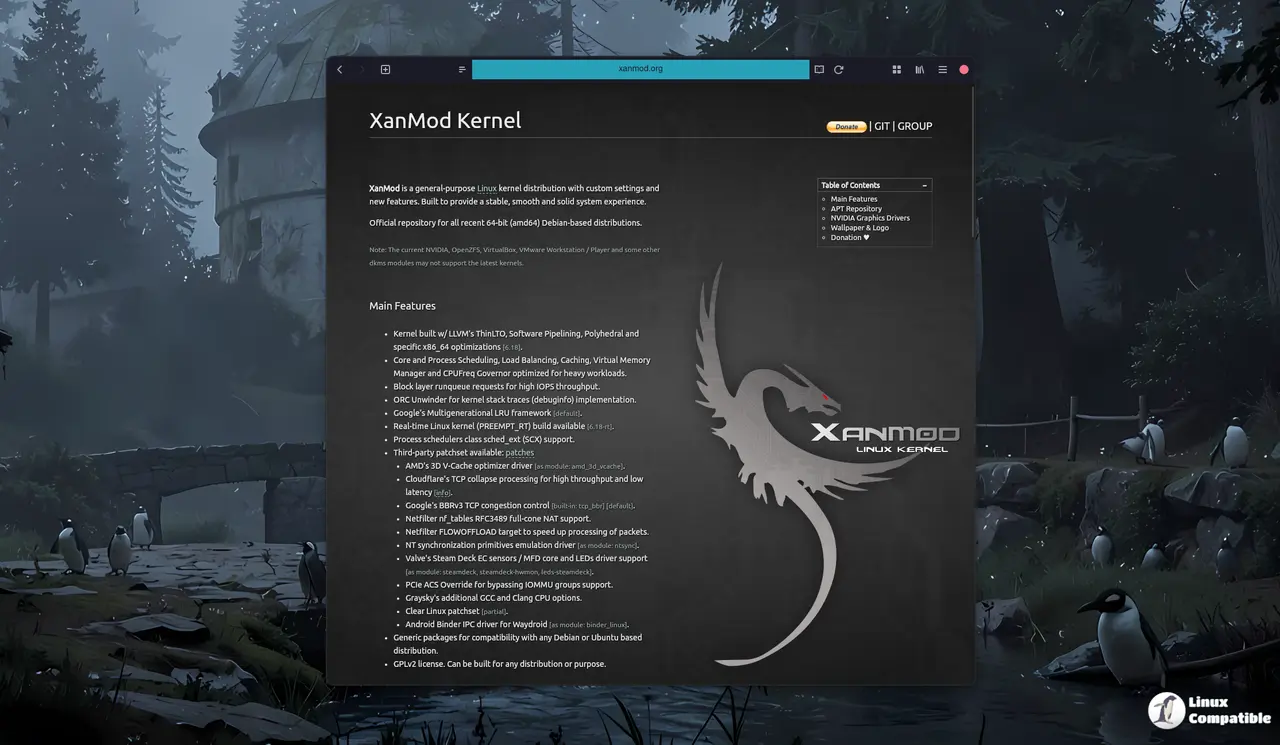
The default Linux kernel tries to please everyone, which usually means it settles for safe but sluggish defaults that prioritize compatibility over raw throughput. This release flips that approach by enabling Google's multigenerational LRU framework as the standard memory manager and pushing BBRv3 congestion control across the board. Those changes alone reduce network latency during heavy downloads or streaming sessions without requiring manual tuning. The block layer runqueue tweaks also squeeze out higher IOPS, which translates to noticeably faster application loading times on modern NVMe drives. Gamers with AMD processors will appreciate the new amd_3d_vcache module that optimizes cache allocation for 3D V-Cache chips without requiring manual configuration. Cloudflare's TCP collapse processing further reduces CPU overhead during high-throughput tasks, so background updates or file transfers stop eating up system resources. These optimizations do not require a complete desktop rebuild, but they do demand a kernel that understands modern hardware workloads better than the vanilla upstream build.
The DKMS Warning You Should Not Ignore
Kernel updates always carry a risk when proprietary or third-party modules are involved, and this release is no exception. The official notes explicitly flag NVIDIA graphics drivers, OpenZFS, VirtualBox, and VMware Workstation as potentially incompatible with the new versions. Those packages rely on dkms to rebuild their kernel modules during installation, and a mismatched build will simply fail to load. A common scenario involves upgrading to a newer XanMod release only to find that the NVIDIA driver refuses to start, leaving the system stuck in fallback graphics mode until the module is manually rebuilt or rolled back. Checking compatibility before running the upgrade prevents hours of troubleshooting. Users who depend on those specific tools should wait for official dkms package updates or stick to the LTS branch if stability matters more than cutting-edge features.
Installing XanMod Kernels Without Breaking The System
Setting up the repository requires a few precise steps that ensure package verification and proper system integration. Downloading the PGP key first guarantees that apt will trust the new source, while adding the repository line points the package manager to the correct Debian or Ubuntu codename. Running an update refreshes the local cache so the installer recognizes the new kernel packages. The linux-xanmod-x64v3 variant targets modern x86_64 processors with specific instruction set optimizations, making it the most efficient choice for desktop and workstation hardware. External module builders will need to install dkms, libelf-dev, clang, lld, and llvm before attempting to compile proprietary drivers, since those tools provide the necessary compilation environment. Skipping any of these dependencies usually results in failed module builds that require manual intervention. A full system reboot after installation activates the new scheduler and network stack, but keeping a fallback kernel entry in the bootloader ensures quick recovery if something goes wrong during the first boot cycle.
First, bring the PGP key into APT’s trust store so it can verify every package that rolls out. Running the command below fetches the key and writes it to the appropriate directory; doing this before adding the repository protects you from man‑in‑the‑middle attacks on the kernel packages.
wget -qO - https://dl.xanmod.org/archive.key | sudo gpg --dearmor -vo /etc/apt/keyrings/xanmod-archive-keyring.gpg
Next, drop a repository file into sources. The line below is already tuned for the distribution you’re on; it automatically expands to the correct codename thanks to lsb_release. Once that file is in place, APT knows exactly where to pull the kernel packages from.
echo "deb [signed-by=/etc/apt/keyrings/xanmod-archive-keyring.gpg] http://deb.xanmod.org $(lsb_release -sc) main" | sudo tee /etc/apt/sources.list.d/xanmod-release.list
Grab the update when ready, test with your usual workload, and enjoy a snappier desktop without waiting for distro maintainers to catch up.


