XanMod just pushed out kernels 6.18.36 LTS, 7.0.13, and 7.1.1 for Debian and Ubuntu, packing in LLVM ThinLTO optimizations and default BBRv3 network handling. The update also adds targeted hardware patches like AMD 3D V-Cache support and Steam Deck sensor drivers to improve real-world responsiveness. Anyone running NVIDIA graphics, OpenZFS, or VMware should verify dkms compatibility first, since proprietary modules frequently break during rapid kernel shifts. Official repositories make the upgrade straightforward, and the GPLv2 license keeps the entire build process fully transparent for tinkerers.
XanMod Kernels 6.18.36 LTS, 7.0.13, and 7.1.1 Release Brings Real Tweaks for Debian and Ubuntu Users
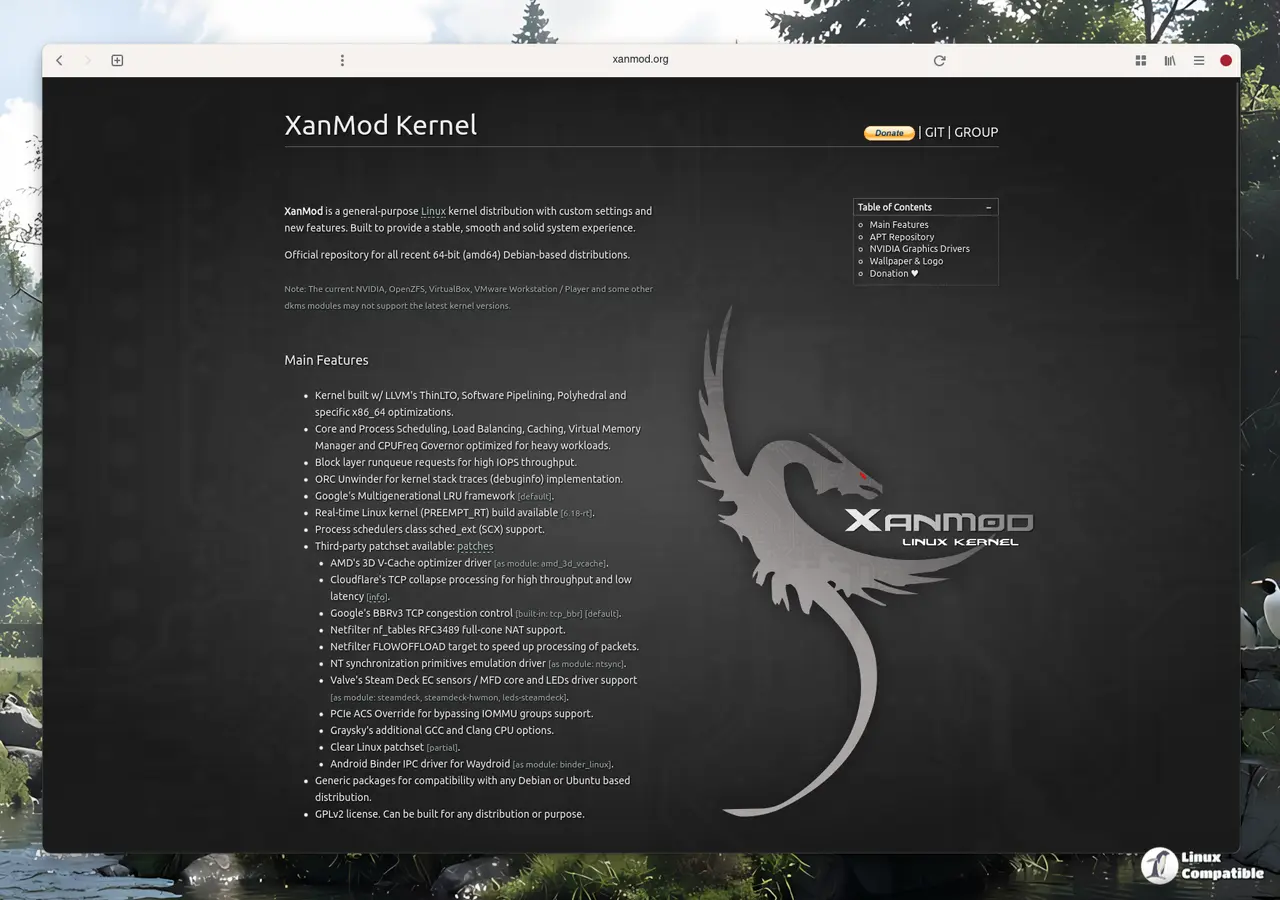
The latest round of XanMod kernels just dropped, and if you run Debian or Ubuntu on a desktop or workstation, there are actual reasons to consider switching. These builds ship with LLVM optimizations, default BBRv3 congestion control, and a few hardware-specific patches that quietly improve responsiveness without turning your system into a benchmarking lab. Before upgrading, anyone running NVIDIA graphics or virtualization software should check compatibility lists first.
Why these XanMod kernels actually matter for everyday Linux
The 6.18.36 LTS, 7.0.13, and 7.1.1 releases keep the same philosophy that made XanMod popular years ago. The team leans heavily on LLVM ThinLTO and software pipelining during compilation, which usually translates to tighter instruction flows and slightly better power efficiency on x86_64 hardware. The default Multigenerational LRU framework replaces older memory swapping logic, and that change alone stops systems from thrashing when dozens of browser tabs and background services compete for RAM. Google built that framework to handle modern workloads, and XanMod enables it out of the box. Heavy IOPS throughput gets a block layer runqueue tweak, which helps when compiling code or running database queries. The PREEMPT_RT real-time build remains available for anyone who needs deterministic scheduling, though most desktop users will stick with the standard PREEMPT variant.
Hardware support and the dkms compatibility warning for XanMod kernels
AMD owners finally get a dedicated 3D V-Cache optimizer driver loaded as a module, which targets those stacked-cache chips directly instead of relying on generic power management. The Steam Deck EC sensors and MFD core drivers also ship as loadable modules, making it easier to read temperatures and fan curves on handheld hardware or custom builds. Cloudflare's TCP collapse processing and BBRv3 congestion control stay enabled by default, so network stacks handle packet loss more gracefully during peak hours. There is a practical warning that needs attention though. NVIDIA drivers, OpenZFS, VirtualBox, and VMware Workstation all rely on dkms modules that sometimes break when the kernel tree shifts too quickly. Administrators frequently report systems locking up during a routine upgrade when a proprietary graphics module refuses to compile against a new scheduling header. Many so-called gaming kernels just rebrand stock kernels with flashy names and zero actual scheduler changes, which is exactly why checking the dkms status before flashing a new build matters. Anyone running those stacks should test the new XanMod kernels in a VM or on a secondary drive before committing to a main workstation.
Installing the update without breaking existing setups
XanMod maintains official repositories for Debian and Ubuntu, which means the upgrade path stays straightforward for people who already know how to manage package sources. The repository adds the kernel packages alongside their header files, so anyone compiling custom drivers or running Waydroid can pull the binder_linux module without hunting for third-party builds. The nf_tables RFC3489 full-cone NAT support and FLOWOFFLOAD target stay compiled into the base image, which helps routers and desktops forward traffic more efficiently without adding extra iptables rules. The PCIe ACS Override patch remains available for people who struggle with IOMMU group splitting on AMD or Intel platforms, though enabling it requires careful hardware testing. Clear Linux patches get partial inclusion, and Graysky CPU options stay in the compiler flags, so the kernel adapts to whatever processor sits on the motherboard. The whole package stays under GPLv2, which keeps the build process transparent and allows anyone to fork the source if a specific optimization needs tweaking.
The update ships with enough concrete adjustments to justify a reboot, provided the graphics and virtualization stacks are checked first. XanMod continues to prove that targeted kernel tweaks still matter for desktop responsiveness. Give the new build a spin on a test partition, watch the memory pressure and network throughput, and keep the old kernel handy until everything settles.


