XanMod Kernel 6.18.34 LTS and 7.0.11 Bring Heavy Workload Tweaks to Debian Systems
The latest XanMod kernel releases hit the ground running with performance patches that actually matter for desktop and workstation use. Users running Debian or Ubuntu based systems can swap out stock kernels without waiting months for upstream stabilization. This update focuses on scheduling, memory management, and network stack tweaks that keep systems responsive under load.
Why the XanMod kernel actually improves daily performance
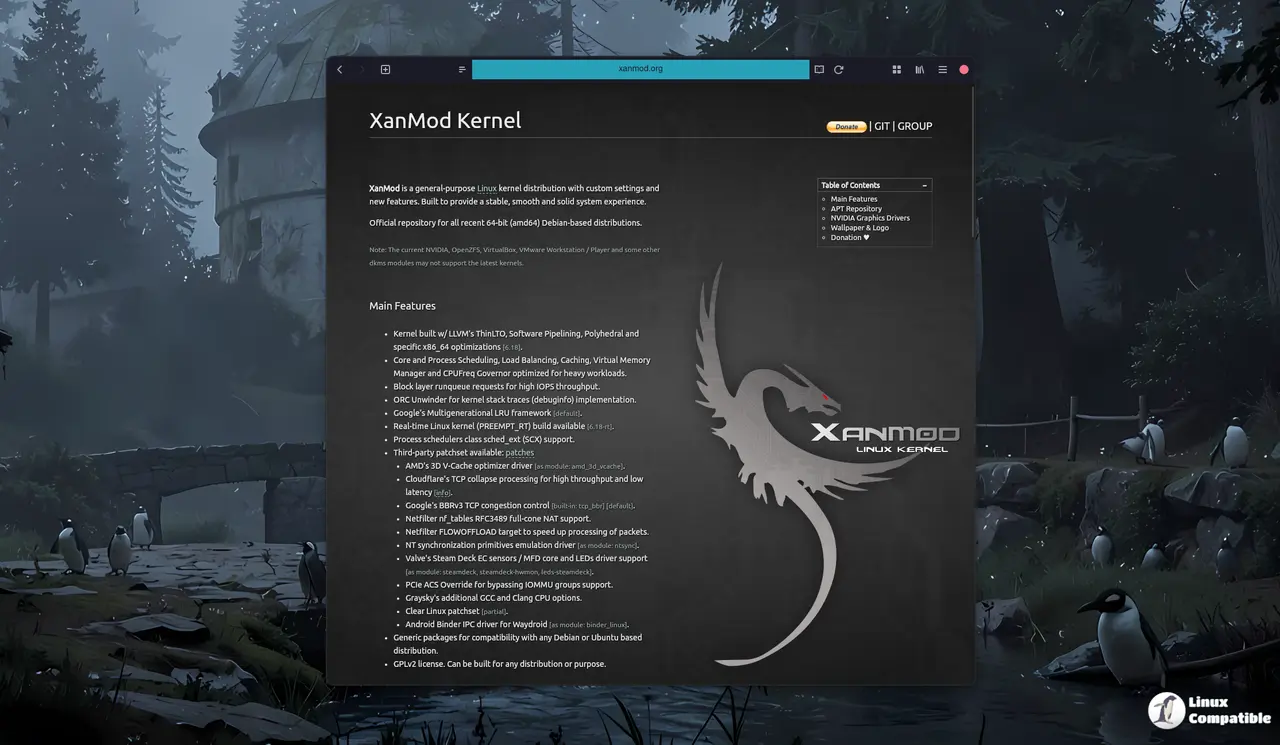
Stock kernels prioritize broad compatibility over raw responsiveness, which means background tasks often steal cycles from active applications. The new release flips that script by tuning process scheduling and virtual memory management for heavy workloads. Google's multigenerational LRU framework ships as the default now, so the system stops thrashing when multiple applications compete for RAM. Block layer runqueue adjustments also help storage drives handle high IOPS without choking on background writes. Anyone who has watched a compile or video render stall because of disk queue saturation will notice the difference immediately. The Clear Linux patchset ships as a partial inclusion, which means desktop users chasing those specific optimizations will likely encounter more stability quirks than actual gains.
Network and hardware patches that deserve attention
Cloudflare's TCP collapse processing reduces latency during heavy downloads, while Google's BBRv3 congestion control handles network jitter better than older algorithms. The netfilter updates add RFC3489 full-cone NAT support and FLOWOFFLOAD targets to speed up packet routing for home routers or virtualized setups. AMD users get a dedicated 3D V-Cache optimizer module that squeezes extra frames out of gaming workloads without touching the base scheduler. Steam Deck hardware drivers now include EC sensor and LED control modules, which means handheld enthusiasts can monitor thermals properly on desktop builds. PCIe ACS override support also helps when routing GPUs through IOMMU groups for virtual machines or passthrough setups. Real-time PREEMPT_RT builds remain available for latency-sensitive audio production, though most general users will find the standard x64v3 variant far more practical.
Installing the XanMod kernel without breaking existing tools
The installation process relies on standard APT commands, but skipping a few steps will leave external modules stranded during updates. First, registering the PGP keyring ensures package managers trust the repository before pulling any files, which prevents authentication errors down the line. Next, adding the source line with the distribution codename baked in directs the system to the correct server branch, since mixing up trixie and bookworm branches will break dependency resolution. Running an update and installing linux-xanmod-x64v3 pulls the optimized build directly from their servers. External module builders should grab dkms, libelf-dev, clang, lld, and llvm before rebooting, because NVIDIA drivers, OpenZFS, VirtualBox, and VMware Workstation all compile against kernel headers at boot time. The developers explicitly warn that some of those DKMS packages lag behind upstream releases, so users relying on proprietary graphics or storage stacks should verify compatibility first. A quick restart finishes the swap and loads the new scheduler defaults.
First, bring the PGP key into APT’s trust store so it can verify every package that rolls out. Running the command below fetches the key and writes it to the appropriate directory; doing this before adding the repository protects you from man‑in‑the‑middle attacks on the kernel packages.
wget -qO - https://dl.xanmod.org/archive.key | sudo gpg --dearmor -vo /etc/apt/keyrings/xanmod-archive-keyring.gpg
Next, drop a repository file into sources. The line below is already tuned for the distribution you’re on; it automatically expands to the correct codename thanks to lsb_release. Once that file is in place, APT knows exactly where to pull the kernel packages from.
echo "deb [signed-by=/etc/apt/keyrings/xanmod-archive-keyring.gpg] http://deb.xanmod.org $(lsb_release -sc) main" | sudo tee /etc/apt/sources.list.d/xanmod-release.list
Finally, update the package list and install the kernel. The --no-install-recommends flag keeps the installation lean by only pulling essential dependencies; you’ll still need a few development packages if you plan on compiling any external modules later.
sudo apt update && sudo apt install linux-xanmod-x64v3
Keep an eye on driver updates after the reboot, and enjoy the smoother multitasking. Drop a comment if any module compilation hiccups pop up during the transition.


