Ubuntu 26.10 "Stonking Stingray" ships with an entirely Rust coreutils and a deliberately smaller boot
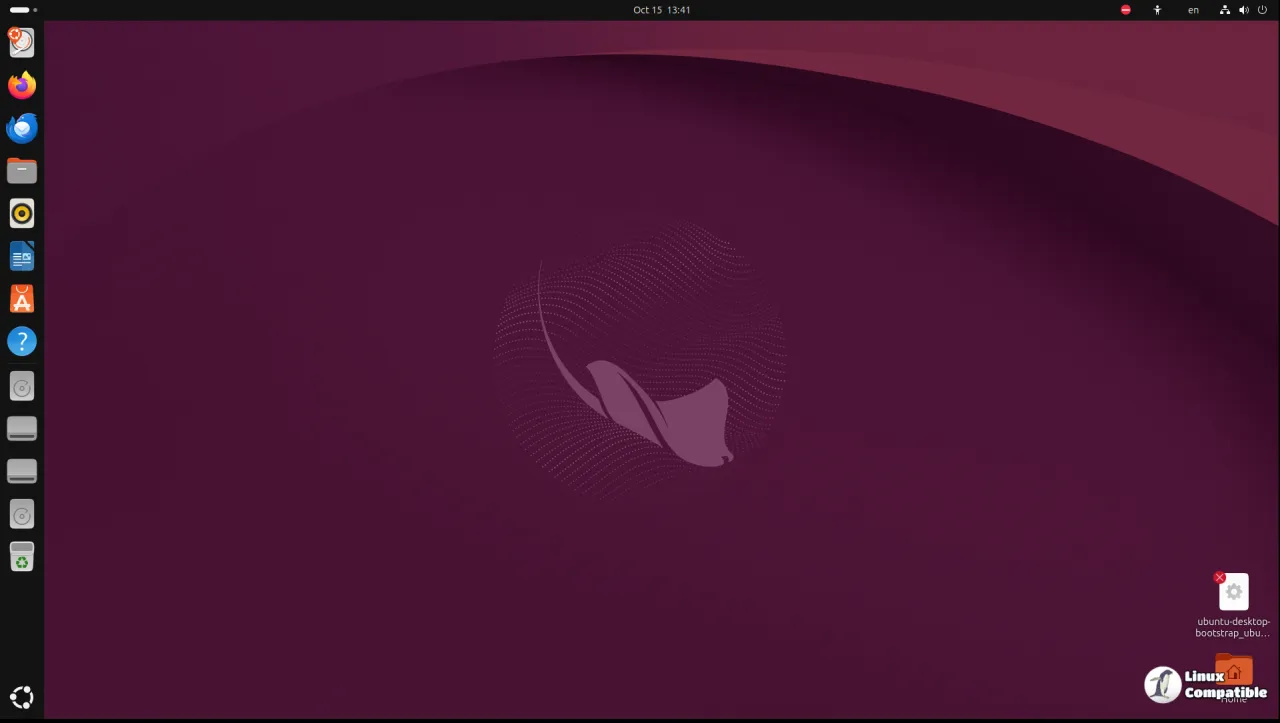
Ubuntu 26.10, codenamed Stonking Stingray, went live today with Canonical leaning hard into a future that is memory-safe, runs its AI on the device, and trims down what an attacker could touch.
That last goal is the real story here, and it is a slightly unusual one for a release to lead with. Canonical is shrinking the code involved in boot, finishing its migration of core utilities to Rust, and testing changes that should eventually flow into Ubuntu 28.04 LTS, which is still nearly two years away. Interim releases are exactly where the disruptive work happens. The community breaks things in public, and Canonical hardens whatever survives.
The quick version
Stonking Stingray released on Thursday, October 15, 2026, as an interim release supported for nine months, until July 2027. It follows 26.04 LTS "Resolute Raccoon," which shipped last April, and it was announced by Utkarsh Gupta on behalf of the Ubuntu Release Team. Canonical's own pitch was that the release "continues to advance security, performance, and hardware support while introducing new capabilities that look towards the future of Ubuntu."
All ten official flavors shipped alongside it, each with nine months of maintenance. That means Kubuntu, Xubuntu, Lubuntu, Ubuntu MATE, Ubuntu Budgie, Ubuntu Cinnamon, Ubuntu Studio, Ubuntu Unity, Ubuntu Kylin, and Edubuntu. The "stonking" in the codename is British slang for excellent, so you are getting an excellent stingray. There is also a fresh wallpaper set, with winners picked through a community competition called "Grace on the Currents"—a small, human detail in an otherwise technical release.
The desktop leans local and drops some old baggage
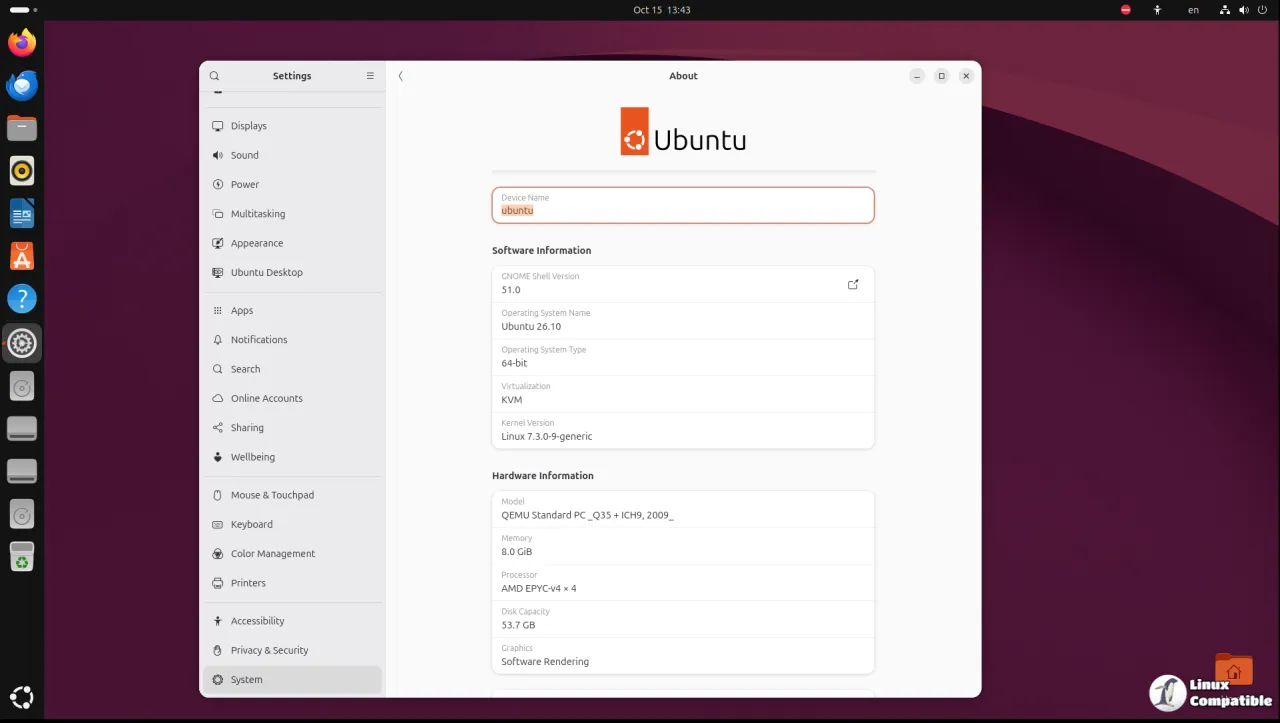
Ubuntu 26.10 ships GNOME 51, bringing the usual round of responsiveness and accessibility improvements to the desktop. But the feature everyone is talking about is Myna, an opt-in speech-to-text tool that runs entirely on your machine. You hold a configurable key, dictate into whatever window is focused, and the transcription never leaves the device. No audio hits a network service. No cloud involved.
Myna ships as a sandboxed snap, and it isn't preinstalled by default. Canonical calls it a technology preview, which means the feature set can shift before it goes fully stable. The point of Myna goes beyond dictation. It is Canonical's signal that it prefers local, opt-in AI over cloud assistants, and it doubles as a demonstration of the confinement-plus-local-inference model the company wants to see become the norm across the platform.
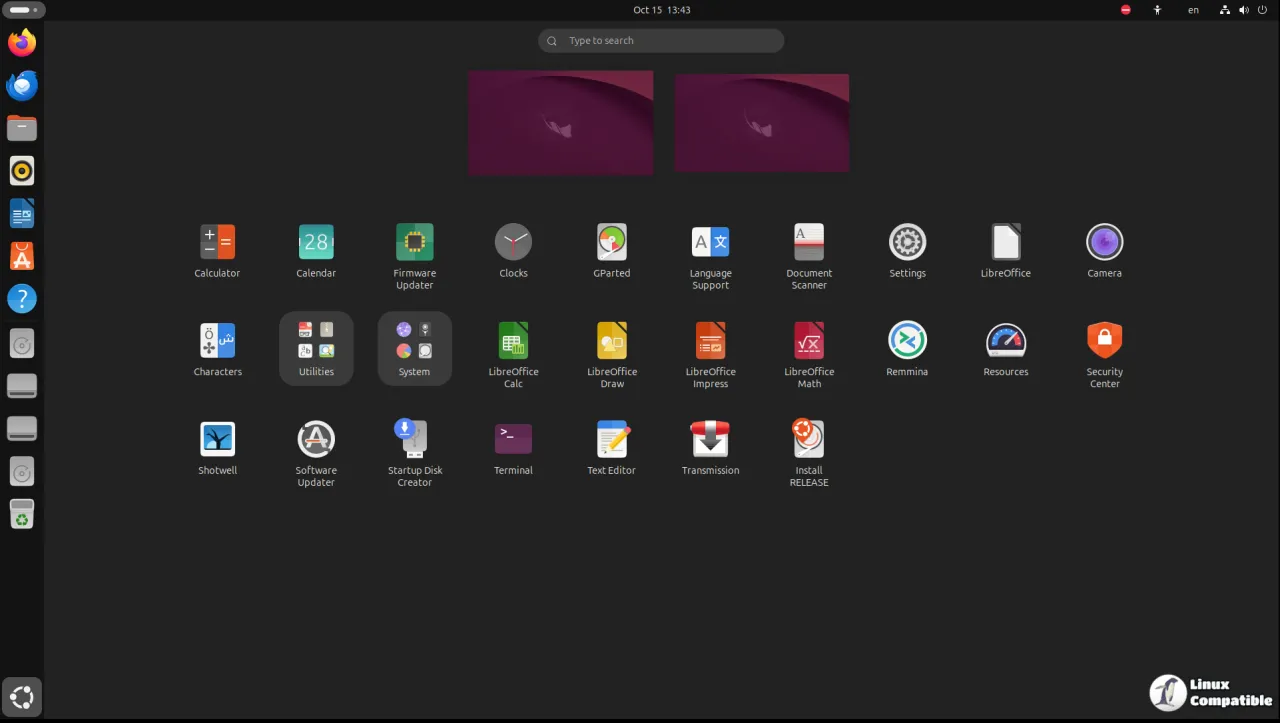
The App Center got reworked into a more unified software manager, folding Snap and Debian details into a single view with one install or uninstall button. There is a dedicated Drivers page now, and on-demand codecs will install themselves for one-time playback of unsupported files.
Here is one change you will actually feel: WEP Wi-Fi is gone. GNOME 51 removed the ability to connect to those ancient insecure networks from Settings. The rest of the stack still boots fine, it just won't help you with legacy routers anymore.
Security is the actual point of the release
Canonical wrote up the 26.10 security work at length, and it is the strongest part of the package. The reasoning is straightforward. AI is speeding up vulnerability discovery, so an OS should reduce what an attacker can wreck before a patch even exists. Fewer moving parts in privileged code means fewer ways to break.
The most concrete move is a slimmed-down signed GRUB. GRUB lives early in the boot chain, and its parsers for filesystems and partition layouts have been a reliable source of Secure Boot bypasses. Canonical kept only what it needs to boot: ext4, FAT, ISO9660, and squashfs for snaps on /boot. Btrfs, HFS+, XFS, and ZFS support, image loading, and Apple partition tables are gone from the signed build. LVM, software RAID, and LUKS are no longer supported under Secure Boot.
Those changes only affect the boot path. The removed filesystems and encryption schemes still work in the running system, and you can use them with Secure Boot disabled. Canonical timed the change to land right after an LTS release, so people who need those features can stay on 26.04 LTS until May 2041 with Ubuntu Pro and the Legacy add-on.
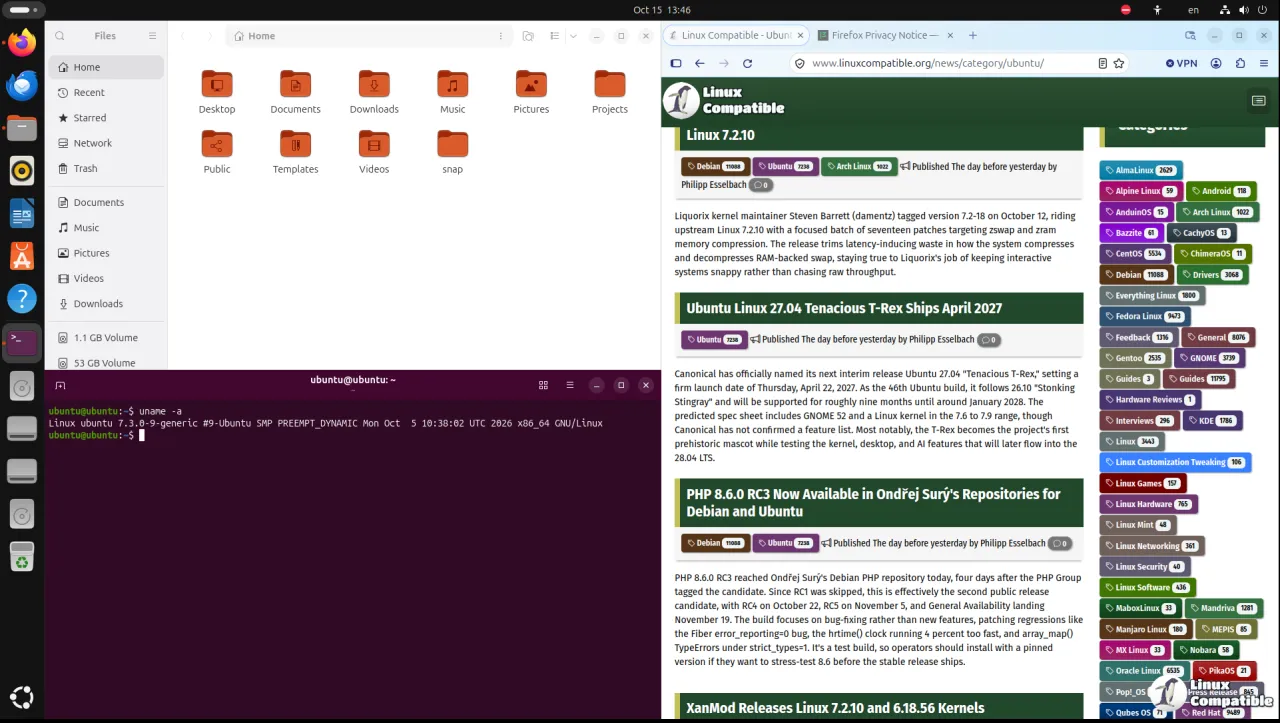
Canonical also finished moving its core utilities entirely to Rust. The 26.04 release made the Rust-based uutils the default but kept GNU's cp, mv, and rm for compatibility. Stingray migrates those final three. Canonical stresses that safe Rust blocks memory-corruption bugs like use-after-free and out-of-bounds reads. It is honest about the limits too. Rust won't stop logic errors or problems in unsafe dependencies, so it is telling admins to test scripts that lean on subtle copy, move, and delete behavior, especially in privileged workflows.
OpenSSL moved to 4.0 for the first time in years, adding post-quantum algorithms and Encrypted Client Hello, which hides the requested server name from eavesdroppers. OpenSSH landed at 10.5 with post-quantum key exchange still on. Canonical also folded the Rust-based Sequoia PGP into the main archive, aiming for it to eventually rival gpg.
Keep in mind that systems running TPM-backed full-disk encryption could not upgrade from 26.04 to 26.10 at launch, and Canonical expects to enable that path sometime during the 26.10 lifecycle. On machines without a hardware root of trust, a PIN or passphrase is now required at install if you want that encryption.
The server side
Ubuntu Server 26.10 shipped some heavy version bumps. MySQL jumped from 8.4 LTS to 9.7 LTS, adding a Hypergraph Optimizer and JSON Duality Views. Valkey reached major release 9.1, HAProxy moved to 3.4.2, and apache2 landed at 2.4.68 after patching roughly 25 CVEs across its modules. Samba added Active Directory audit logging and certificate-based authentication.
Enterprises should watch a few compatibility shifts. OpenSSH is now split into two source packages to cut down on exposure, and the old PKCS#11 engine is gone in favor of a provider, so any config referencing the old engine has to migrate. System V init scripts are gone too, which means packages that leaned on systemd-sysv-generator now ship systemd services or were removed.
The dev toolchains are current across the board. GCC sits at 15.2.0, Go at 1.27, Rust at 1.97.1, Python at 3.14.7, and OpenJDK at 25.0.4, with OpenJDK 27 also available.
Hardware got interesting
The Linux kernel is 7.3, though the release image is actually built on 7.3-rc6 because the final 7.3 slipped in after the freeze. That is a small tell that things got tight near the end of the cycle. Snapshots had been running 7.2 up until that point.
The real hardware news is RISC-V. Ubuntu 26.10 delivers a full desktop on RVA23 hardware, including the SpacemiT K3 and the SiFive BigSky platform. That is a genuine milestone for an architecture that has long lagged on desktop usability. Canonical also added early support for the Snapdragon X2 Elite and upcoming AMD Zen 6 platforms, plus Secure Execution and quantum-safe cryptography on IBM Z.
Where to get it
Head here to download the images for desktop, server, WSL, cloud, and every flavor. If you are on 26.04 LTS and opted to be notified of all releases, you will get a prompt to jump up.
The full caveats, workarounds for known issues, and every gory detail live in the release notes. Canonical says Stingray "sets the direction for Ubuntu 28.04 LTS," which is fair. Interim releases exist precisely so both the good ideas and the breaking ones get sorted out here, where the blast radius stays small. You have until July 2027 to decide whether Stonking Stingray is heading the right way.


