Ubuntu 26.10 'Stonking Stingray' Lands October 15, 2026 With Kernel Updates and Backport Plans
Canonical officially revealed the codename for Ubuntu 26.10 as Stonking Stingray, setting a firm launch date of October 15, 2026. This interim release follows the Resolute Raccoon LTS track and continues the predictable six-month development cycle that defines the distribution. Users looking for newer hardware support or fresh software stacks will find this update aligns with typical kernel timelines, likely shipping version 7.3 of the Linux kernel. Canonical also confirmed plans to backport the GPU driver stack from this release to Ubuntu 26.04 LTS in early 2027, offering a middle ground for systems that need modern drivers without a full OS upgrade.
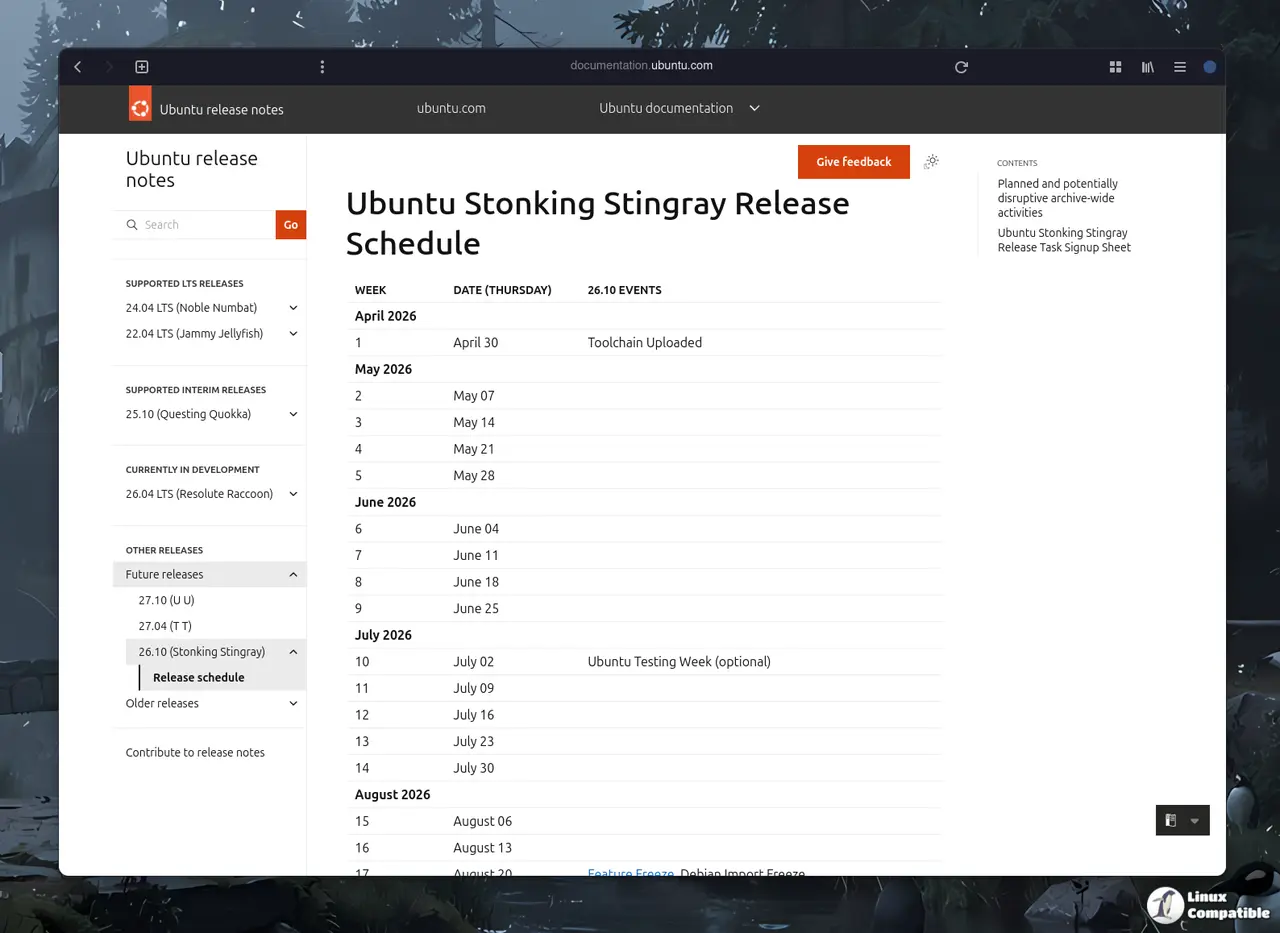
Development Schedule and Release Milestones
Official development kicks off later this month once the repository infrastructure is ready, which explains why Canonical announces the codename first to lock in naming conventions. The roadmap outlines a steady progression toward October with key freezes scheduled throughout August and September. Feature freeze lands on August 20 followed by Debian import restrictions, while user interface and documentation freezes occur in mid-September. Mandatory beta testing begins on September 24, leading into kernel and final freezes before the release candidate drops on October 8. This timeline gives testers a clear window to validate hardware compatibility and catch regressions before the final build ships. The rhythm has remained consistent across recent cycles, allowing administrators to plan upgrades around known milestones rather than guessing at release windows.
Kernel 7.3 and GPU Driver Backports for LTS Users
Interim releases serve as a testing ground for newer components that eventually filter into long-term stable versions. Ubuntu 26.10 is expected to ship with kernel version 7.3 based on current development pacing, bringing support for recent CPUs, GPUs, and peripheral standards that older kernels simply do not recognize. This creates a common scenario where users running LTS releases encounter hardware issues because the base kernel lacks necessary driver updates. To address this gap, Canonical plans to backport the GPU driver stack from 26.10 to Ubuntu 26.04 LTS in early 2027. System administrators often prefer this approach over upgrading the entire OS, as it delivers critical graphics and display improvements while maintaining the stability guarantees of the long-term track. Waiting for these backports can save time and reduce risk compared to rushing an upgrade just to fix a specific driver problem.
Choosing Between Interim Updates and LTS Stability
User priorities usually dictate whether this release warrants an immediate upgrade or if staying on the current LTS version makes more sense. Developers and enthusiasts who need access to the latest tools, libraries, or kernel features tend to favor interim releases like Stonking Stingray. These versions provide early access to improvements that refine system performance and hardware compatibility over time. Businesses and critical infrastructure generally stick with LTS releases to ensure dependable performance and longer support windows. The nine-month support period for 26.10 is sufficient for testing environments or personal workstations, but production systems often benefit from the extended lifecycle of long-term stable tracks. Upgrading an interim release solely because a new version exists rarely justifies the potential downtime unless specific hardware requirements demand it.
Keep an eye on that October 15 date if you are planning to refresh your setup. The backport plans for LTS users provide a safety net, but checking compatibility with your current software stack before upgrading remains essential. If the kernel improvements align with your needs, this release offers a solid path forward without waiting for the next long-term cycle.


